
Daniel Salzler No. 1376 EnviroInsight.org Four Items September 18 2026
—————Feel Free To Pass This Along To Others——————
If your watershed is doing something you would like others to know about, or you know
of something others can benefit from, let me know and I will place it in this Information .
If you want to be removed from the distribution list, please let me know.
Please note that all meetings listed are open to the public.
Enhance your viewing by downloading the pdf file to view photos, etc.
The attached is all about improving life in the watershed through knowledge.
If you want to be removed from the distribution list,
please let me know. Please note that all meetings listed are open.
Check our website at EnviroInsight.org
- US Strikes Colorado River Deal With Mexico. The deal, which comes on the heels of big water cuts for three Western states, includes more cuts for Mexico.
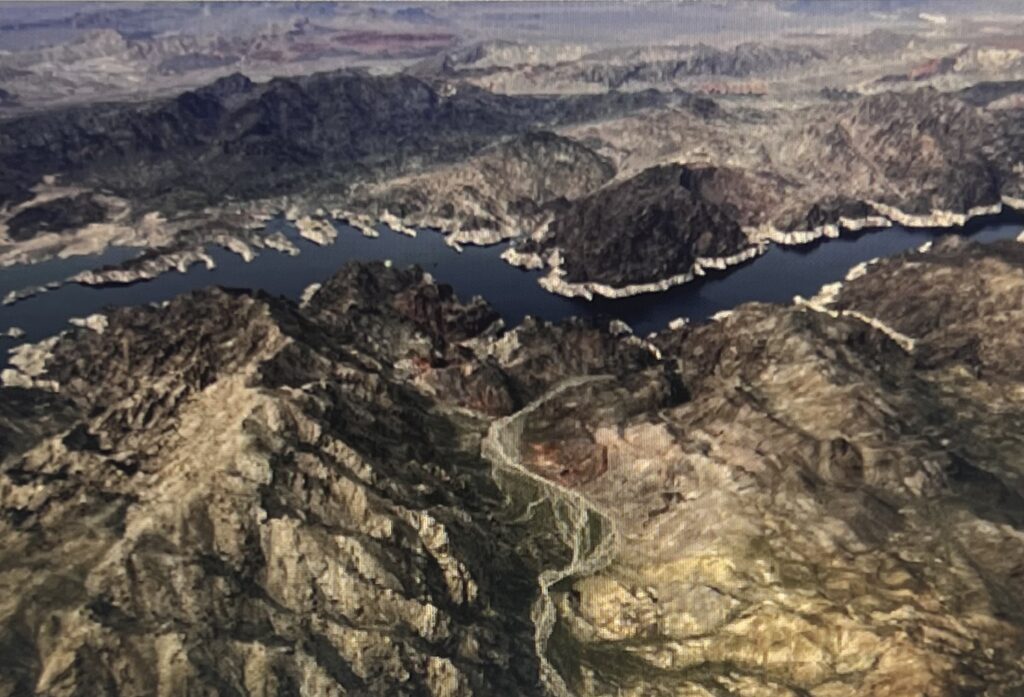
“We will continue monitoring the evolution of basin conditions and working with interested parties to seek the best solutions during scarcity,” Adriana Reséndez, the Commissioner of the Mexican Section of the IBWC, said.
The Minute 334 salinity pilot program will evaluate and track salt levels during the 2027 and 2028 water deliveries and assess methods for managing salinity.
Both governments also plan to cooperate on managing the Colorado River Delta in Mexico, where the river once nurtured forests and wetlands before it met the Pacific Ocean. For decades, upstream water users have sucked up nearly every drop leaving a dry, brown expanse.
2. Upper Verde River Granted Highest Level Of Water Protections By Arizona Regulators. Almost 50 miles of the Upper Verde River and portions of Sycamore Creek west of Sedona have been granted the highest level of water protections by state regulators.
The Governor’s Regulatory Review Council approved the Tier 3 water Outstanding Arizona Waters status Tuesday.
That level prohibits pollutants from degrading the water quality and preserves wildlife habitats, threatened species and recreational resources.
The Grand Canyon Chapter of the Sierra Club nominated the waterways in 2023. The environmental organization says the area covers a diverse habitat corridor, three national forests and a wildlife preserve.
The Arizona Department of Environmental Quality says it will finish final state level rulemaking before submitting to the EPA for federal approval. Source: KJZZ
3. Arizona’s Top Water Official Explains The Reality Of Colorado River Cuts- An Interview on KJZZ.
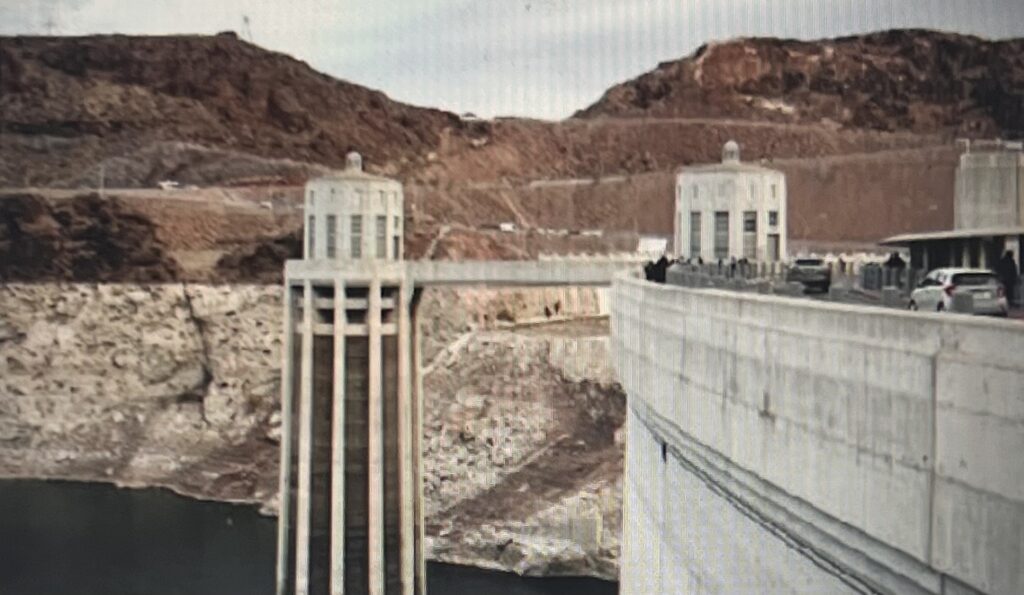
TOM BUSCHATZKE: I think that somewhat sums it up, but we really have applauded the fact that California, Arizona and Nevada for 2027 and 2028 put 3.2 million acre-feet of water on the table to help prop up the elevation of Lake Mead.
And perhaps more importantly, California and Nevada, their volumes of water are on the table. It’s likely legally California didn’t have to put anything on the table. So I think that’s a great outcome for us collectively to show that collaborative nature, but it also results in less reductions for the state of Arizona.
Unfortunately, for the next three to 10 years — 2029 and beyond — there’s some huge risks under the federal decision. They might cut by 3 million acre-feet in priority. So, what that could mean in at least one interpretation of priority is that the Central Arizona Project could go dry.
My cities north of Yuma — Lake Havasu City, Bullhead City — would also lose their Colorado River water, and they have no alternative supplies. And even Yuma, who has a higher priority than those folks, could lose almost half of their water. So, that’s a very draconian outcome, and of course we’re very unhappy that that’s a possibility moving forward.
MARK BRODIE: So, I’m curious about the fact that all of the seven states — these plans are only for two years at a time. Do you have reason to think that the seven states can come up with some kind of agreement in the next two years when you haven’t been able to over the past however many years up until now?
TOM BUSCHATZKE: So, my view is that when all seven states feel risk to their water supplies, that will be the lever that gets us to an agreement. We asked the federal government in this current process to assess risk in the four Upper Basin states by looking at how they might be reduced if the compact was enforced in the way we believe it should be enforced.
Neither the former federal administration nor this one chose to do so. So I guess the other possibility of assigning risk is if you go to Congress. Nothing’s going to happen in Congress without all seven states. So, perhaps the third level of government that could assess risk or assign risk is the Supreme Court of the United States of America.
So that’s certainly not our preferred path, and we’ll see if the next set of discussions with all seven states can come up with a better outcome. But for three-and-a-half years we tried, and without that risk, I’m not sure what other levers can be pulled.
MARK BRODIE: OK, so you mentioned the legal system. Let me ask you — because one of your fellow Lower Basin states, Nevada, has sued over this plan. I’m curious what you make of that.
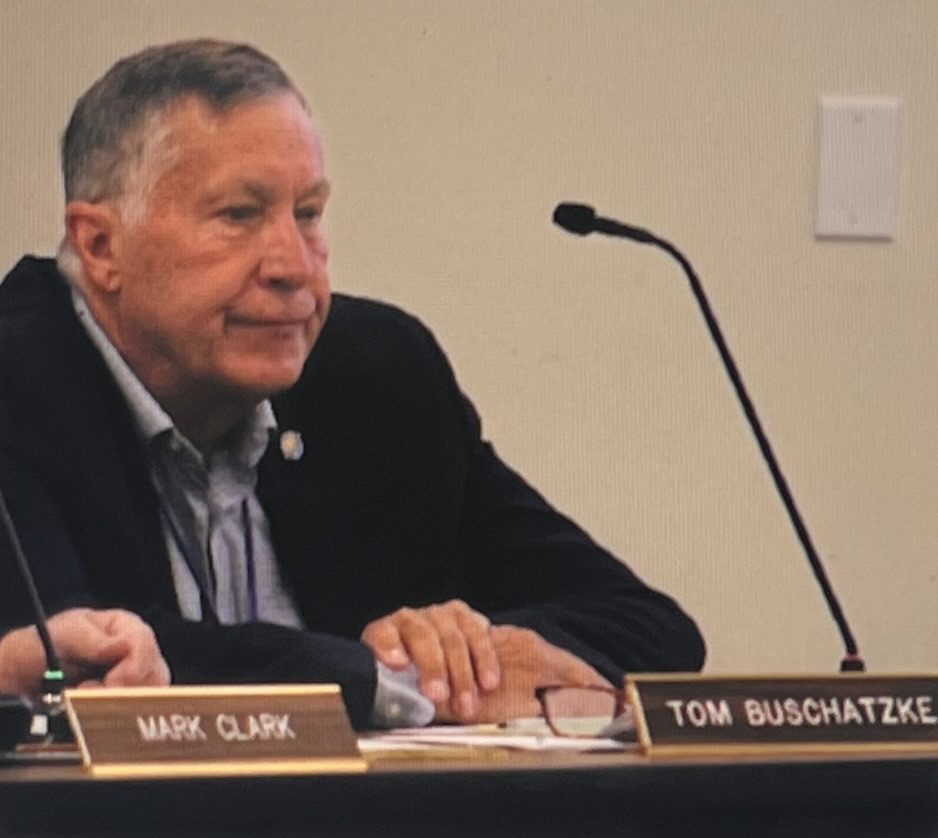
TOM BUSCHATZKE: So, we are assessing the Nevada complaint. We’re assessing what it means, whether we want to participate in it. And we haven’t made that decision yet. But certainly my department is working in concert with Gov. Hobbs’ office on assessing that complaint and trying to figure out what our path forward is.
But I will say this: This proposal that we put together among the three states — Arizona, California, Nevada — we need to keep that in place. And so, that will go into our calculation of the Nevada complaint and how we respond to it.
MARK BRODIE: Is there a risk that Nevada filing the suit potentially on its own could put the agreement that we have right now at risk?
TOM BUSCHATZKE: I guess that is a potential outcome. Nevada put pretty much every issue on the table in its complaint, and you just don’t know where any of those will go in front of a court.
MARK BRODIE: What does it mean for Arizona that we’re going to be losing this amount of water?
TOM BUSCHATZKE: So, the 760,000 acre-feet that we would lose in 2027 and 2028 would almost all come out of the Central Arizona Project. A little bit for some folks on the river. But we are pretty well prepared to deal with that level of reductions.
There’s something called the Arizona Water Banking Authority. We’ve been storing water under the ground, and we have since 1996. We’re going to recover some of that water. And as a matter of fact, the bank a couple weeks ago passed a policy that for 2027, we’re going to completely 100% fill the reduction of folks’ water orders.
But we’re balancing in the water bank short-term fixes versus making sure the water bank has water for the long term. And interestingly, when we talk about collaborating with California and Nevada, in the early 2000s, Nevada was actually using more than their entitlement, so through the Water Banking Authority, we stored water under the ground for Nevada. That gave them some security, and then they started hyper-conservation programs — paying for people to remove their grass, and they went from a number — 325,000 acre-feet per year — they’re down to 250,000 acre-feet a year.
But I just say that because it’s been part of the evolution of the three Lower Basin states working together.
MARK BRODIE: Do you think that there will be more of that kind of conservation mindset in Arizona, be it ripping out your grass, or maybe we rethink our relationship with agriculture, or anything like that?
TOM BUSCHATZKE: I think it’s an all- hands-on-deck kind of philosophy that needs to be implicated. I mean, Arizona has always been a leader in conservation. The cities have reduced their per capita use substantially, even with pretty large growth since the 1980 Groundwater Management Act was passed.
The other thing that we’ll be doing is maybe changing the way we use reclaimed water. But of course, you got to make choices about those uses that the reclaimed water is being used for now.
MARK BRODIE: When you talk about other sources of water, I’m wondering in the universe of things that you’re concerned about, where does groundwater fall? If some of these entities don’t get Colorado River water anymore, we know that groundwater’s being depleted at a pretty rapid pace. How concerned are you about that?
TOM BUSCHATZKE: So, we don’t want to go back to relying on groundwater for the long term, but we did pass the Groundwater Management Act of 1980 to preserve our groundwater for drought periods.
There are also basins outside of the Phoenix-Tucson corridor that were designated in the early ’90s by the Legislature for that water to be recovered and moved into our areas. Some of that’s already happening. We’ve approved some of those things — the town of Queen Creek, for example — and it gets transported through the CAP canal.
There are these other resources out there. Taking water away from agriculture at this point — the agriculture within the Central Arizona Project has already lost their water over the last four years because of the cuts we’ve already had to take. So, you look at the Yuma area, who has substantial Colorado River water, but if you take that water away and move it here, then the vegetable market, which comes from Yuma in the wintertime, that’s going to be impacted.
So, we have to create a balancing act of all the resource values that this water creates. And again, not only agriculture, but we’re making the most advanced microchips in the Western Hemisphere right here in Phoenix, for example. A lot of that’s Colorado River water.
And we’ve had these discussions with the federal government, like these issues of Arizona’s Colorado River water being reduced are really issues of national security on several levels, including food security.
So, there’s some tough times ahead in that regard, in figuring out how we’re going to continue to meet those important outcomes and still deal with what we have to do, at least in the near term, reduce our water take out of the Colorado River.. Source: KJZZ August 31, 2026.
4. OSHA HAZCOM Update 2026: Complete Breakdown of New Labeling & SDS Requirements. Overview of key changes [Updated April 23, 2026]
The 2026 update to the Occupational Safety and Health Administration Hazard Communication (HazCom) Standard makes specific improvements to labeling, Safety Data Sheets (SDS), and hazard classification. These changes bring the standard more in line with the Globally Harmonized System (GHS) of Classification and Labelling of Chemicals.
Labeling Updates: The redesign provides more detailed hazard warnings, additional options for labeling small containers without sacrificing safety, and clearer, more standardized precautionary statements to make it easier for users to understand.
SDS Updates: New data items are now needed, and the reporting of chemical properties must be more accurate. All 16 parts must also be more consistent to make things clearer and easier to use.
Detailed breakdown of labeling requirements
1. Core label elements (No Structural Change, but updates apply)

Keeps the necessary parts in line with the Occupational Safety and Health Administration HazCom:
Update focus:
- Identifier for the product
- Word of signal
- Statements of danger
- Statements of caution
- Finding the supplier
- Make sure that everything is correct.
- Be in line with the new categories set by the Globally Harmonized System of Classification and Labelling of Chemicals.
2. Changes to hazard statements
- Changed the phrasing to make it clearer and more consistent.
- In line with the terminology of GHS Revision 7.
- More accurate disclosure of chemical hazards.
3. Precautionary statements
- Simplified and made the language the same.
- Remove unnecessary or overlapping statements.
- Workers can use and read it more easily.
- Label flexibility for small containers
New rules about flexibility include:
- There is less information on labels for small packages.
- Other ways to name things when there isn’t much room.
Detailed breakdown of SDS requirements
i. The structure remains unchanged.
The Occupational Safety and Health Administration’s 2026 update preserves the standard 16-section SDS format, and the way it is set up stays the same. But today the guidelines are all about making sure that each region has information that is accurate, full, and consistent with current scientific and classification standards.
ii. Updated physical and chemical properties (Section 9)
Section 9 now needs more accurate and thorough reporting of data. Companies need to use more physical and chemical criteria when they are applicable, like particle quality and other attributes that are more specific. The goal is to help people understand how chemicals work in the actual world.
iii. Revised hazard identification (Section 2)
The Globally Harmonized System of Classification and Labelling of Chemicals has modified how dangers are grouped, and Section 2 must now fully reflect these changes. This entails introducing any new types of danger and making sure that the language used to group them is completely up to date to reflect the new rules.
iv. Composition and ingredient clarity (Section 3)
Section 3 has been changed to make it easier to see how chemicals are created. It has to set limits on how much concentration is allowed and make the regulations for handling trade secrets better. This makes sure that keeping things private doesn’t make it harder to tell people about dangers.
v. Enhanced toxicological information (Section 11)
Section 11 now needs more thorough toxicological data, like exact details on how people are exposed and what health effects they have. This adjustment makes it easy to figure out what substances are dangerous in the short and long run.
vi. Consistency across all SDS sections
The Occupational Safety and Health Administration (OSHA) places a high priority on internal consistency as a key area of enforcement. The danger categorization, labeling information, and SDS content must all be the same. This will make sure that all of the papers use the same reliable manner to talk to each other.
Substances compliance deadline
- Chemical makers, importers, and distributors must completely follow the new labeling and SDS rules by May 19, 2026.
- The goal of this phase is to ensure that all individual chemicals have the right classifications according to the Globally Harmonized System of Classification and Labelling of Chemicals.
Employer compliance deadline
- Employers need to upgrade their procedures for communicating about hazards in the workplace by November 20, 2026.
- This means that you need to change how you label things at work, how easy it is for employees to obtain SDSs, and how you teach your employees to meet new standards.
Mixture’s compliance timeline
- Manufacturers must make sure that chemical mixes are safe by November 19, 2027. This includes updating classifications, labels, and SDSs.
- By May 19, 2028, all employers must have fully put the new rules for mixes in workplace systems into place.
Copyright 2026 EnviroInsight.org
