
—————Feel Free To Pass This Along To Others——————
If your watershed is doing something you would like others to know about, or you know
of something others can benefit from, let me know and I will place it in this Information .
If you want to be removed from the distribution list, please let me know.
Please note that all meetings listed are open to the public.
Enhance your viewing by downloading the pdf file to view photos, etc.
The attached is all about improving life in the watershed through knowledge.
If you want to be removed from the distribution list,
please let me know. Please note that all meetings listed are open.
Check our website at EnviroInsight.org
1. Record Of Decision And Operating Guidelines Underscore Need For 3-State Deal.
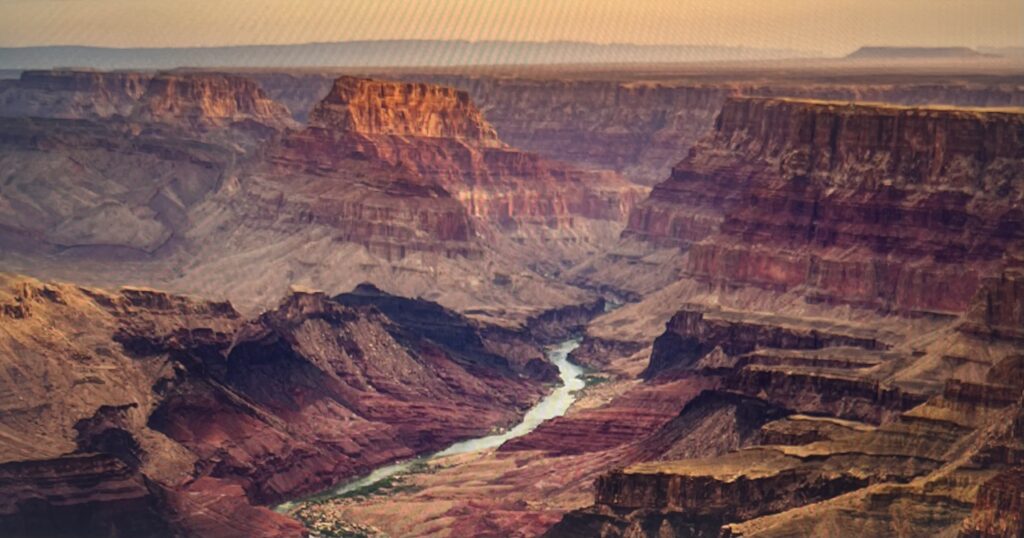
CAP and the Arizona Department of Water Resources have been working with other water users in Arizona, California and Nevada, as well as the United States, on a two-year agreement to provide stability to CAP users and the entire Colorado River.
The Record of Decision (ROD) and two-year Operating Guidelines for the Colorado River released today by the federal government adopt the historic level of conservation proposed by the Lower Basin states that will help stabilize the River for all users through 2028. However, the Record of Decision extends through 2036 and proposes a post-2028 framework for future River operations that violates the Law of the River and authorizes the imposition of disproportionate, unlawful, and intolerable cuts on Arizona and CAP users. The ROD requires no water conservation or cuts from the Upper Basin states – Colorado, New Mexico, Wyoming, and Utah – and fails to encourage much needed consensus among the seven Basin states.
The 2026-2028 Operating Guidelines contemplate the execution and incorporation of a Lower Basin states agreement that would conserve at least 3.2 million acre-feet of Lower Basin states’ water through 2028 and may provide the time needed to negotiate a long-term resolution to the River’s future outside protracted litigation. As written, the post-2028 framework described in the Record of Decision includes conditions which CAP will not accept, but there will be time to negotiate that over the next two years.
CAP supports the finalization and implementation of a Lower Basin proposal to provide water certainty for the next two years. Source: “Know Your Water News” August 21, 2026
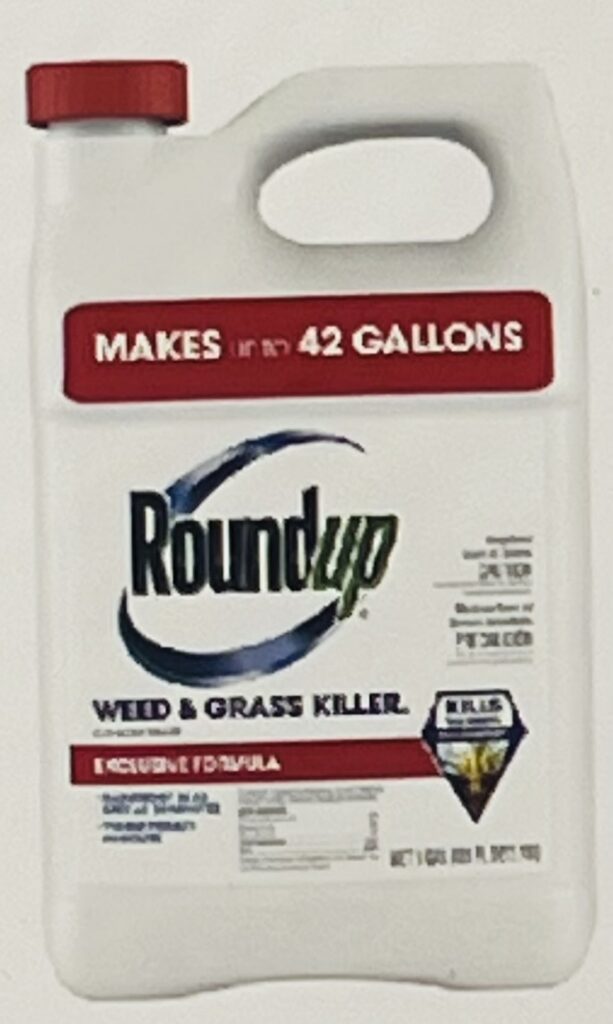
2. Eating Safe Pesticide-Free Food. RoundUp (Glyphosate) Herbicide In Food You Should Avoid. The Environmental Working Group (EWG) scientists have found cancer-linked glyphosate at shockingly high levels in popular foods like cereal and hummus. Glyphosate is the key ingredient in Roundup, the most widely used pesticide in the U.S. It is often sprayed right before harvest to dry out crops, a process that leads to high levels of contamination in our food.
Glyphosate levels vary widely by sample, but your best option is to shop organic. Despite the presence of glyphosate in some organic products, they remain a better choice for reducing glyphosate exposure. Glyphosate is not allowed on organic crops, so the organic samples EWG tested that contained it may have been contaminated by the chemical drifting from nearby conventional crop fields—evidence of the need for a ban on all pre-harvest uses of glyphosate.
HUMMUS
On average, conventional hummus had nearly 5 TIMES MORE GLYPHOSATE than organic alternatives.
Average Level of Glyphosate for Organic Hummus* 65
Average Level of Glyphosate for Conventional Hummus* 296
*Note: Number of organic samples: 12; number of conventional samples: 33.
—————————————————————
OAT BREAKFAST CEREAL
On average, conventional oat-based cereals had nearly 700 TIMES MORE GLYPHOSATE than an organic alternative.
Average Glyphosate Level for Organic Cereals* None Detected
Average Glyphosate Level for Conventional Cereals 711
- Note: Number of organic samples: 2; number of conventional samples: 28.
——————————————————————-
GRANOLA
On average, conventional oat-based granola had nearly 300 TIMES MORE GLYPHOSATE than an organic alternative.
Average Glyphosate Level for Organic Granola* None detected
Average Glyphosate Level for Conventional Granola* 298
Note: Number of organic samples: 2; number of conventional samples: 15.
——————————————————————-
SNACK BAR
On average, conventional oat-based snacks and snack bars had nearly 320 TIMES MORE GLYPHOSATE than an organic alternative.
Average Glyphosate Level for Organic Snack Bar* NoneDetected
Average Glyphosate Level for Conventional Snack Bars* 318
Note: Number of organic samples: 2; number of conventional samples: 27.
You can find our full results at ewg.org
* All glyphosate levels are reported in parts per billion. Glyphosate levels are based on samples collected by EWG staff from retailers in the Washington, D.C., Boulder, Colo., New York City and San Francisco metropolitan areas. Actual levels of glyphosate may vary by product.
Source: EWG, from tests by Anresco and Eurofins Central Analytical Laboratories.
3. Union Of Concerned Scientists Fight Proposed Forest Service Cuts. When Dr. Julian Reyes, former federal scientist and current Union of Concerned Scientists chief of staff, heard about a proposed plan from the Trump administration to reorganize the US Forest Service by moving its headquarters from the nation’s capital to Utah and closing 57 of its 77 research and development facilities, he knew he had to speak up.
“This plan will leave us to face growing climate threats with fewer experts predicting and managing wild-fires. It also leaves us less equipped to protect forests that provide clean air and water, and less able to support many rural livelihoods,” says Reyes, who used to work directly with Forest Service scientists in research and development at its parent agency, the US Department of Agriculture (USDA).
The Forest Service’s mission in administering more than 193 million acres of land—including 154 national forests and 20 national grasslands—is to “sustain the health, diversity, and productivity of the nation’s forests and grasslands to meet the needs of present and future generations.” Through its research and development programs, the agency also conducts independent science that provides the foundation for many forest management decisions—including crucial data about wildfires. Indeed, the research and development program at the Forest Service bills itself as the world’s leading wildland fire research organization.
Misplaced Priorities
“The agency has done all this on a budget that equates to roughly 0.6 percent of the president’s proposed $1.5 trillion budget for national defense spending” says Reyes. “And now, thisnew plan would dismantle the world’s premier, and largest, wildfire research agency at a time when wildfire risk, climate impacts, and economic losses are accelerating. Cutting research into\ wildfires—especially in a ‘super’ El Niño year with significant drought risk—isn’t smart.”
Reyes was invited on NPR’s 1A along with the head of the Forest Service, whom Reyes challenged on these plans while millions listened live. Subsequently, the agency edited its website to soften some of the language in its proposed plans. To read more about the Forest Service and how UCS is fighting to protect it, visit act.ucs.org/sum26- forests. Source: Catalyst magazine. September 2026.
4. What Climate Science Tells Us About The Causes Of the Colorado River Crisis.
Researchers have grown increasingly confident in global warming’s role in post-2000 ‘megadrought’
That’s never been more true than it is today, at a time of extreme drought and escalating political conflict over the future of the Colorado River. The river’s cumulative flow at Cameo, just upstream of Palisade and Grand Junction, is at a record low this year, and Colorado and six other states that depend on its water are likely headed for an extended, high-stakes court battle over how to apportion the cuts forced on them by more than two decades of persistently dry conditions.
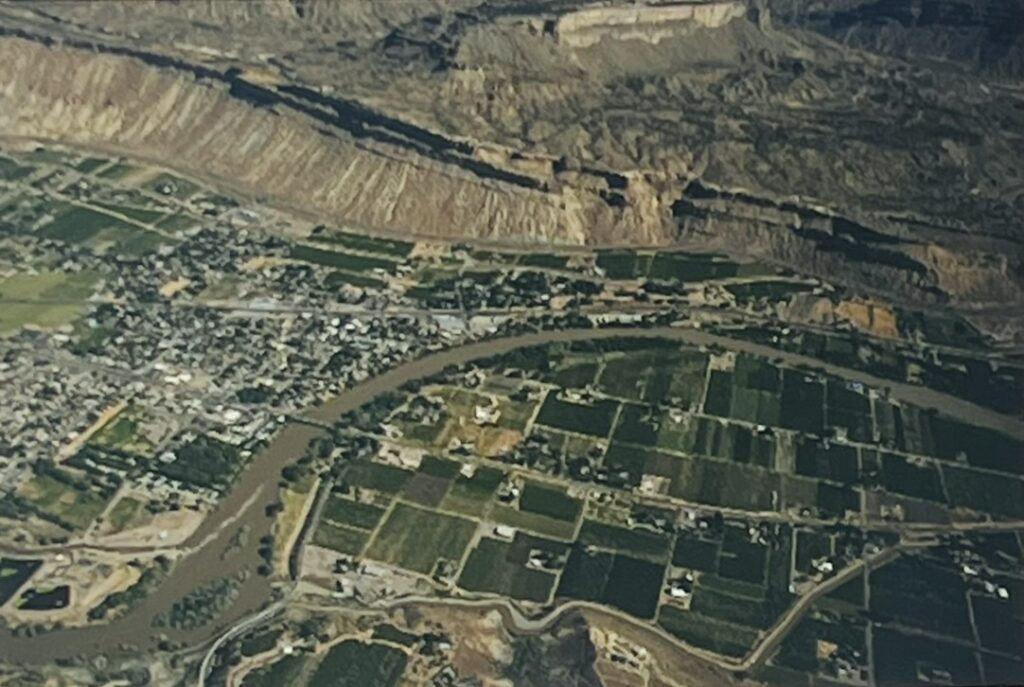
Addressing the Water Congress, Colorado leaders said the way forward for water users is through, as Attorney General Phil Weiser, the Democratic nominee for governor, put it, “collaboration and innovation.” They talked about storage and diversion projects, conservation measures and drought-resistant crops. They promised to defend farmers and ranchers from so-called “buy and dry” purchases of their water rights by municipal utilities, and to fight off efforts by the Lower Basin states of Arizona, California and Nevada to force mandatory cuts on upstream users in Colorado.
The lack of acknowledgment of the causes of the Colorado River Basin’s post-2000 megadrought comes as Colorado Republicans largely continue to ignore or deny the science of climate change — and as Democrats have been pressured by some party consultants to deemphasize the issue in the wake of their defeat in the 2024 election.
But even as this “climate hushing,” as Rhode Island Sen. Sheldon Whitehouse dubbed it earlier this year, appears to have taken hold in the Democratic Party, hydrologists and climatologists have grown increasingly confident in identifying human emissions, rather than natural variability, as the overwhelming factor driving the West’s water woes.
Whether or not it’s politically expedient for either party to say so, the scientific consensus is that rising levels of greenhouse gases in the Earth’s atmosphere — mostly the result of burning oil, gas and coal — have pushed the Colorado River system to the brink, and that drought conditions are likely to continue to worsen as long as those emissions continue to push global temperatures higher.
‘Hot drought’ and beyond
As of 2024, average global temperatures had risen by more than 2.3 degrees Fahrenheit over pre-industrial levels, according to NOAA data, and climate scientists have concluded that virtually all of that observed warming is due to greenhouse gas emissions from human activity. Parts of Colorado, including much of the Western Slope, are among the areas in the U.S. where average temperature increases have been most severe.
Further research has only solidified those conclusions. Using historical soil-moisture data and tree-ring records, one 2022 study found that the current megadrought is the worst dry spell the Southwest has experienced in at least 1,200 years. Studies generally agree that about 40% to 50% of the Colorado River’s declining flows can be attributed to higher temperatures alone.
“We can say with confidence that human-caused emissions of greenhouse gases are having an increasingly negative impact on the flows of the Colorado River,” they wrote. “This climate change impact will continue to worsen, but because humans cause it, humans can halt it.” Source: “Colorado Newsline”, August26, 2026
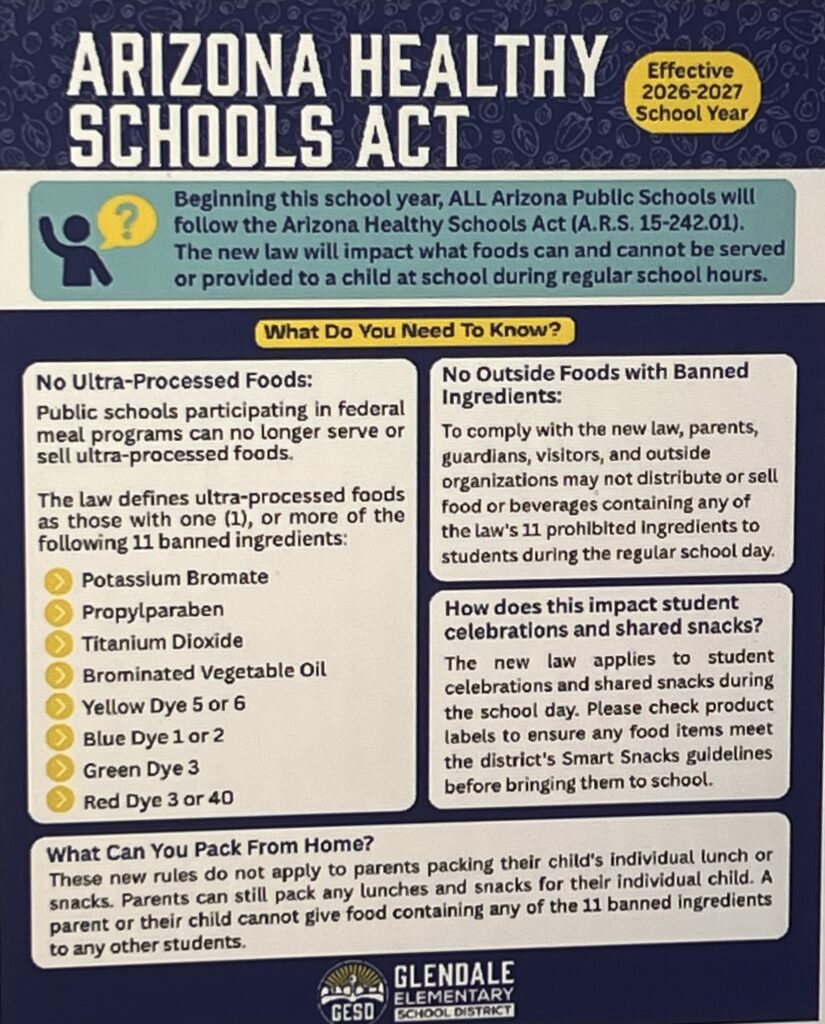
5. Attention Parents And Grandparents Of School-Age Children. Beginning this school year, ALL Arizona Public Schools will follow the Arizona Healthy Schools Act (A.R.S. 15-242.01). The new law will impact what foods can and cannot be served to children in Public Schools (Not Private or Charter schools). Please note the new guide lines.Source: Councilman Lupe Conchas
6 Water Supply Tops Arizona Voters’ Concerns.
When the Center for the Future of Arizona (CFA) asked Arizona voters to choose from a broad list of issues the single top issue facing the state, more voters selected long-term water supplies than any other issue on the list. Water supply is a major concern across political affiliations and age groups.
According to CFA’s reporting,

- 71% of voters are not confident Arizona’s water systems can reliably support future growth and extreme heat.
- 69% do not believe Arizona will have enough water over the long term to support residents, agriculture, and future economic growth.
The CFA research also found substantial agreement among voters on what steps Arizona should take:
- 78% support strengthening groundwater protections in rural parts of Arizona that currently have fewer groundwater regulations, including 68% of Republicans, 81% of independent/unaffiliated voters, and 87% of Democrats.
- 78% support limiting new housing development in areas without a guaranteed long-term water supply, including 72% of Republicans, 83% of independent/unaffiliated voters, and 83% of Democrats.
Source: University of Arizona Water Resource Research Center
7. As This Date, AZ Has Logged More Than 7,668 Cases Of Valley Fever. How do you tell the difference between allergies, a common cold and Valley Fever. Here is a quick guide: Valley fever vs. allergies vs. colds.
Allergies are more likely when:
- You have sneezing, itchy eyes or a runny nose
- Symptoms come and go with pollen, dust and seasonal triggers
- Allergy medicine helps
- You have a sore throat, congestion or a runny nose
- Symptoms improve within about a week
- Fever is mild or absent
- Other people around you are sick
Valley fever may be more likely when:

- A cough, fatigue or chest symptoms linger
- You have fever, night sweats, a rash or joint pain
- Your symptoms started after dust exposure, construction, yard work, hiking or a dust storm
- You recently traveled to Arizona or another part of the Southwest
- You have been treated for pneumonia but are not getting better
When should you talk to a doctor?
You don’t need to rush to urgent care or the ER but here are signs it’s time to get checked by a health care provider:
- Symptoms last more than one to two weeks with no improvement
- Fever won’t go away, especially when combined with a cough or fatigue
- Chest pain or shortness of breath that wasn’t there before
- Night sweats alongside other symptoms
- You visited Arizona or the Southwest and got sick shortly after your trip
- You’re in a higher-risk group, including adults over 60, people with weakened immune systems or those who are pregnant
Source: Banner Health, July 21, 2026
Copyright2026@ EnviroInsight.org
