
Daniel Salzler No. 1372 EnviroInsight.org Five Items August 21 2026
—————Feel Free To Pass This Along To Others——————
If your watershed is doing something you would like others to know about, or you know
of something others can benefit from, let me know and I will place it in this Information .
If you want to be removed from the distribution list, please let me know.
Please note that all meetings listed are open.
Enhance your viewing by downloading the pdf file to view photos, etc.
The attached is all about improving life in the watershed through knowledge.
If you want to be removed from the distribution list,
please let me know. Please note that all meetings listed are open.
Check our website at EnviroInsight.org

- Join The Climate Town Hall and Take Action To Protect Our Borderlands.
Thursday, August 27, 2026
6:00 PM AZ
North Central Phoenix
(Register and we will send you the location a few days before.)
To register:https://act.sierraclub.org/events/details id=701Po 000024sy8mIAA& formcampaignid=701Po 000020XDqHIAW&data =b318b006e7b059f6ffe 101c1b53c82ec4dcc0de 5c333b1e559df0829132a 1f738719157f35ef3f8bc 422daa14964fb0b
2. Lake Powell Hits Record Low As Colorado River Crisis Deepens. Lake Powell, the second-largest U.S. reservoir, has reached a historic low, threatening water supply and hydropower for millions across the Southwest.
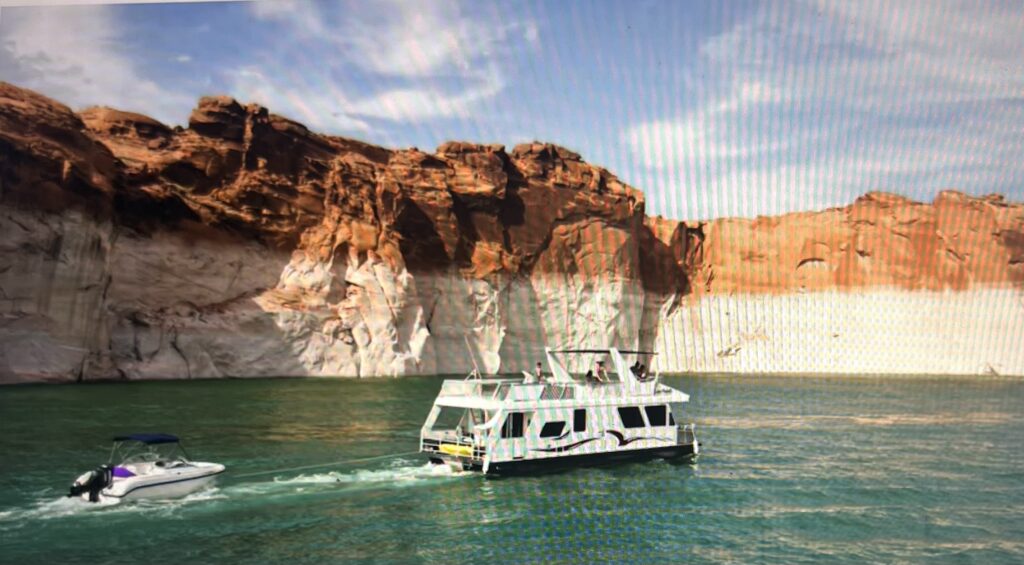
Lake Powell, the second-largest reservoir in the United States, has fallen to a record-low elevation, adding pressure to an already strained Colorado River system that supplies water and hydropower to communities across the Southwest.
The reservoir reached 3,519.91 feet above sea level on Saturday, according to U.S. Bureau of Reclamation data, slipping below its previous record low set in April 2023. The lake is now more than 20 feet lower than it was at the beginning of 2026.
The decline comes roughly a week after Lake Mead also reached a historic low, leaving the two major Colorado River reservoirs with their lowest combined storage in nearly seven decades. The Colorado River system supplies water to more than 40 million people across Arizona, California, Colorado, Nevada, New Mexico, Utah and Wyoming and supports agricultural production, ecosystems and hydropower generation.
Hydropower concerns grow
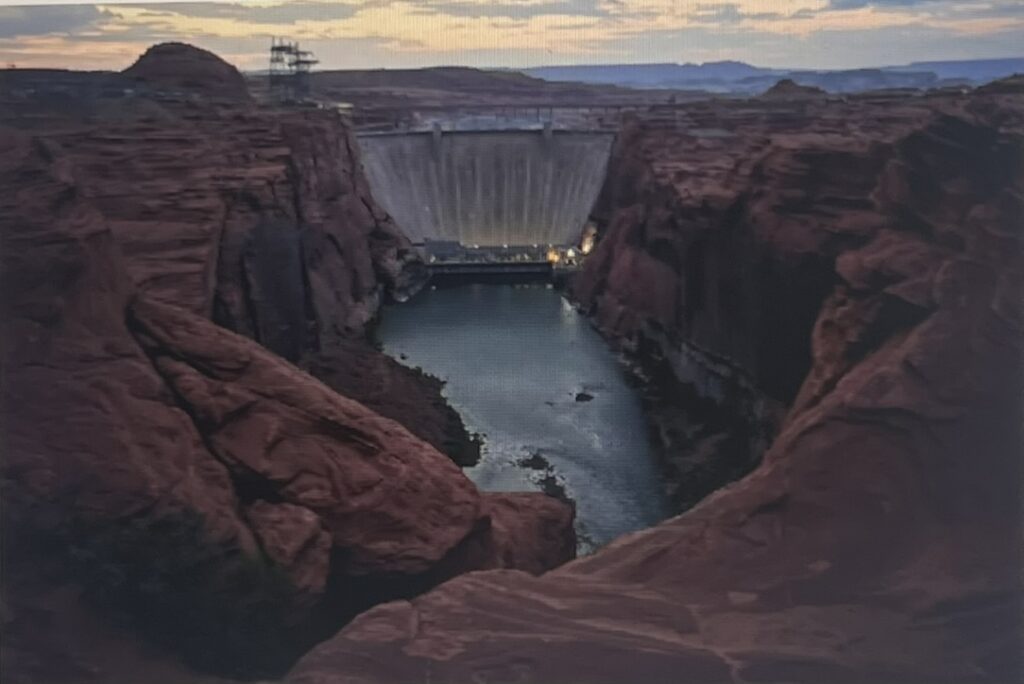
Lake Powell’s declining elevation is particularly significant for the region’s power supply. Glen Canyon Dam’s hydroelectric turbines require the reservoir to remain above approximately 3,490 feet, known as the minimum power pool. Powell is now only about 30 feet above that threshold. If the reservoir falls below it, Glen Canyon Dam would no longer be able to generate hydropower through its turbines.
The Bureau of Reclamation has already taken steps intended to stabilize Lake Powell. Earlier this year, the agency said it planned to move as much as 2.48 million acre-feet of water into Powell by reducing releases from the reservoir and drawing on water from upstream Flaming Gorge Reservoir. Reclamation projected those actions could raise Powell’s elevation to at least 3,500 feet by April 2027.
The immediate challenge is being compounded by poor inflows. Reclamation reported that unregulated inflow into Lake Powell during June was only 12% of average, while the reservoir ended the month at about 24% of live capacity.
Pressure on Colorado River management
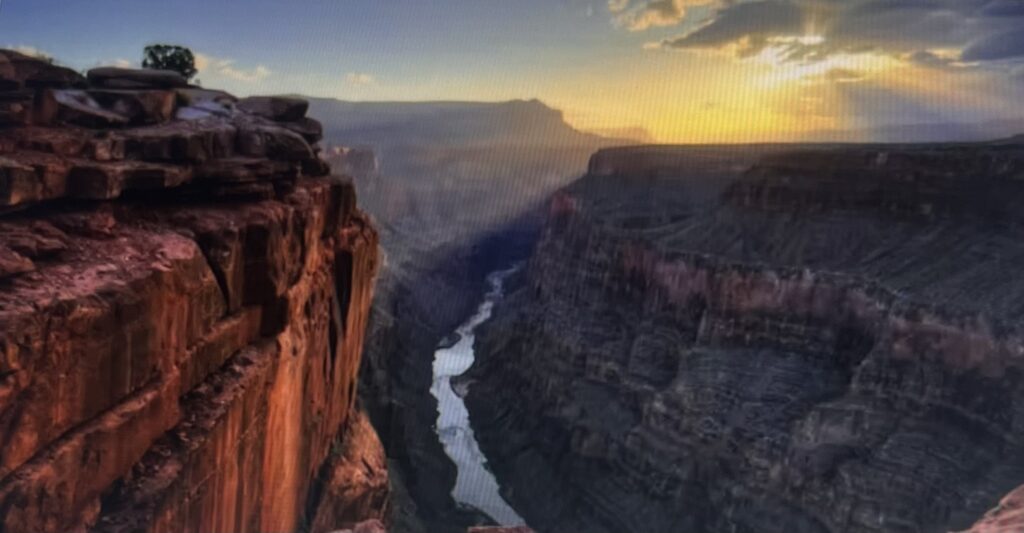
The reservoir declines come as federal officials and the seven Colorado River Basin states work toward a new framework for managing the river after 2026. Existing operating guidelines are scheduled to expire at the end of the year.
The Bureau of Reclamation has said a decision on post-2026 operations will be made before Oct. 1, 2026. Its draft environmental review evaluates multiple approaches for operating Lake Powell, Lake Mead and other Colorado River facilities, but the agency has not selected a preferred alternative.
The worsening reservoir conditions increase the stakes of those negotiations. Reclamation has been evaluating potential changes that could require significant reductions in water use, particularly in the Lower Basin states of Arizona, California and Nevada.
The current conditions are the product of more than a single dry season. The Colorado River Basin has experienced prolonged drought, low runoff and increasing temperatures while demand has continued to place pressure on available supplies. This year’s especially poor snowpack further reduced the amount of water reaching the reservoirs. A regional climate assessment found that Upper Colorado River Basin snowpack peaked at a record-low percentage of median levels this year, with April 1 inflow forecasts for Lake Powell at just 22% of average.
For water utilities and communities dependent on the Colorado River, the latest reservoir records underscore the importance of conservation, demand management, water reuse and diversified supplies as long-term management decisions are made. Source: Waterworld Aug 17,2026
3. Hoover Dam Is Losing Power. Inside The ‘Slowest-Moving Train Wreck In History’
From the rim of Lake Powell, you can’t see the danger line. There isn’t a flashing gauge or a chart on the canyon wall that warns visitors when one of the most important machines in America begins to fail. There’s only an invisible number: 3,490 feet above sea level.
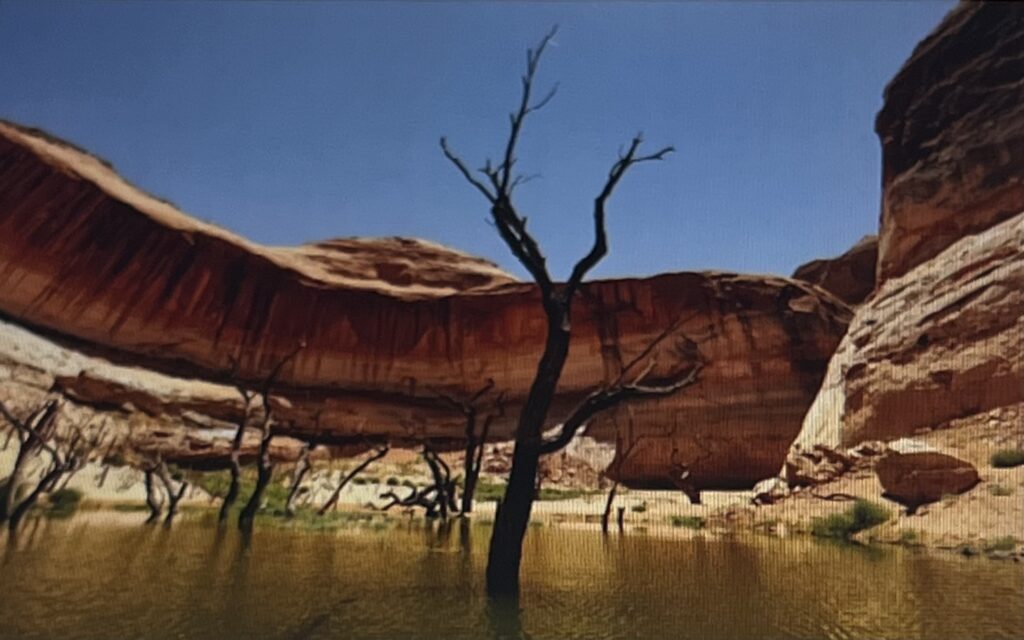
Engineers call it “minimum power pool.” Above that elevation, Lake Powell can still push water through Glen Canyon Dam’s massive penstocks, spin its turbines, and send electricity across the Southwest with no trouble. Below it, the dam loses the function that helped justify its existence. The river still wants to move, but the machine starts running out of ways to move it.
Glen Canyon Dam and Lake Powell sit near the center of the Colorado River system, upstream from Hoover Dam and Lake Mead. Together those reservoirs store the water that cities, farms, and power plants across the Southwest depend on. Now the entire system is being pushed past its limits, and Lake Powell is where the cracks are really starting to show.
Since 2000, the Southwest has been caught in a megadrought that has steadily pulled down water levels in both Lake Powell and Lake Mead. Climate change has made that trend hotter, drier, and harder to reverse. In 2026, a punishingly weak snowpack and an extreme heat wave pushed the basin deeper into emergency. The Bureau of Reclamation began taking steps to keep Lake Powell’s water levels high enough for electricity generation; Hoover Dam’s hydropower output is expected to drop by 40 percent of its maximum capacity this year.
“It’s a crisis moment for the Colorado River,” says John Berggren, regional policy manager for Western Resource Advocates. “We’ve known about this problem for years.
Long before it became an engineered system, the Colorado River was a dynamic desert waterway. Prone to both floods and droughts, it began in the Rocky Mountains, wound through the heart of the Colorado Plateau, carved the Grand Canyon, and emptied into the Gulf of California. On October 9, 1936, several 4-million-pound generators inside the brand-new Hoover Dam began turning the wild river’s force into electricity—and holding back the water that would become Lake Mead.
Hoover’s curved ax-head shape and its 726-foot-high walls eventually made it an icon of American engineering: a single structure that could control floods, generate power, store water, and supply the cities and farms spreading across the deserts of the Southwest.
This dam was only the beginning. In the decades that followed, the once-wild Colorado River turned into a complex web of dams and reservoirs designed to deliver electricity—and, even more crucially, water—to roughly 40 million people. The system now includes 14 other dams, including Glen Canyon Dam.
But none of them can work without enough water in the right places.
On paper, Hoover Dam and Glen Canyon Dam basically work the same way. Water stored behind each dam drops through giant tubes called penstocks, spins turbines, activates generators, and then flows downstream for agricultural and municipal purposes. But it’s the small differences in the two dams—particularly in the design of how water can leave their reservoirs—that could spell the end of electricity generation along the Colorado River.
At Glen Canyon Dam, Lake Powell has three main exits. The first is the penstocks, which are the only way to generate power through the dam. The second is the spillways, built for floods and used only once, in 1983. But the spillways sit high on the dam, so they aren’t all that useful in today’s drought-induced crisis.
The third exit: four small tunnels farther down from the penstocks that can bypass the generators and release water downstream without producing power. These are called river outlets. But with a flow rate of 15,000 cubic feet per second, the river outlets can also release excess water during flooding or for other conservation programs. In 2023, the Bureau of Reclamation used them to flush sediment that had built up in Lake Powell downstream.
Each exit comes with its own important elevation numbers and terms. When the surface of Lake Powell sits at 3,700 feet above sea level, the reservoir is officially at “full pool,” meaning it’s reached its max capacity of 26 million acre-feet of water, and the penstocks can work as designed. Then, at 3,490 feet above sea level, Lake Powell officially enters that “minimum power pool” phase. Here, electricity generation is no longer possible, as water levels have fallen below the penstocks, but water can still exit through the river outlets.
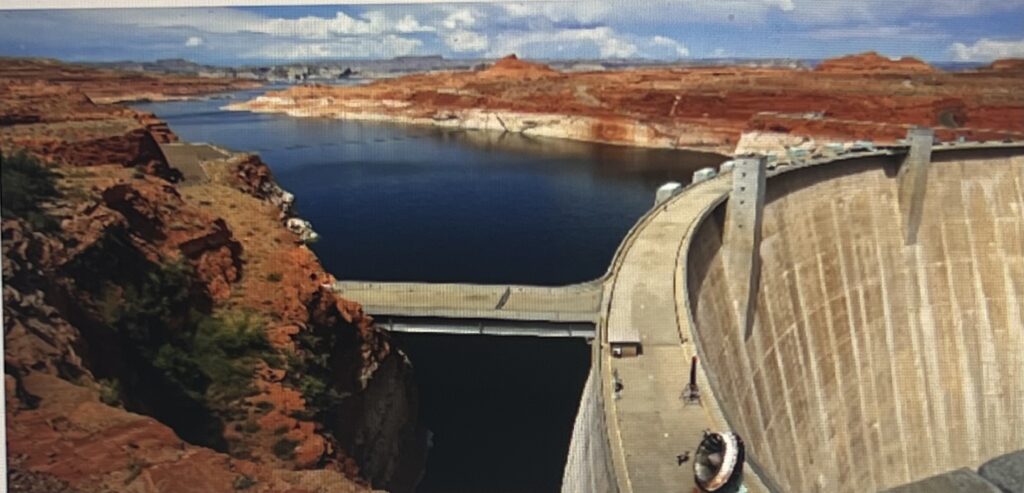
That creates two problems at once. The first is downstream disruption: The smaller river outlets were never designed to operate continuously or move the same volume as the penstocks. The second is mechanical danger. As water levels continue to drop, turbines and outlets can begin pulling in air, raising the risk of cavitation that could pit metal, attack concrete, and destroy machinery from the inside.
“It’s the incorporation of water bubbles in the water column. When those water bubbles collapse, they send off shock waves, and those shock waves can destroy concrete and metal,” says Jack Schmidt, director of the Center for Colorado River Studies at Utah State University and former chief of the Grand Canyon Monitoring and Research Center. “This is a situation that has been calculated, but it’s never been tested because we’ve never been this low.”
Below minimum power pool is the final, even more ominous threshold: “dead pool.” Under 3,370 feet, Lake Powell would fall below the level of the river outlets. At that point, water could remain in the reservoir but would no longer be able to rely on gravity to pass through the dam’s existing outlets. The result would be a reservoir trapped behind a dam that is no longer able to release it the way it was designed to. Source: Popular Mechanics, Aug 10, 2026
4. Officials Will Not Release Cool Water From A Colorado River Reservoir To Protect Threatened Fish. Federal officials said Thursday they will not release cool water this year from one of the Colorado River’s major reservoirs, which would have protected a threatened native fish downstream but put more strain on already struggling hydropower production.
In an email obtained by The Associated Press, the Bureau of Reclamation told various groups that water from Glen Canyon Dam in northern Arizona would not be released “due to significant hydropower generation concerns under already strained system conditions.”
As the Colorado River and its once massive reservoirs shrink from overuse and climate change, officials were faced with a decision that pits conservation of the humpback chub — a threatened fish native to the river — against ratepayer costs for electricity.
The decision comes after the worst snowpack on record for the Colorado River Basin, relied upon by farmers, industries, wildlife, hydropower and more than 40 million people in seven U.S. states, tribal nations and Mexico. It also comes a week after federal officials announced a proposal to stave off a crisis in the beleaguered waterway.
Officials stepped in after states that rely on the river — California, Colorado, Arizona, Nevada, New Mexico, Wyoming and Utah — failed to reach an agreement on how to share the dwindling resource long-term. Under the proposal, California, Nevada and Arizona would share water cuts.
A “cool mix flow” is when cold water is released from deep in a reservoir — in this case Lake Powell — to cool the river below. There are no hydropower turbines in the cool, deep section, so significant power generation would have been lost.
Lake Powell is about 23% full after decades of overuse and evaporation of water as average temperatures rise because of climate change. With such a low reservoir, warm water near the surface gets sucked through the generators and sent downstream.
Smallmouth bass, introduced in Lake Powell in the 1980s for sport fishing, live at that warm surface and also get sucked through the hydropower generators and into the river below, and if it’s warm enough, they spawn. That’s a problem for the humpback chub and other federally protected fish farther south on the river.
Officials say cool water releases from Lake Powell in 2024 and 2025 successfully prevented smallmouth bass spawning.
The river downstream of the dam is about 69 degrees Fahrenheit (20.5 degrees Celsius). The Bureau says it considers recommending cold water releases when the average daily temperature there exceeds about 60 F (15.5 C) for three consecutive days. Those temperatures have regularly exceeded that threshold for more than a month.
Utilities that buy hydropower from Glen Canyon Dam said releases would have forced them to spend millions of dollars to buy alternative energy that is more costly and less likely to be renewable, and could increase electricity bills for customers.
“We’re very pleased with the decision and appreciate Reclamation’s deliberate and thoughtful approach to this, just recognizing the challenges that we’re facing on the river,” said Andy Colosimo, executive director of the Colorado River Energy Distributors Association, which represents about 155 customers who buy federal hydropower generated from the river. “I think this was the right call, given the conditions that we’re all facing.” Source:c Seattle pi – Associated Press August 7, 2026
5. Aging Grand CanyonPipeline Breaks Again As $208-Million Replacement Continues. Water restrictions are in effect across the Grand Canyon’s South Rim after another break in the park’s aging Transcanyon Waterline disrupted the delivery of potable water, AZ Family reported, prompting conservation measures for residents and visitors.
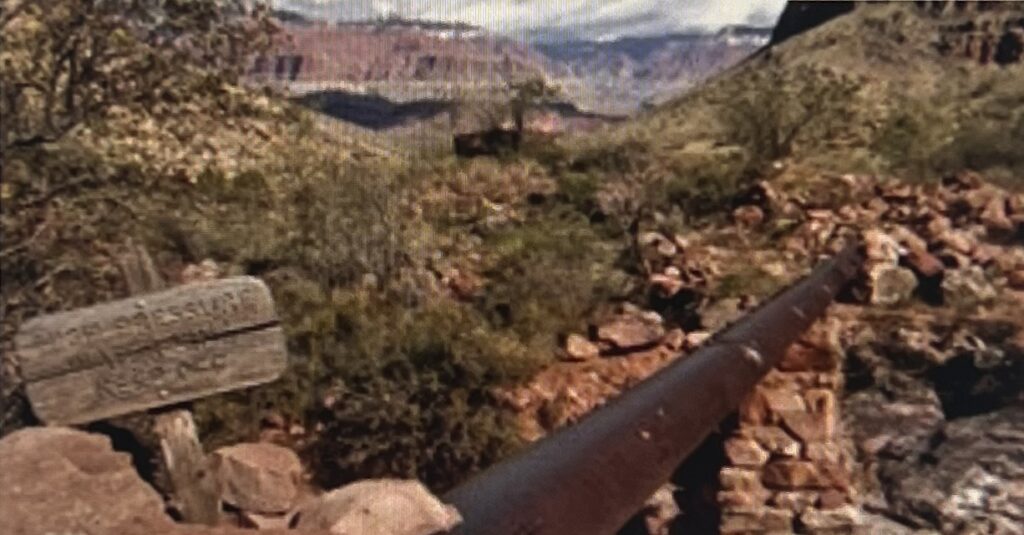
National Park Service officials said the latest break occurred along the North Kaibab Trail, leaving water unavailable at several locations while repair crews work to restore service. Park visitors have been asked to reduce water use, including limiting showers, toilet flushing and other nonessential consumption until repairs are complete.
The latest failure is one of several breaks affecting the nearly 50-year-old Transcanyon Waterline, which has experienced recurring outages in recent years. The pipeline also sustained damage during last year’s Dragon Bravo Fire, adding to ongoing maintenance challenges.
The National Park Service is currently replacing the aging waterline through a $208 million infrastructure modernization project scheduled for completion in October. According to AZ Family, the upgrade is expected to improve long-term reliability for the park’s water distribution system and reduce the frequency of pipeline failures. Source: Underground Infrastructure 8/6/26
Copyright 2026 @ EnviroInsight.org
