
—————Feel Free To Pass This Along To Others——————
If your watershed is doing something you would like others to know about, or you know
of something others can benefit from, let me know and I will place it in this Information .
If you want to be removed from the distribution list, please let me know.
Please note that all meetings listed are open to the public.
Enhance your viewing by downloading the pdf file to view photos, etc.
The attached is all about improving life in the watershed through knowledge.
If you want to be removed from the distribution list,
please let me know. Please note that all meetings listed are open.
Check our website at EnviroInsight.org
- Colorado River Cuts Are Here!
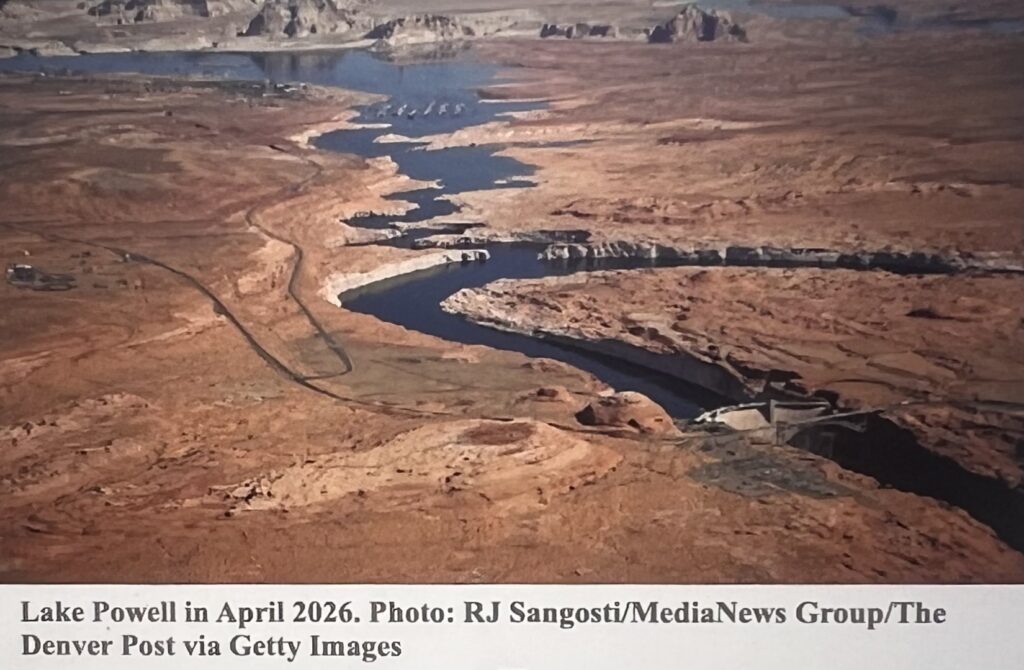
The U.S. Department of the Interior made its final decision on cuts to water allocations from the drought-stricken Colorado River over the next two years, and while it’s not good, it’s likely the best-case scenario for Arizona — at least for now.
- That’s nearly twice what the three states offered to conserve under a voluntary proposal.
That largely mirrors a plan proposed by the Lower Basin states.
The big picture: The Colorado River basin, which also includes all or parts of Colorado, New Mexico, Utah and Wyoming — has suffered a massive drought for more than two decades.
- Lake Mead and Lake Powell, key reservoirs for the river, are at record lows, threatening “deadpool” conditions in which water levels would be too low to flow through the Hoover and Glen Canyon dams.
What they’re saying: Gov. Katie Hobbs applauded the feds, saying they “saved Arizona from forced federal cuts that would have crippled our economy and America’s national security.”
- Yes, but: Hobbs criticized the Upper Basin states for refusing to negotiate cuts and said Arizona “stands prepared to protect our water by any legal means necessary.”
Threat level: If conditions worsen, Arizona and the rest of the Lower Basin could end up taking deeper cuts.
- “It’s likely to happen. There will be some changes, unless El Niño comes through for us,” he says. “We should have learned the lesson: Don’t expect good news from Mother Nature.”
The intrigue: Arizona still must determine the cuts to individual water users in the state.
- Cooke says those cuts will mostly come from CAP, which will make determinations based onits priority guidelines.
What’s next: The Legislature must approve the agreement with California and Nevada, meaning Hobbs will have to call lawmakers into special session this year.
- There’s no date or timeline for that yet, Hobbs spokesperson Christian Slater tells Axios.
Source: AXIOS Phoenix, August 21 2026
2. Filling The Need To Belong To Something. On August 22, 2026, 30-year-old Carl Endrulat and Jenny Mandl asked if anyone was interested, to show up at the entrance of Meridian Hill Park (also known as Malcolm X Park) in Washington D.C. at W and 16th Street Northwest on Aug. 15 in the afternoon. Organizers also asked folks to “BYOA” aka “bring your own apple.”
6,500 people responded with apple(s) in hand. Source: “Today” August 18, 2026
3. Arizona Agency Advances California, Mexico Partnership Projects To Increase Water Supply
Arizona’s water finance agency took a step toward implementing two projects that could increase the state’s water supply through partnerships with California and Mexico.
The state Water Infrastructure Finance Authority solicited ideas for long-term water augmentation projects last year and is exploring seven proposals. The board voted Wednesday to approve “scopes of work” for two of those proposals.
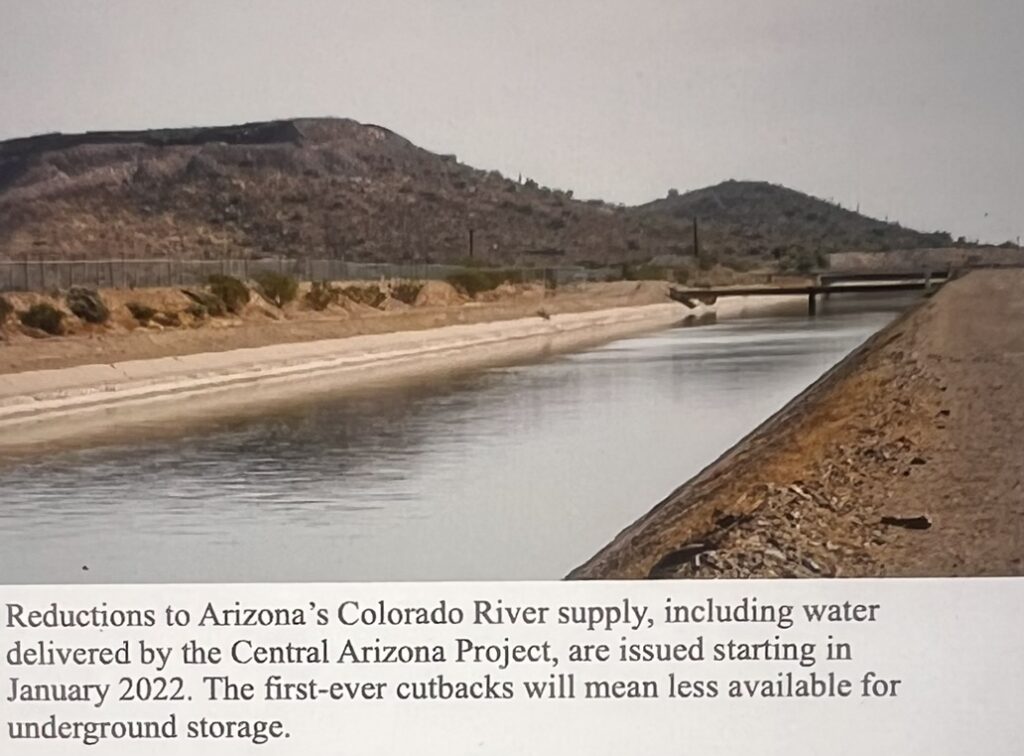
Ultimately, WIFA doesn’t expect to be able to afford all seven projects, but they’re all on the table for now.
“These are the scopes that actually dictate real work on the ground to give us real answers to the questions we all have, like, ‘How much is this water going to cost? Do we have willing exchange partners and willing stakeholders and partners in the communities where these projects are going to be built?’” WIFA Director Chelsea McGuire said.
The two projects in question were proposed by EPCOR, a utility provider based in Canada.
They would each bring in about 100,000 acre-feet of water to Arizona per year, but would take several years to implement. That’s enough water to serve roughly 600,000 single-family homes.
The two proposals WIFA discussed this week involve potable reuse and groundwater storage.
The plans rely on California and Mexico trading the cost of infrastructure for a share of Colorado River water.
Neither California nor Mexico have said they’ll agree to that yet In other words, they have substantial leverage over Arizona in these negotiations.
Water Storage Project
This project would involve Arizona paying to store excess water flows from the Sacramento and San Joaquin rivers and tributaries via the California State Water Project in exchange for some of California’s share of Colorado River water.
The project hinges on California being willing to partner with Arizona and make the “paper exchange” for Colorado River water, an increasingly precious commodity.
With Colorado River negotiations ongoing, it looks like Arizona, Nevada and California will take steep cuts to their shares of the river.
McGuire said WIFA is in discussion with some stakeholders in California, but has no commitments from the state so far for any long-term augmentation projects.
WIFA and EPCOR aim to confirm “stakeholder and partner interest” within the next nine months.
South Bay Potable Water Reuse Project
There is an existing South Bay International Water Treatment plant in southern California close to Mexico. It treats waste from Mexico.
EPCOR’s idea is to expand an aqueduct and get that treated drinking water from southern California and move it southeast to be distributed in Mexicali.
In exchange, Arizona would receive a portion of Mexico’s Colorado River water supply, through another paper exchange.
Another option EPCOR is exploring is building a pipeline straight to Arizona.
Outstanding questions
Arizona is still somewhat early in the process of implementing either of these ideas, or five other augmentation proposals that are still being considered.
At the earliest, the state likely won’t see a drop of water from any of the projects for 10 years.
No one knows how much the state will have to spend to make these projects a reality, or where all that funding will come from.
Chairman Jonathan Lines said seeking federal grants is certainly on the table.
The cost of the water these projects ultimately yield is unknown. It is expected to be more expensive than the water Arizonans currently pay for and receive through the Central Arizona Project.
“We don’t have a number like that. I think it’s safe to say it would be more than $300 an acre-foot that’s being paid for CAP Colorado River water today, and watch what happens to that price when their deliveries get cut in half,” WIFA board member Ted Cooke said.
As for at what point the price of water becomes cost-prohibitive, McGuire said that’s a question for the providers they’re working with.
“We’re asking them those questions at the same time. Source:KJZZ
4. A New Colorado River Plan Is Heading For Arizona Lawmakers. Do They Have The Power To Change It? There’s a new plan for sharing water from the Colorado River, and it means big cutbacks for cities in the Phoenix and Tucson areas. Now that the federal government has put the plan in ink, it will soon affect the amount of water that flows to cities and farms across the West.
It comes after years long negotiations between the seven states that use the Colorado River’s water. Arizona sent a delegate to those talks who helped shape the plan. But, thanks to an old quirk of Arizona law, there may be one more step before the plan becomes a reality.
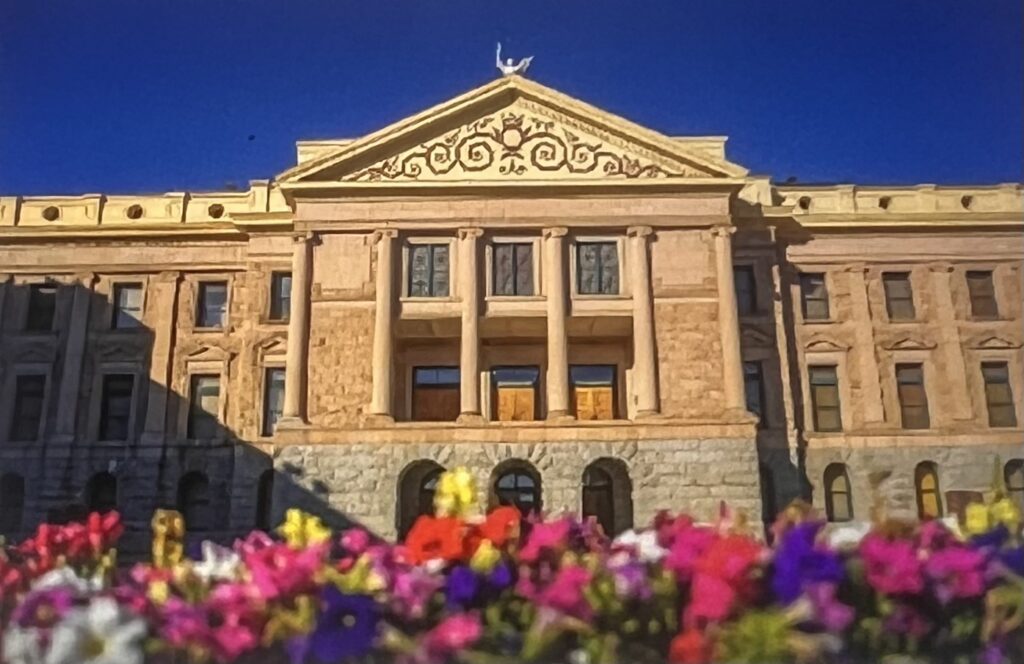
Arizona is the only basin state where the Legislature has a chance to sign off on Colorado River plans.
There’s one obscure, vague sentence of Arizona law from 1980 that could have an impact on present day water negotiations. It could bring state lawmakers together this summer to consider — and maybe vote on — the next chapter of the Colorado River.
However, the details of that process are murky. What exactly are lawmakers being asked to do, and how much power do they actually have? KJZZ set out to find answers.
How did we get here?
When Arizona and six other states first set out to write region-wide laws for managing the Colorado River, the West looked a lot different. The city of Phoenix had a population of about 30,000 people. Parts of the Valley that are now lined with suburban streets were largely farmland and desert.
In 1922, delegates from each of the seven states that use the Colorado River convened near Santa Fe, New Mexico, and wrote up rules to govern how its water would be shared. In the century-plus since that first agreement, called the Colorado River Compact, the West has changed and so have the rules for sharing water.
States and the federal government have layered new laws on top of that 1922 document, gradually adapting river management strategies as water supply and water demand evolved. But one thing has remained relatively constant — major, region-wide changes to Colorado River management are primarily decided by seven individuals representing each of those states.
Those state delegates don’t act alone. They consult with cities, farms, politicians and tribes on their way to the negotiating table.
So it stands out that Arizona, and only Arizona, has one extra layer to make those decisions official.
That layer became a reality in 1980.It exists as a 36-word statute that was part of the Groundwater Management Act.
“An agreement entered into between the director and the United States or a state or government involving a sovereign right or claim of this state is not effective unless approved by the legislature by concurrent resolution,” the statute reads.
Rita Maguire has thought a lot about it. She served as director of the Arizona Department of Water Resources from 1993 to 2001, making her the state’s main negotiator for the Colorado River — one of those seven delegates.
She still works as an attorney and describes water law as “a passion.”
Maguire said the statute wasn’t originally designed to deal with the Colorado River at all, just provide a broader check on the power of the state agency she used to direct.
“The reality is, when the Legislature adopted the language in this particular statute, it was to keep a balance between state agencies and the Legislature,” Maguire said. “Beyond that, they weren’t at all contemplating Colorado River issues.”
What can the Legislature actually do?
The statute, decades old and vague, leaves a lot to interpretation. Even though it is frequently mentioned during conversations about the Colorado River, Maguire said, it can be hard to tell exactly how much power it gives Arizona lawmakers.
“No one has a clear understanding of what it means, because it’s never been tested,” she said.
Maguire said the Legislature has not attempted to revoke any Colorado River plans put forth by Arizona’s negotiator, so it would be “speculation” to guess what would happen if they did so this time around.
To get a clearer sense of what power the Legislature might wield, experts said, it can be helpful to focus on what specific water policy they are voting on.
New rules for managing the Colorado River are, ultimately, a decision of the federal government. Historically, the seven states agree on a plan for sharing water, then the federal government takes those plans and sets them into action at the massive reservoirs and dams along the river operated by the Bureau of Reclamation.
Rhett Larson, a professor of water law at Arizona State University, said Arizona lawmakers do not have the power to revoke that federal plan, even if they vote to oppose it.
“The federal government couldn’t care less if the state Legislature approves or disapproves,” he said.
A different kind of agreement, though, might fall under the Legislature’s purview.
Arizona, California and Nevada have signed a deal with one another to make big cutbacks to their take from the Colorado River. It is designed to work alongside the new federal plan and soften the blow of steep mandated cutbacks by spreading the pain of water reductions across three states, instead of allowing them to fall disproportionately on the Phoenix area.
Larson said there will probably have to be a special session of the Arizona Legislature to approve that agreement.
Finally, there’s a third thing that legislators can vote on — how to make water cuts within Arizona. This, Larson said, is the area where they may wield the most power.
If lawmakers all gather in a special session to approve Arizona’s role in a multi-state agreement, they may use the meeting to tweak state laws that make it easier for Arizona to adapt to a future with less water from the Colorado River.
Larson posed a hypothetical scenario for lawmakers.
“We’re going to go ahead and approve the deal because we feel like we don’t have any other choice or any better option,” he said. “But as long as we’re all in the room, how about we make the following changes to groundwater management to respond to less Colorado River water?”
Larson said that, as opposed to a vote on a big multi-state agreement, is “the more likely and the more interesting outcome.”
How will lawmakers vote?
If lawmakers gather for a special session, they will be making decisions about the future of Arizona at a time of deep political divisions. Their stances could influence the direction of water use across the state for years.
Democratic Gov. Katie Hobbs said she hopes lawmakers will come together from across the political spectrum for this vote without straying into other unrelated water policy issues.
“I think that it is in the best interest of Arizona to focus on that [the deal] and not use a special session needed for ratification to kind of delve into a whole bunch of other water issues,” Hobbs said.
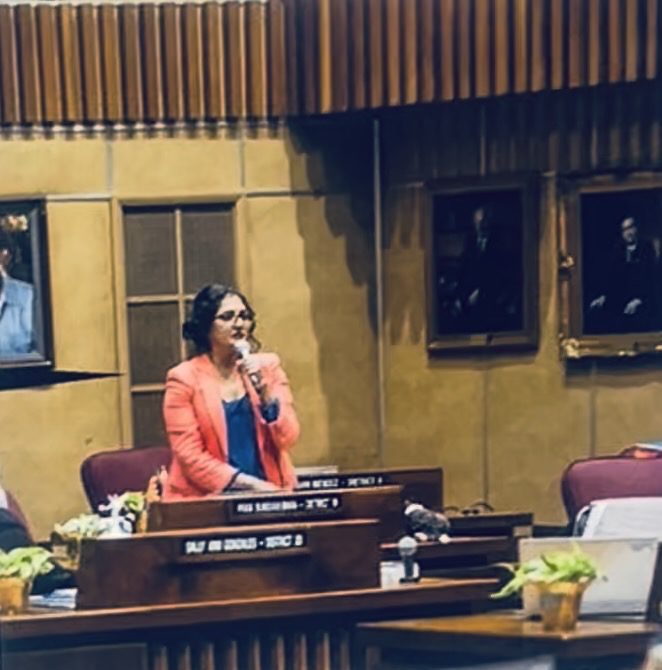
Sen. Priya Sundareshan (D-Tucson) said this is the time to be more restrictive of Arizona’s groundwater resources, not to allow for more groundwater pumping to mitigate cuts.
“The magnitude of the Colorado River consequences are finally hitting here, so it’s just more important than ever that we do not weaken our own groundwater management. We still have a great need to strengthen it there’s still a lot of loopholes that remain,” she said.
The process of divvying up water use could fracture caucuses.
Rather than this being a partisan issue, it could create a divide between rural and urban representatives — since lawmakers won’t want to vote for a proposal that makes their legislative district suffer from cuts.
“When we do have to figure out which users take more cuts than others, I think that’s when we’ll start to see the controversy and the concerns and perhaps some increased fighting occur,” Sundareshan said.
“There was a sheet that’s handed out by [GOP] leadership that’s talking about, ‘Oh no, we don’t want this to split the caucus and put the districts against each other,’” he said. “Meanwhile, all the members in the rural districts are trying to form their own negotiating party to deal with their own Colorado River stuff.”
As for the likelihood that the Legislature will be able to vote yes, no one is confident in the answer..
Copyright 2026@EnviroInsight.org
