
- Water Conservation Program Provides Free Water-Saving Makeovers. The City of Flagstaff’s Water Conservation Program is holding educational and consultative events throughout April to promote water conservation awareness, including offering free resources and in-home repairs with water efficiency makeovers.
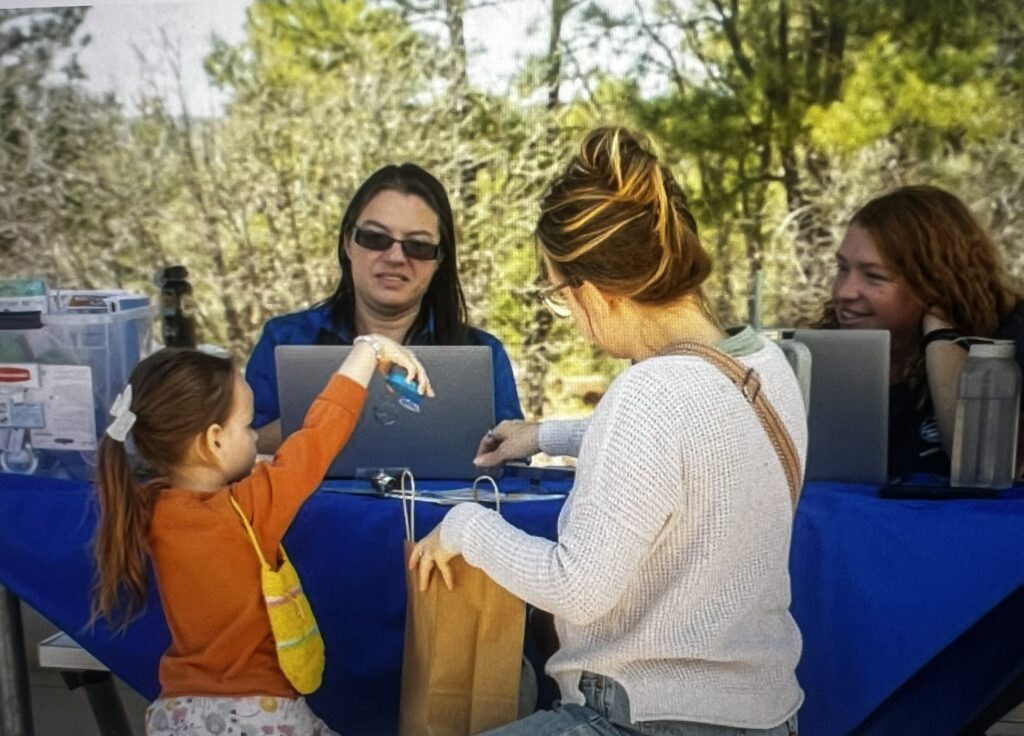
The makeovers are an effort to curb water use in the city by providing free home consultations, tips for saving water, low-flow faucets and plumbing repairs to residents.
Arizona Gov. Janet Napolitano first recognized April as Water Conservation Awareness Month in 2008, and Flagstaff’s Water Conservation Program has been operating in the city’s residential and commercial spaces since 1988.
Emily Melhorn, water conservation specialist for the City of Flagstaff, staffed the April 11 makeover event from a ramada in Buffalo Park.
Melhorn said despite giving out free services to its residents, the city benefits long-term from reduced water usage by saving the energy pumping from the aquifer. Since the program’s creation, Flagstaff has gone down to the lowest water usage per capita in Arizona.
“Really, it is the most cost-effective thing to do because to go find another water source is incredibly expensive,” Melhorn said. “The infrastructure for that, even us trying to create another well to be able to pump more water out of our aquifer, is a multi-million-dollar prospect.”
The program had mostly taken the form of ordinance change, Melhorn said, until a drought in 2002 convinced the city it needed dedicated water conservation efforts supported by full-time staff.
The City of Flagstaff began to value water conservation enough to opt into the Adequate Water Supply. The City of Flagstaff began to value water conservation enough to opt into the Adequate Water Supply Designation in 2011, demonstrating Flagstaff’s plan of sustainable water usage for the next hundred years, despite facing no official requirement to do so.
“Our city has been very forward-thinking on conservation,” Melhorn said. “The City of Flagstaff does not have the population where it’s required to have a long-term plan for water, but we’ve chosen to do it anyway. We have voluntarily entered into that. So, we make sure that the water that we are taking from our aquifer, that we’re doing it at a sustainable rate, that we’re not taking too much.”
The 2024-25 winter season was the seventh driest ever recorded in Flagstaff, and lack of snowfall has made an immediate impact on water supply and increased the need to save water.
Melhorn said when there is less snowpack, Flagstaff residents rely more on the aquifer, which involves an energy-intensive operation to harvest groundwater from beneath a layer of hard bedrock.
“Imagine millions of gallons a day being pushed 1,800 feet through bedrock,” Melhorn said. “You kind of get the sense of the amount of energy, and just how expensive it is to get that water into people’s homes.”
The home makeovers are a part of a larger effort to couple the Water Conservation Program with general Earth Day celebrations and get people interested in looking at their water usage, Melhorn said.
Navajo Tribe member Doris Brodie attended the makeover event and said she planned to implement the low-flow sink faucets and shower heads upon getting home.
“With everything going up through inflation, any way to save money we’re definitely doing,” Brodie said.
The Water Conservation Program focuses on educating residents about living strategies to reduce water usage, including offering workshops and giving out educational materials that can help them save water in ways they may not have expected.
Brodie said besides the financial savings, her Navajo heritage taught her water should be respected as a vital part of the environment.
A banner from the Flagstaff Water Services displays under a patio near the trail at Buffalo Park for their Water Conservation Program, April 11. Various events are held to promote ways to reduce water usage for water awareness month.
“We’ve always been taught that way back,” Brodie said. “I was knee-high, and I was raised around the Page area. Before Page was even there, we were there. We know about all that as Native Americans.”
The first line of action in most makeovers begins with giving out low-flow faucets, Melhorn said, and it’s important to the team to make sure they not only save water but perform satisfactorily.
All the equipment given to residents by the Water Conservation Program are WaterSense-certified products, meaning they conform to the Environmental Protection Agency criteria for water flow rate.

“We purchase those and make sure that’s what we recommend,” Melhorn said. “Because it’s not really going to help if somebody puts on a new shower head and it’s just a tiny little trickle, and they’re like, ‘This is awful, water conservation doesn’t work,’ and then they get rid of it. So, for us, it is efficiency, but it’s also performance standards that we take very seriously.”
The Water Conservation Program will hold two more makeover events on April 28 and 29, which can be found on the city website. Flagstaff residents can also reach the program through email for more information on water-saving resources or tracking their home water usage.Source: JackCentral.org
2. Saving Critical Species Of Insect: BEES,. It’s The Time of Year to Plant Plant and Harvest Garden Fruits And Vegetables. Weed and bug control can be a problem when done by hand. Many run to herbicides and pesticides that kill the bees we need to produce the food we eat. What foods do the bees help produce? Here’s a partial list:
| Agave (Tequila) | Current (Black and Red) | Prunes (all varieties) |
| Alfalfa | Dates (all varieties) | Pumpkin (all varieties) |
| Almonds | Egg Plant (all varieties) | Quince |
| Allspice | Elderberry | Rape Seed (Canola oil) |
| Amaranth | Fennel | Raspberry |
| Apple (all varieties) | Flax | Rocket Salad |
| Apricot | Figs (all varieties) | Rose Hips |
| Arugula | Garlic(all varieties) | Saffron |
| Asparagus | Gooseberry | Savoy Cabbage |
| Avocado | Grape (all varieties) | Sesame (seed and oil) |
| Bannana | Guar Bean | Star Fruit |
| Beans (all varierties | Guava | Strawberry (all varieties) |
| Beets (all varieties) | Huckleberry | Squash (all varieties) |
| Blackberry | Jerusalem Artichoke | Sunflower (all varieties) |
| Blueberry (all varieties) | Kale (all varieties) | Tomatoes (all varieties) |
| Bok Choy | Kiwi Fruit | Turnip |
| Boysenberry | Kolhrabi | Watermelon (all varieties) |
| Brazil Nut | Loquat | |
| Broccoli (all varieties) | Macadamia Nut | |
| Brussel Sprouts | Mangoes | |
| Buckwheat | Maple Syrup (Sugar Maple Tree) | |
| Cabbage (all varieties) | Mint (all varieties) | |
| Carrots (all varieties) | Mustard | |
| Caraway | Napa Cabbage | |
| Cardamon | Nectarines (all varieties) | |
| Canteloupe (all varieties) | Okra (all varieties) | |
| Cashews | Olives (all varieties) | |
| Cauliflower (all varieties) | Onions (all varieties) | |
| Celery | Papaya | |
| Cherries (all varieties) | Parsley (all varieties) | |
| Chestnut | Passion Frut | |
| Citrus (all varieties) | Peaches (all varieties) | |
| Cocoa | Pears (all varieties) | |
| Coconut | Peppers (all varieties) | |
| Coffee (all varieties) | Persimmon | |
| Collard Greens | Plums (all varieties) | |
| Coriander | Potatoes (all varieties) | |
| Cotton |
| Cucumber (all varieties) | Prickly Pear Cactus |
The chemical class of Neonicotinoids dissolve in water, and easily make their way into waterways via agricultural runoff, Zayed said. Flowers miles away from a farm can take up the chemicals, which seep into the stems, leaves, pollen and nectar. So Zayed’s team of researchers looked for the presence of the neonicotinoids on dead bees, forager bees, nurse bees, larvae, pollen and in nectar.
They found a combination of herbicides, fungicides and pesticides, including a handful of neonicotinoid chemicals. To their surprise, neonicotinoids were mostly detected on pollen from plants other than corn — willow trees, clovers and wildflowers — located near the crop fields. Source: PBS
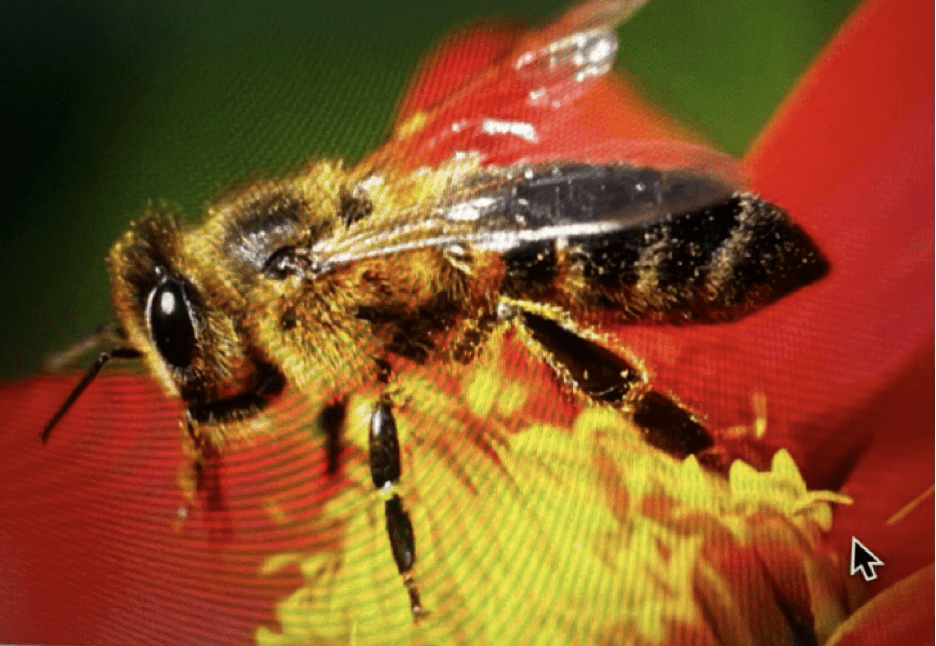
Bees consume pollen, nectar and water to survive. All are potential sources of pesticide exposure. In addition, bees may be exposed to pesticides enroute to collect these resources, in dusts or liquids suspended in the air as they fly through it. Indiana is a heavily agricultural state, and bees may be attracted to a crop that is in bloom, or may be attracted into treated crop fields by the presence of blooming weeds even though the crop itself is not in bloom. Dandelion, wild mustard, white clover, yellow rocket, sweet clover, milkweed, goldenrod, and aster blossoms all attract bees and are often present in areas beside crop fields, ditches, or roadsides. Planting of corn and soybean seed, typically treated with neonicotinoid insecticides, can lead to bee kills as well when bees fly through the dust that arises during planting with pneumatic planting equipment. Bees will sometimes forage in field crops when these are producing pollen, including field corn and soybeans. When bees are killed by pesticides it is often because the product drifted directly onto the bees or onto flowers that the bees are feeding on. The recent popularity of systemic insecticides, primary neonicotinoids, however, have led to new exposure routes. Uptake of contaminated soil water by both crop and non-crop plants is a new and important route for exposure as well – many types of pollen from crops and non-crops alike has been found to be contaminated with pesticides. Contaminated water sources are also a culprit, as bees seem to favor ponds, wheel ruts and mud puddles for their drinking water.
TABLE 1. HIGHLY TOXIC PESTICIDES. THIS GROUP INCLUDES
MATERIALS THAT KILL BEES ON CONTACT DURING
APPLICATION AND FOR ONE OR MORE DAYS AFTER TREATMENT.
BEES SHOULD BE MOVED FROM THE AREA IF HIGHLY TOXIC
MATERIALS ARE USED ON PLANTS THE BEES ARE VISITING.
| Pesticides by Common Name | Pesticides by Trade Name |
| abamectin (Agri-Mek, Avid) | Actara, Platinum, FarMore (thiamethoxam) |
| acephate (Orthene, Address) | Admire Pro (imidacloprid) |
| bifenthrin (Capture, Brigade) | Agri-Mek (abamectin) |
| carbaryl (Sevin) | Ambush, Pounce (permethrin) |
| carbofuran (Furadan) | Ammo (cypermethrin) |
| chlorpyrifos (Dursban, Lorsban) | Apollo (clofentezine) |
| chlorethoxyfos (Fortress) | Asana (esfenvalerate) |
| clofentezine (Apollo) | Avid (abamectin) |
| clothianidin (Belay, Poncho seed treatment) | Baythroid (cyfluthrin) |
| cyfluthrin (Baythroid) | Belay (clothianidin) |
| cyhalothrin (Warrior) | Capture, Brigade (bifenthrin) |
| cypermethrin (Ammo) | Cruiser seed treatment (thiamethoxam) |
| deltamethrin ( Delta Gold) | Cygon, Dimethoate (dimethoate) |
| diazinon (Diazinon, Sprectracide) | DDVP (dichlorvos) |
| dichlorvos (DDVP) | Delta Gold (Deltamethrin) |
| dimethoate (Cygon, Dimethoate) | Delegate/Radiant (spinetoram) |
| emamectin (Proclaim) | Diazinon (diazinon) |
| esfenvalerate (Asana) | Dibrom (naled) |
| fenpropathrin (Danitol) | Lorsban (chlorpyrifos) |
| hexythiazox (Savey/Onager) | Envidor (spirodiclofen) |
| imidacloprid (Admire Pro) | Fortress (chlorethoxyfos) |
| indoxacarb (Avaunt) | Fury, Mustang (zeta-cypermethrin) |
| malathion (Cythion), low volume | Imidan (phosmet) |
| methamidophos (Monitor) | Lannate (methomyl) |
| methidathion (Supracide) | Mesurol (methiocarb) |
| methiocarb (Mesurol) | Monitor (methamidophos) |
| methomyl (Lannate) | Movento (spirotetramet) |
| naled (Dibrom) | Nexter (pyridaben) |
| novaluron (Rimon) | Orthene (acephate) |
| permethrin (Ambush, Pounce) | Poncho seed treatment (clothianidin) |
| phosmet (Imidan) | Proaxis (gamma-cyhalothrin) |
| pyridaben (Nexter) | Proclaim (emamectin) |
| spinosad (Tracer) | Rimon (novaluron) |
| spinetoram (Delegate/Radiant) | Savey, Onager (hexythiazox) |
| spirodiclofen (Envidor) | Sevin (carbaryl) |
| spirotetramet (Movento) | Spectracide (diazinon) |
| thiamethoxam (Cruiser, Actara, Platinum, FarMore) | Supracide (methidathion) |
| zeta-cypermethrin (Fury, Mustang) | Tracer (spinosad) |
| Warrior (lambda-cyhalothrin |
| Pesticides by Common Name | Pesticides by Trade Name |
| acetamiprid (Assail) | Acramite (bifenazate) |
| bifenazate (Acramite) | Assail (acetamiprid) |
| carbaryl (Sevin XLR formulation only) | Calypso (thiacloprid) |
| ethoprop (Mocap) | Confirm (methoxyfenozide) |
| malathion (Malathion) | Counter (terbufos) |
| methoxyfenozide (Confirm) | Entrust (spinosad) |
| oxamy (Vydate) | Esteem (pyriproxyfen) |
| phorate (Thimet) | Larvin (thiodicarb) |
| pyriproxyfen (Esteem) | Malathion (malathion) |
| spinosad (Entrust) | Mocap (ethoprop) |
| spiromesifen (Oberon) | Oberon (spiromesifen) |
| terbufos (Counter) | Sevin XLR (a specific carbaryl formulation) |
| thiodicarb (Larvin) | Thimet (phorate) |
| Vydate (oxamyl) |
TABLE 2. MODERATELY TOXIC PESTICIDES. THESE MATERIALS CAN BE USED WITH
LIMITED DANGER TO BEES IF NOT APPLIED OVER BEES IN THE FIELD OR THE HIVES
CORRECT DOSAGE, TIMING, AND METHOD OF APPLICATION ARE ESSENTIAL. THIS
GROUP INCLUDES:
| Pesticides by Common Name | Pesticides by Trade Name |
| acetamiprid (Assail) | Acramite (bifenazate) |
| bifenazate (Acramite) | Assail (acetamiprid) |
| carbaryl (Sevin XLR formulation only) | Calypso (thiacloprid) |
| ethoprop (Mocap) | Confirm (methoxyfenozide) |
| malathion (Malathion) | Counter (terbufos) |
| methoxyfenozide (Confirm) | Entrust (spinosad) |
| oxamy (Vydate) | Esteem (pyriproxyfen) |
| phorate (Thimet) | Larvin (thiodicarb) |
| pyriproxyfen (Esteem) | Malathion (malathion) |
| spinosad (Entrust) | Mocap (ethoprop) |
| spiromesifen (Oberon) | Oberon (spiromesifen) |
| terbufos (Counter) | Sevin XLR (a specific carbaryl formulation) |
| thiodicarb (Larvin) | Thimet (phorate) |
| Vydate (oxamyl) |
| Pesticides by Common Name | Pesticides by Trade Name |
| acetamiprid (Assail) | Acramite (bifenazate) |
| bifenazate (Acramite) | Assail (acetamiprid) |
| carbaryl (Sevin XLR formulation only) | Calypso (thiacloprid) |
| ethoprop (Mocap) | Confirm (methoxyfenozide) |
| malathion (Malathion) | Counter (terbufos) |
| methoxyfenozide (Confirm) | Entrust (spinosad) |
| oxamy (Vydate) | Esteem (pyriproxyfen) |
| phorate (Thimet) | Larvin (thiodicarb) |
| pyriproxyfen (Esteem) | Malathion (malathion) |
| spinosad (Entrust) | Mocap (ethoprop) |
| spiromesifen (Oberon) | Oberon (spiromesifen) |
| terbufos (Counter) | Sevin XLR (a specific carbaryl formulation) |
| thiodicarb (Larvin) | Thimet (phorate) |
| Vydate (oxamyl) |
TABLE 3. RELATIVELY NONTOXIC PESTICIDES. MATERIALS IN THIS GROUP CAN
BE USED WITH FEW PRECAUTIONS AND A MINIMUM OF INJURY TO BES. FUNGICIDES
ARE INDICATED BY AN “F”. THE LARGEST NUMBER OF MATERIALS ARE IN THIS
GROUOP WHICH INCLUDES, BUT IS NOT LIMITED TO:
| Pesticides by Common Name | Pesticides by Trade Name |
| allethrin (Pynamin) | Altacor/Coragen (chlorantraniliprole) |
| amitraz (Mitac) | Avaunt (indoxacarb) |
| azadirachtin (Neemix, Align) | Beleaf (flonicamid) |
| Bacillus thurgingiensis or Bt (Biobit, DiPel, Full-Bac, Javelin, MVP, etc.) | Belt (flubendiamide) |
| Bordeaux mixture – F | Biobit (Bacillus thuringiensis) |
| captan – F | Bordeaux mixture – F |
| chlorantraniliprole (Altacor/Coragen) | Captan – F |
| chlorothalonil (Bravo) – F | Confirm (tebufenozide) |
| copper compounds (Kocide) – F | Dimilin (diflubenzuron) |
| cyromazine (Trigard) | Dipel (Bacillus thuringiensis) |
| dicofol (Kelthane) | Dithane (zineb) – F |
| diflubenzuron (Dimilin) | Dithane M-22 (maneb) – F |
| etoxazole (Zeal) | Dithane M-45 (mancozeb) |
| fenpyroximate (Portal) | Dylox (trichlorfon) |
| flonicamid (Beleaf) | Fulfill (pymetrozine) |
| flubendiamide (Belt) | Full-Bac (Bacillus thuringiensis) |
| fluvalinate (Spur) | Javelin (Bacillus thuringiensis) |
| koalin (Surround) | Kelthane (dicofol) |
| mancozeb (Dithane M-45) – F | Kocide (copper compounds) – F |
| maneb (Dithane M-22) – F | MVP (bacillus thuringiensis) |
| metiram (Polyram) – F | Neemix, Align (azadirachtin) |
| pymetrozine (Fulfill) | Omite (propargite) |
| pyrethrum (nature) | Polyram (metiram) – F |
| sulfur – F | Portal (fenpyroximate) |
| tebufenozide (Confirm) | Pynamin (allethrin) |
| trichlorfon (Dylox) | Spur (fluvalinate) |
| zineb (Dithane) | Sulfur – F |
| Surround (kaolin) |
Source: Purdue University https://extension.entm.purdue.edu/publications/E-53/E-53.html
PLEASE THINK BEFORE YOU SPRAY!
Copyright: 2025 EnviroInsight.org
