
Daniel Salzler No. 1337 EnviroInsight.org Five Items December 19, 2025
—————Feel Free To Pass This Along To Others——————
If your watershed is doing something you would like others to know about, or you know
of something others can benefit from, let me know and I will place it in this Information .
If you want to be removed from the distribution list, please let me know.
Please note that all meetings listed are open.
Enhance your viewing by downloading the pdf file to view photos, etc.
The attached is all about improving life in the watershed through knowledge.
If you want to be removed from the distribution list,
please let me know. Please note that all meetings listed are open.
Check our website at EnviroInsight.org
1. MERRY CHRISTMAS!
…And A HAPPY NEW YEAR!

2. Arizona Bill Would Ban Fluoridation In Public Water Systems
Arizona lawmakers are debating Senate Bill 1019, which aims to ban the addition of fluoride and related chemicals in public water systems, potentially making the state one of the few to outlaw water fluoridation.
Arizona lawmakers are considering legislation that would prohibit any addition of fluoride to public drinking water systems statewide. Senate Bill 1019, introduced by Sen. Janae Shamp, would amend state statute to bar public water systems—and any political subdivision of the state—from adding “fluoride or any chemical compound that contains the fluoride ion” to drinking water.

Fluoridation is currently practiced by several Arizona municipalities as a public health measure to reduce tooth decay. Under the bill, chemicals such as fluorosilicic acid, sodium fluorosilicate, and sodium fluoride could no longer be used in any water that will be introduced into a public water system. The proposal does not alter utilities’ existing responsibilities under the Safe Drinking Water Act but adds fluoride to the list of substances explicitly prohibited.
If enacted, Arizona would become one of the few states to outlaw drinking water fluoridation. The bill will next move through committee hearings when the legislature convenes for the 2026 session. Source: https://www.waterworld.com/water-utility-management/news/55337949/ arizona-bill-would-ban-fluoridation-in-public-water-systems?o_eid=3813J1386478F1W&oly_ enc_id=3813J1386478F1W&rdx.ident[pull]=omeda|3813J1386478F1W&utm_campaign=CPS251121090&utm_medium=email&utm_source=WW+Weekly+News
3. Climate Change Is Stealing Rain And Snow From The Colorado River, New Report Says. In a collection of essays, leading Colorado River scientists say the basin is “dancing with deadpool ” and facing a dire future.
Leading scientists from around the Colorado River Basin, which spans parts of Colorado, six other Western states and Mexico, released Tuesday a collection of essays on the future water supply for 40 million people. In many ways, it’s bleak. Rainfall is low, river flows are down, reservoir storage is on the brink of depletion and groundwater is struggling, according to several authors in the Colorado River Research Group.
“We still don’t have a crystal ball, but the future is pretty dark,” Brad Udall, a member of the research group and a Colorado-based climate scientist, told The Colorado Sun.
The group, formed in 2014, includes leading scientists from around the basin and aims to share scientific insights into Colorado River system management.
Reservoirs that once held four full years of river flows are now more than two-thirds empty, one essay said.
A single dry year or two could push those massive reservoirs, Lake Powell and Lake Mead, into critically low levels where hydropower production, water deliveries, and physical conveyance of water downstream can no longer be assured — a scenario called deadpool.
Where has the rain gone?
One key challenge for the Colorado River Basin? Rainfall — or the lack thereof.
Since 1999, precipitation in the basin has dropped by 7% compared with the 20th-century average.
In some years, parts of the basin receive near-normal precipitation during the winter, but come spring only about half the usual amount of water makes it into springs and rivers.
Flows in the Colorado River have fallen, too. The 26-year average flow is 12.2 million acre-feet. That’s well below the 16.5 million acre-feet of water the states and Mexico have agreed to share on paper. One acre-foot roughly equals the annual water use of two to four households.
It’s not the basin’s first dry period. Historically, long periods of lower precipitation in the basin have swapped irregularly with periods of more rain and snow. Over the past 2,000 years, some of the basin’s drought periods have lasted as long as 80 years.
Some researchers point to these swings to say that periods of greater precipitation could be coming back to the Colorado headwaters.
Udall and co-author Jonathan Overpeck disagree.
“This new science tells us … these flows are not going to rebound,” Udall said. “Also on the table are future flow declines as it continues to warm and as precipitation potentially goes down.”
There’s natural variability, but human actions are also tipping the scales, studies show.
Human-caused greenhouse gas emissions lead to warmer temperatures. A warmer atmosphere holds more water. Snow melts earlier, and soils and vegetation lose more water during hotter seasons. Thirstier soils suck up more water before it can reach springs, rivers, reservoirs, farms and homes.
New studies also show that human-caused emissions are behind the decline in precipitation. Source: https://coloradosun.com/2025/12/12/climate-change-colorado-river-new-report/

4. Water Wisdom
5. Arizona Board Of Regents Approves $3M Grant To Strengthen Arizona Agriculture Amid Water Cutbacks. The Arizona Board of Regents has approved a $3 million Regents’ Grant to strengthen Arizona’s agriculture industry and advance sustainable farming practices.
The Arizona Department of Agriculture will work with the state’s three public universities to create a hub based in Yuma. The goal is to ensure long-term agriculture resilience and address challenges like groundwater depletion and resource scarcity.
Arizona Department of Agriculture Director Paul Brierley said the initiative will focus on developing solutions in three key areas: precision agriculture, soil health, and crop innovation.
“Those just haven’t been moving along fast enough,” Brierley said.
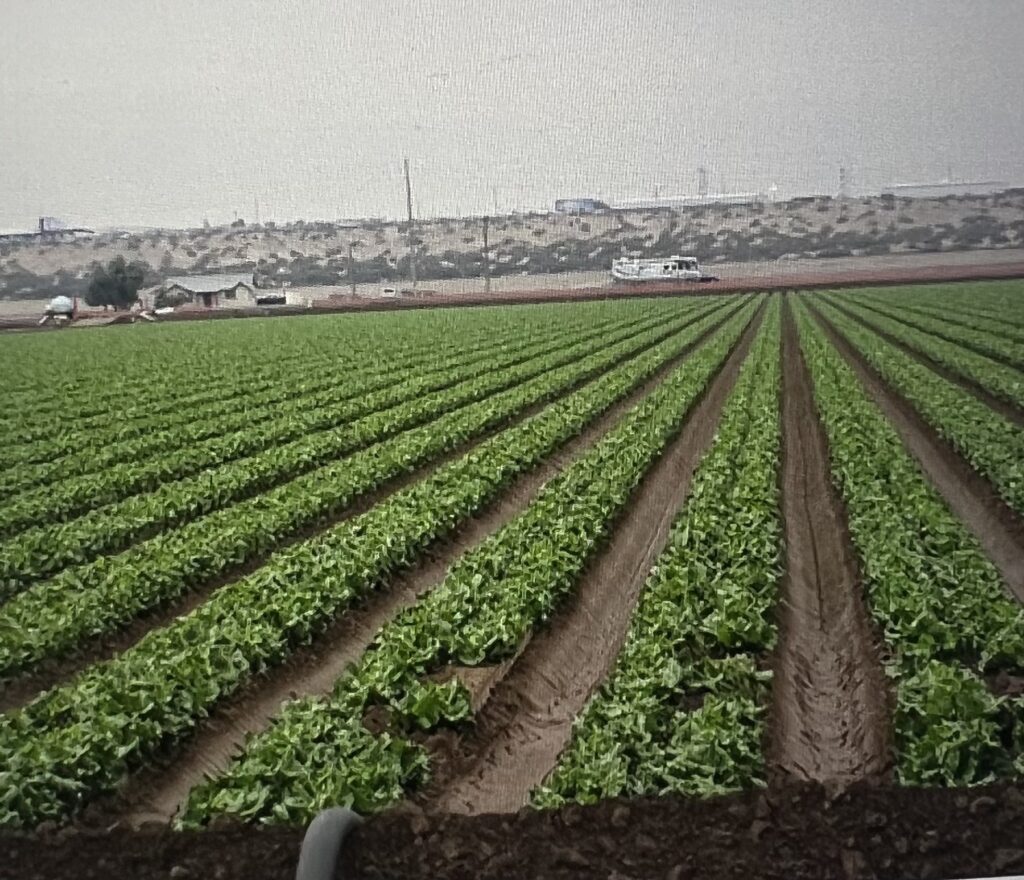
Brierley said Yuma is the perfect place to headquarter the research because Arizona State University, Northern Arizona University and University of Arizona all have existing programs in the city. About 90% of all the leafy vegetables grown in the U.S. from November through March are grown in and around the Yuma area, according to the Yuma County Chamber of Commerce.
“Yuma’s agriculture community knows how to tackle tough challenges, but we can’t do it alone. By working with our universities, we can bring new technology, research and ideas to the people who need it most,” Sen. Tim Dunn (R-Yuma) said. “Grant funding like this can help create long-term solutions and prepare the next generation of leaders. I applaud the Arizona Board of Regents for supporting this effort and helping build a stronger, more sustainable future for agriculture in Yuma.” Source: KJZZ https://www.kjzz.org/education/2025-12-08/arizona-board-of-regents-approves-3m-grant-to-strengthen-arizona-agriculture-amid-water-cutbacks
Copyright 2025 @ EnviroInsight.org
