
Daniel Salzler No. 1322
EnviroInsight.org Three Items September 5, 2025
—————Feel Free To Pass This Along To Others——————
If your watershed is doing something you would like others to know about, or you know
of something others can benefit from, let me know and I will place it in this Information .
If you want to be removed from the distribution list, please let me know.
Please note that all meetings listed are open.
Enhance your viewing by downloading the pdf file to view photos, etc.
The attached is all about improving life in the watershed through knowledge.
If you want to be removed from the distribution list,
please let me know. Please note that all meetings listed are open.
Check our website at EnviroInsight.org
1. Water Authority Entertains Six Proposals For New Water Sources In Arizona
Key Points:
- Three proposals involve creating desalination plants using ocean water
- State law will keep proposals confidential until contracts are announc
- The proposals come amid years of cuts to the Colorado River water supply
Three years after an obscure Arizona agency was tasked with finding new water supplies for the state, it has received six proposals from groups hoping to tap more than $375 million in state money to develop new water sources.
The proposals include three to create desalination plants using ocean water — likely from the Sea of Cortez in Mexico. But exactly what is being proposed — and how much it will cost — remains confidential. And the Water Infrastructure Finance Authority says state law will keep it that way until its board members award one or more contracts to move ahead with more detailed plans.
The board of the agency known as WIFA heard only the names of the companies or teams of companies making the proposals at their meeting last week. Ted Cooke, a board member who chairs the agency’s Long Term Water Augmentation committee, said he and other board members won’t learn more until they prepare to award contracts, which could happen as soon as October.
Instead, agency staff will review each submission confidentially to determine if they meet the requirements laid out by the board in its solicitation.
“Even the board members will not be involved in that evaluation,” Cooke told the board.
The three teams that made proposals either declined to provide details of what they want to build or did not respond to requests for comment.
The developments come while Arizona, which lost part of its Colorado River water supply in recent years, navigates more possible cuts as river flows continue to remain low. In addition, demand for groundwater in metro Phoenix prompted state water officials to halt many new housing developments as groundwater depletion remains an issue statewide.
“WIFA is the next stop for new water supplies as the existing water supplies that we have as a state are impaired, reduced or more, go away in some other, some other means,” Cooke said. “And that’s why this is so important.”
The initial contracts will not actually produce any water. Instead, they will task the companies with further developing their plans using some of the money the Legislature has given WIFA since 2022. And once they are awarded, all six proposals will become public.
The expanded role of obtaining new water supplies was originally to be funded with $1 billion over three years. However after the initial $333 million deposit in the augmentation fund in 2022, state budget woes and political decisions limited additional investments. That means WIFA will need to use some creative financing or other means to help support the huge private investments water suppliers will need to make to build massive new plants and pipelines to move the water into central Arizona.
WIFA solicitation documents show the state needs to obtain from 100,000 to 500,000 acre feet of new water in the next 5-15 years and could need as much as 1.5 million acre feet of new supplies by 2060. An acre foot equals about 325,000 gallons, enough water for three families for a year, according to the Arizona Department of Water Resources. For now, WIFA wants up to 500,000 acre feet of new water to be available within 10 years. The 2022 law envisions at least 75% of that water to come from out of state.
Four of the six proposals come from a Canadian company, EPCOR, a firm that currently supplies many Arizona municipalities with water and wastewater treatment.
It proposes a desalination plant and aims to develop three other sources. EPCOR contemplates treating wastewater, tapping surface water and using a third, unidentified source to provide new supplies. The board’s public announcement contains no information about that source.
The company has a broad reach but no experience building desalination plants.
Its sole shareholder is the city of Edmonton in the province of Alberta. EPCOR builds, owns and operates electrical and natural gas networks, water transmission and distribution networks and treatment facilities, and sewer and floodwater systems in Canada and the United States.
Another desalination proposal comes from a company called ZARETAW, LLC, led by an Israeli attorney. That lawyer, Erez Hoter-Ishay, pushed WIFA to approve an unsolicited desalination proposal for a plant on the Sea of Cortez to be built by an Israeli company, IDE Technologies, in 2022.
That proposal came shortly after the then-Gov. Doug Ducey and the Legislature approved the 2022 law expanding the mission of the once-obscure state agency to include finding new supplies to import into Arizona.
The unsolicited proposal was never acted on after it prompted questions from some lawmakers about backroom dealings.
Ducey had visited Israel numerous times during his eight years as governor with an eye on new water technologies. He called for Arizona to build a desalination plant in his 2022 state of the state address, his last as the state’s chief executive.
The cost of the proposed new plant would have been more than $5 billion and be privately financed, Hoter-Ishay told the WIFA board at the time. However, the development group needed Arizona to commit to buying all the water produced — whether or not the state needed it.
Hoter-Ishay was at the time working for IDE, an Israeli firm that has developed desalination plants since the 1960s in Israel, China, the U.S. and other countries. It runs plants in several countries.
In November 2023, ZARETAW and IDE responded to a request from WIFA with another proposal for a desalination plant in Mexico, along with a pipeline to bring the water to the Phoenix area. That proposal contemplated delivering at least 300,000 and as many as 1 million acre feet of water from Mexico to metro Phoenix through a 200-mile pipeline. The initial plant and pipeline construction would cost about $5.5 billion, with the state committing to buy the water for 100 years at a price that wasn’t outlined in the plan.
The third desalination proposal is from a partnership called the ACCIONA-Fengate Water Augmentation Alliance. There’s no other description of the group, but Acciona is a Spanish firm that develops those plants across the world.
Acciona and a construction firm won a contract last December to design and build a desalination plant in Carlsbad, CA. It already runs plants in Saudi Arabia, Australia and Florida, among others. Fengate Capitol is a private equity firm that specializes in infrastructure investment.
Once the board picks one or more of the proposals and awards the contracts to further develop their plans, it will wait for more detailed proposals and eventually could pick one or more of the projects to fund.
“So this is as much public information as we are allowed, essentially, to provide,” McGuire told the board. “But the questions you have obviously are valid, and that is the kind of information that the long term augmentation committee and then ultimately, the board will have before it makes decisions on these proposals,” she said. “You’re not going to be asked to make any decisions without seeing the information you need to make those decisions. It’s just not public information at this point.”
Board chair Jonathan Lines then asked McGuire to lay out the legal rules that bar the public release of more information now.
“I think it might be appropriate to explain why this is necessary,” Lines said.
“Because there’s, let’s be honest, everybody always expects that … there’s some backroom deal going on,” he continued. “And I know that’s not what’s happening here, but the controlled rollout of the information might appear to some (to imply that), so let’s just take the opportunity to say why we’re doing it this way and why it’s a good thing.”
“Because there’s, let’s be honest, everybody always expects that … there’s some backroom deal going on,” he continued. “And I know that’s not what’s happening here, but the controlled rollout of the information might appear to some (to imply that), so let’s just take the opportunity to say why we’re doing it this way and why it’s a good thing.”
McGuire then cited provisions of Arizona law and its administrative code that keep the procurement process confidential.
Cooke, for his part, said he was excited to be at this point just a year after the board approved the process for soliciting proposals. He said as the board moves toward evaluating and then approving actual projects, he can actually envision water coming out of a pipe in metro Phoenix.
“I’m very excited, if you can’t tell, and I never would have predicted this,” he said. “I’d hoped for this outcome, but I never would have predicted it.” Source: Bob Christie, Capitol Media Services//August 25, 2025
2. How Tucson’s Dry Monsoon Could Affect Groundwater Recharge. Tucson is experiencing one of its driest monsoons this year.
Tucson is experiencing one of its driest monsoons on record, and the parched summer comes directly on the heels of the city’s driest August to March period since official weather record-keeping began here in 1895.
Both the seasonal monsoons and winter storms that have been so sparse this year are critical for groundwater recharge in the Tucson basin, but the winter precipitation contributes most to yearly recharge, says Wally Wilson, water resources manager for Metro Water District.
“There is episodic recharge that is measurable along the major rivers when there’s a good (monsoon) storm event, but it dissipates quickly,” Wilson said. Winter rain and snow in the mountains is “much more significant with regard to the water table.
In comparison to winter storms, monsoon events are more sporadic and dispersed, and Wilson said they typically don’t generate the kind of slow, sustained rainfall that a winter storm front brings in. Saturation of rainfall is crucial to water recharge.
“Snowmelt in the rain in the mountains moves a lot slower and has opportunities to infiltrate more, and that makes it into the groundwater system more efficiently,” Wilson said. “Whereas, a one-square-mile downpour on a part of the city, a lot of that makes it into washes, but it’s not a long-lasting event where that water is in that wash channel for a long period of time and having more opportunity to infiltrate.”
In addition to volume and saturation of water, there are several other factors that prevent monsoon rains from permeating the water table as effectively, said Jennifer McIntosh, associate head of hydrology and atmospheric sciences at the University of Arizona.
“Much of our precipitation goes back up to the atmosphere through transpiration by plants and evaporation at the surface,” she said.
Without as many growing plants, winter rains are more easily absorbed into the soil, and into the water table. “If it’s been really dry over the winter, then that means the soils, come summertime, are really dry. So it takes several big monsoon storms in order to get recharge,” McIntosh said.
But that’s not to say monsoon rains don’t still play an important role in water recharge.2. How Tucson’s Dry Monsoon Could Affect Groundwater Recharge. Tucson is experiencing one of its driest monsoons this year.
Tucson is experiencing one of its driest monsoons on record, and the parched summer comes directly on the heels of the city’s driest August to March period since official weather record-keeping began here in 1895.
Both the seasonal monsoons and winter storms that have been so sparse this year are critical for groundwater recharge in the Tucson basin, but the winter precipitation contributes most to yearly recharge, says Wally Wilson, water resources manager for Metro Water District.
“There is episodic recharge that is measurable along the major rivers when there’s a good (monsoon) storm event, but it dissipates quickly,” Wilson said. Winter rain and snow in the mountains is “much more significant with regard to the water table.
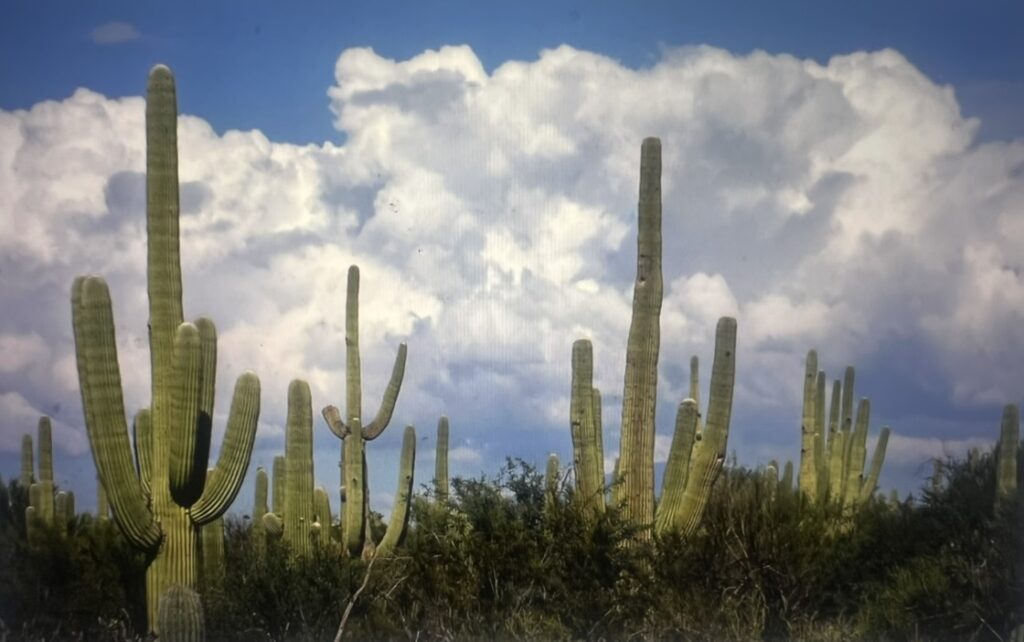
In comparison to winter storms, monsoon events are more sporadic and dispersed, and Wilson said they typically don’t generate the kind of slow, sustained rainfall that a winter storm front brings in. Saturation of rainfall is crucial to water recharge.
“Snowmelt in the rain in the mountains moves a lot slower and has opportunities to infiltrate more, and that makes it into the groundwater system more efficiently,” Wilson said. “Whereas, a one-square-mile downpour on a part of the city, a lot of that makes it into washes, but it’s not a long-lasting event where that water is in that wash channel for a long period of time and having more opportunity to infiltrate.”
In addition to volume and saturation of water, there are several other factors that prevent monsoon rains from permeating the water table as effectively, said Jennifer McIntosh, associate head of hydrology and atmospheric sciences at the University of Arizona.
“Much of our precipitation goes back up to the atmosphere through transpiration by plants and evaporation at the surface,” she said.
Without as many growing plants, winter rains are more easily absorbed into the soil, and into the water table. “If it’s been really dry over the winter, then that means the soils, come summertime, are really dry. So it takes several big monsoon storms in order to get recharge,” McIntosh said.
But that’s not to say monsoon rains don’t still play an important role in water recharge.
“A strong monsoon season definitely contributes to natural recharge,” Wilson said. “With a really good rain event where the Rillito was running for several days, you’ll see a bump in the water level that would rise and fall, but it’s a very localized little ribbon of recharge.
As McIntosh explained, the effects of the annual monsoon rainfall, and even precipitation from winter storms, on natural water recharge are seen most clearly along the city’s washes.
“The only places that we see recharge in the Tucson basin are along our major washes,” she said. “Once you get away from the washes, even just adjacent to them, the ground water is decades to hundreds to thousands of years old, so that water wasn’t recharged anytime recently and it’s not being affected by what’s happening seasonally.”
In short, no monsoon storm or record-breaking winter snowpack is going to fill up Tucson’s aquifer entirely, but specific areas still feel the direct impacts of yearly weather patterns and rainfall. (The city does artificially recharge its Colorado River allotment, brought to Tucson via the Central Arizona Project canal, through basins that let it seep into the ground. It is then pumped to provide drinking water.)
Localized areas along the washes are also where the impacts of Arizona’s ongoing megadrought are most obvious, McIntosh said.
“One example is Sabino and Tanque Verde; they flow into the Rillito. That’s an area of localized recharge where we see that recent water reaching the water table, and it’s in those locations that we see the effects of the megadrought,” McIntosh said. “We’ve seen this decline in water tables in wells in shallow alluvial aquifers in washes. That’s because of the megadrought.”
In 20 years, McIntyre said, the water level in one of the wells monitored by Pima County has dropped some 10 feet.
“And it’s been in a steady decline since the early 2000s,” she said.
According to McIntosh, the only time the water table of the well has risen recently was in 2021 after extreme monsoon storms.
Monsoon rainfall is more important than winter rain from the perspective of the ecosystem, another expert said.
“Because the ecosystem is under so much stress in the summer, the additional rainfall makes an enormous difference,” said Kathy Jacobs, director of the Center for Climate Adaptation Science and Solutions, and professor of environmental science at the University of Arizona. “Many plants and animals are also having a hard time. And in fact, if we lose the riparian areas or the areas along streams and washes, you lose the vast majority of the habitat for birds and fishes and so forth.”
Life is a delicate balance in the desert, and whether it’s winter storms or summer monsoons, every drop of water counts.
3. Why Do Our Fingers Wrinkle In Water? The answer has more to do with our nerves than skin. The skin on the palms of our hands and soles of our feet is unique, says Danilo Del Campo, a dermatologist at the Chicago Skin Clinic. It’s called glabrous skin, a name from the Latin word glaber, meaning “bald.” This hairless surface plays an essential role in sensing our environment. It is packed with receptors that transmit signals from our skin into electrical impulses that our brain can read. Glabrous skin is not unique to humans. It makes up the unusual protuberances that the star-nosed mole uses to sense its environment and the upper bill of the platypus. An analysis of glabrous skin in rats found that the ratio of fast-conducting to slow-conducting nerves was three times higher in glabrous skin than in hairy skin.
The sympathetic nervous system gets our body ready for physical action. In the heart, it increases pump rate and contraction force. In the eye, the same system dilates the pupil, allowing more light to enter. These functions are often referred to as our “fight-or-flight” responses. Research in the 1970s identified that it was damage to these sympathetic connections in the median nerve that stopped wrinkling. Dipping a hand in warm water was recognized as a valuable test for this type of nerve damage.

Scientists settled this question in a 2021 study. Nick Davis, a researcher at Manchester Metropolitan University, organized an experiment at the British Science Museum. Davis assessed museum visitors’ ability to grip wet and dry objects. Then, he asked them to immerse their hands in warm water. Once their fingers had wrinkled, he tested their grip again. Anyone who has fought to grab a bottle of shampoo during a shower will know that picking up wet objects requires more force than dry objects. Davis’s analysis showed wrinkled fingers gripped wet objects more easily than wet but unwrinkled fingers. “Evolutionarily speaking,” says Taglia, “perhaps there’s an advantage for our ancestors that they could grab fish from bodies of water.” Our shoeless forefathers would also have benefited from being able to ford streams or rivers without slipping through their wrinkly feet, she says.
It’s a fortunate coincidence that a feature carved by evolution millennia ago now benefits diagnostic medicine today. “I like to say that the skin is the window to your entire body,” concludes Del Campo. Source: https://www.popsci.com/science/why-do-fingers-wrinkle-in-water/
Copyright 2025 @EnviroInsight.org
