
Daniel Salzler No. 1321
EnviroInsight.org Five Items August 29, 2025
—————Feel Free To Pass This Along To Others——————
If your watershed is doing something you would like others to know about, or you know
of something others can benefit from, let me know and I will place it in this Information .
If you want to be removed from the distribution list, please let me know.
Please note that all meetings listed are open.
Enhance your viewing by downloading the pdf file to view photos, etc.
The attached is all about improving life in the watershed through knowledge.
If you want to be removed from the distribution list,
please let me know. Please note that all meetings listed are open.
Check our website at EnviroInsight.org
- Tucson City Council Approves New Rules For Large Quantity Water Users. TUCSON, Ariz. (13 News) – The Tucson City Council passed new rules to establish anordinanceregarding the large quantity water user program.
It has to do with water service applications for exceptionally large quantity water users within the Tucson Water service area.
At this time, no single customer within Tucson Water uses enough water on a monthly basis to be considered a large quantity user.
Councilman Paul Cunningham of Ward 2 said they’re planning for future customers – such asdata centers – whose water usage might significantly exceed average consumption levels.
We’ll probably have to tweak it, and make some minor changes here and there down the road, or even some major changes, but right now, we need to make this happen, and we need to do it with urgency,” Cunningham said.
Any large quantity customers will be expected to submit a conservation plan to the Tucson Water director.
They would then give it to the mayor and council for approval.
Mayor Regina Romero also said the move is necessary, especially when it comes to data centers in Tucson, but that there will likely be many more guardrails following this move that go beyond water conservation.
“This is the first step, it’s an immediate guardrail and protection for our water resources,” Romero said. “Any land use, code changes and other ordinances, we will be working on with the community, to bring something that makes sense for Tucsonans.”
Romero said they will revisit the issue with the community in 6 months, which many members of the community, like Tucson resident Vivek Bharathan, voiced support for during the meeting.
“I also appreciate the urgency to bring about an immediate ordinance so that these corporations can consume however much power they can pay for,” Bharathan said.
Any business violating their water usagerules will face significant costs and could be shut off from Tucson’s Water supply. Source: 13 News, Tucson.
2. Coalition Forms To Protect Arizona’s Water Supply. The bipartisan group of Arizona mayors is teaming up after Arizona once again got an 18% reduction in water for 2026 and negotiations for sharing the future of the Colorado River continue.
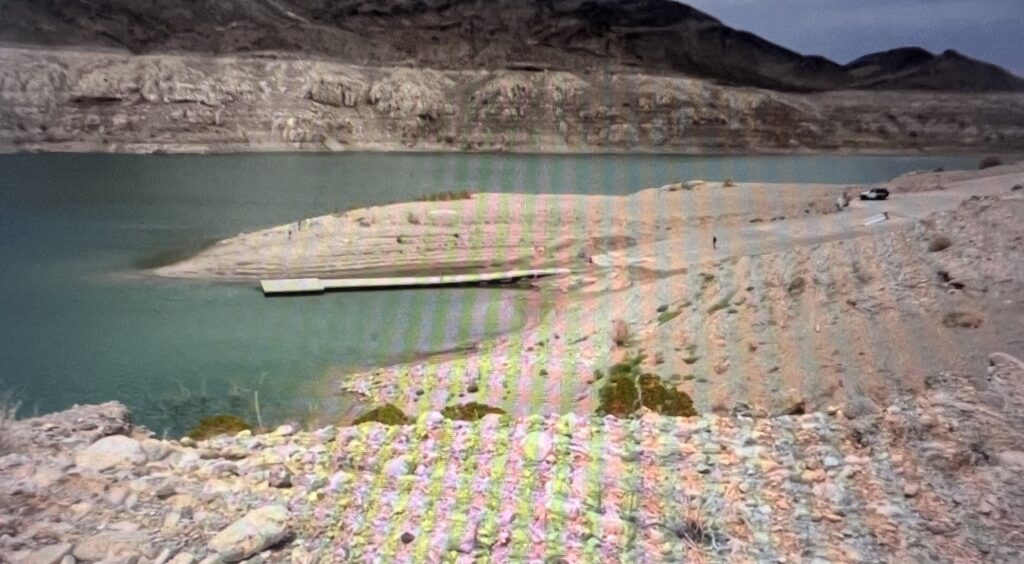
Arizona mayors are confronting one the state’s most pressing challenges, securing its water supply amid record drought conditions and increasing demand.
As negotiations continue over how the Colorado River will be shared among western states, Arizona leaders are working to prevent major cuts to the state’s water allocation.
The severity of the situation has prompted 22 mayors to form a new group called the “Coalition for Protecting Arizona’s Lifeline” focused on keeping Arizona’s share of Colorado River water.
“We have to work together to protect Arizona’s water,” said Mesa Mayor Mark Freeman. “We cannot afford additional reductions of the Colorado River; the consequences of this would be very grave.”
The Central Arizona Project, or CAP, holds junior water rights on the Colorado River, meaning the state has been the first to face cuts during the ongoing drought. Now, Arizona is facing the possibility of even deeper reductions.
“This must be a basin-wide commitment rooted in collaboration and mutual respect,” said Surprise Mayor Kevin Sartor. “In Surprise and across Arizona, our communities are water smart.”
The current agreement governing how Colorado River water is shared among western states expires next year, and negotiations for a new deal are ongoing.
“We’re here today because we’re concerned with how it’s going,” said Phoenix Mayor Kate Gallego. “Our residents want to be part of the solution.”
The Central Arizona Project diverts nearly 500 billion gallons of water annually from the Colorado River to Phoenix and Tucson. However, that number could be significantly reduced in the future as drought conditions persist.
Central Arizona Project General Manager Brenda Burman hopes the new coalition will encourage conservation efforts across all water users.
“It’s time for others to step up. We’ve seen our partners in California, Nevada do that, Mexico is cutting its water this year,” Burman said. “We say to the other water users on the river, everyone must be part of this solution, everyone.” Source:ABC 15 News
3. Officials Predict Lake Mead Will Hit Its Lowest Water Levels Ever In 2 Years. By the end of 2025, the bureau estimates that Lake Powell’s water levels will be 34 feet lower than the previous year, hitting 3,538 feet in elevation by Jan. 1. That’s 162 feet below Lake Powell’s full operating capacity and 48 feet above the water level needed for Glen Canyon Dam to continue producing hydropower.
By next spring, the bureau’s projections put water levels for Lake Powell at elevation 3,519 feet, which is approaching the “danger zones for electricity generation,” said Kyle Roerink, executive director of the watchdog organization Great Basin Water Network.
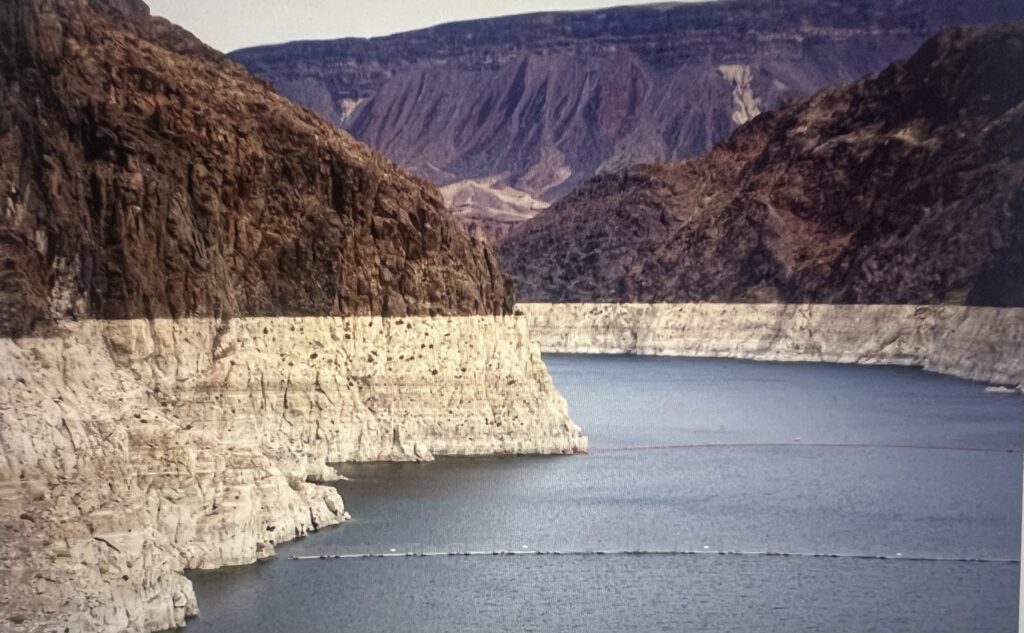
The outlook for Lake Mead is even more stark. By the end of the year, Lake Mead’s water levels are expected to drop to elevation 1,056 feet, which is 7 feet lower than last year, and the decline continues over the next two years. By July 2027, the farthest month out on the bureau’s timeline, federal officials predict the water will be at elevation 1,037 feet, Lake Mead’s lowest ever, eclipsing the record set in 2022, when Lake Mead’s water levels dipped to elevation 1,041 feet.
The report led the bureau to cut Arizona and Nevada’s shares of water from the Colorado River by 18% and 7%, respectively. Mexico will also lose 5% of its water allotment.
The bureau did not call on California to reduce its water usage, however. California has already committed to decreasing its water use from the Colorado River. States located in the Colorado River’s upper basin — Colorado, Wyoming, Utah and New Mexico also avoided cuts to their water supply.
The outlook comes during an “unprecedented” drought, the bureau states in a news release issued Friday, and a critical time for negotiations over the future of water usage in the West.
This round of cuts “underscores the importance of immediate action to secure the future of the Colorado River,” said Bureau of Reclamation Acting Commissioner David Palumbo in the news release.
The Colorado River’s 1,450 miles provide water to 40 million people. Several agreements that guide how water rights are distributed among seven states and Mexico expire at the end of 2026. What happens next has been the focus of tense, ongoing negotiations between federal agencies and the seven states. Last week’s outlook underscored the pressing need for resolution. Scott Cameron, the Department of Interior acting assistant secretary for water and science, said in Friday’s news release that “we cannot afford to delay” a consensus agreement between all seven states in the Colorado River Basin.
In the meantime, lower basin states — California, Arizona and Nevada — are already making big cuts to their water usage. The bureau’s latest study shows that “2026 will mark the third consecutive year the Lower Basin and Mexico receive less than 7.5 million acre-feet from Lake Powell — a rare occurrence seen only five times since the reservoir first filled, four of them in just the past five years,” said JB Hamby, chairman of the Colorado River Board of California, in a statement emailed to SFGATE. The board represents California in Colorado River negotiations.
Even though it wasn’t called on to make cuts, California is a year ahead of schedule to meet its commitment to conserve 3 million acre feet of water, Hamby said. He also put pressure on the upper basin states. Hamby said all seven states — including those in the upper basin — need to shoulder some of the responsibility.
“We have to ensure that every part of the Basin takes responsibility for protecting the river’s future. There is no justification for inaction — or especially growing demands — in the face of the challenges we see today and know the Colorado River will face in the decades ahead,” Hamby said.
Roerink, from Great Basin Water Network, agrees that all seven states need to take action to reduce their water usage.
“Water is not available to meet existing demands — let alone new requests that we see popping up in regulatory dockets week after week,” Roerink said in an emailed statement. “States like Utah and Colorado are planning to use more when others like Nevada, Arizona, and California are using less. It defies logic. All states — not just a few — need to make meaningful cuts and they need to do it now.” Source: https://www.sfgate.com/california/article/officials-predict-lake-mead-lowest-water-levels-20823085.php
4. Trump Era EPA Relaunches Guidance Document Website The EPA has relaunched its Guidance Portal, a centralized website designed to provide easy access to vital guidance documents on air quality, water protection and waste management.
The U.S. Environmental Protection Agency (EPA) announced on August 13, 2025, the relaunch of EPA’s Guidance Portal, a streamlined website for accessing important guidance documents related to air quality, water protection, hazardous waste management and more. The website serves as a resource for all guidance documents managed across EPA’s headquarters environmental programs. It is designed to be a one-stop shop to help users and small businesses easily and quickly locate and follow EPA’s active guidance documents on topics of interest.
“This guidance portal will ensure that we reduce bureaucratic hurdles and increase transparency for everyone seeking information about EPA’s programs by providing centralized access to guidance documents,” said Deputy Administrator David Fotouhi in an EPA press release. “This will bring much-needed clarity to small business owners, farmers, and everyday Americans, and it reinforces our commitment to following the law and upholding fundamental fairness. The days of EPA relying on obscure and non-public guidance documents are over.”
EPA guidance documents inform the public how the agency interprets an underlying statute and its regulations, and take the form of memoranda, policy statements, handbooks, manuals, and other documents formally titled as guidance. Guidance documents that have been superseded with newer guidance are not included in the updated website.
EPA Guidance Documents can be found at https://www.epa.gov/guidance
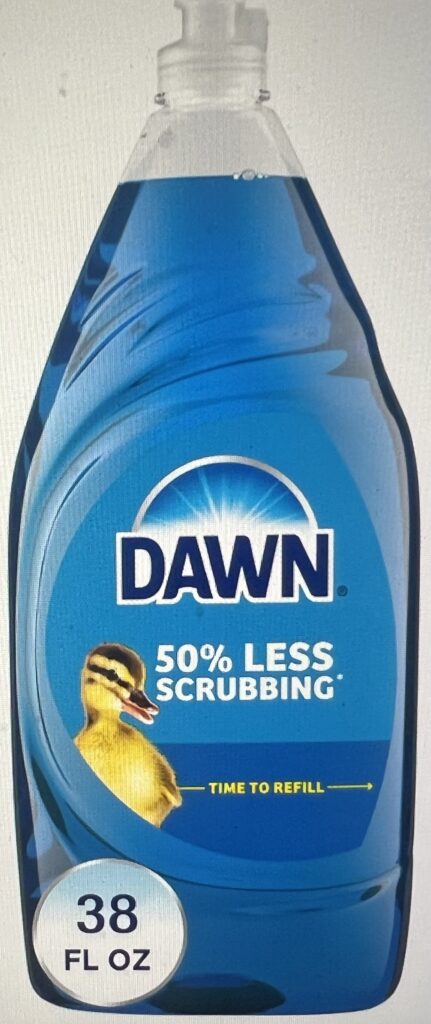

5. Used Oil Dripping From Your Car/Truck/SUV On To Your Driveway? Rid your driveway of ugly oil stains caused by leaking cars, trucks and SUV’s by applying “Goof Off Concrete Cleaner” (Dilute degreaser, apply to concrete, rinse off) available at Home Depot and Walmart for $11.47, OR apply “Dawn Dishwashing Liquid” ($4.94) directly to wetted concrete. Scrub with a brush and rinse.
Copyright 2015@EnviroInsight.org
