
Daniel Salzler No. 1356 EnviroInsight.org Five Items May 1, 2026
—————Feel Free To Pass This Along To Others——————
If your watershed is doing something you would like others to know about, or you know
of something others can benefit from, let me know and I will place it in this Information .
If you want to be removed from the distribution list, please let me know.
Please note that all meetings listed are open.
Enhance your viewing by downloading the pdf file to view photos, etc.
The attached is all about improving life in the watershed through knowledge.
If you want to be removed from the distribution list,
please let me know. Please note that all meetings listed are open.
Check our website atEnviroInsight.org
1. Arizona Groundwater Ruling Could Be The ‘Death Knell’ For 100-Year Water Supply Rule, Expert Says. A state judge ruled this week that the Arizona Department of Water Resources illegally changed how it evaluates whether there’s enough groundwater to build new homes in parts of the Valley. The decision is a win for the Home Builders Association of Central Arizona, which had sued.
State law requires builders in certain parts of the state — including the Phoenix area — to prove there’s an assured hundred-year water supply for houses being built there.
But shortly after Gov. Katie Hobbs took office, she released a report showing the Phoenix Active Management Area was short of that. Those numbers led to a pause in building new homes in parts of the Valley.
Kathleen Ferris, senior research fellow at the Kyl Center for Water Policy at Arizona State University’s Morrison Institute for Public Policy, joined The Show to talk about the ruling and its potential impacts. Ferris was also instrumental in crafting the 1980 Groundwater Management Act.
This has been a requirement of Arizona’s law for 45 years now. And when groundwater is involved, the applicant for an assured water supply determination must show that its proposed pumping of groundwater over 100 years will not exceed a certain depth to water and will not impact existing users of groundwater.
For decades, the department relied on computer models to make this determination. But those models have improved over the years. And in [2023], the department found that the groundwater in the greater Phoenix area was even more interconnected. And that pumping of groundwater for new subdivisions would create a shortage of groundwater over the next 100 years for existing users. Hence, Gov. Hobbs declared a moratorium on granting new certificates of assured water supply.
The Home Builders Association and the Goldwater Institute are talking about homes on raw desert land. They’re not talking about homes that would be put on retired agricultural land. They want to build on vast swaths of desert land that have never had any groundwater use. So this is a new use.
It should be noted the state Department of Water Resources has suggested that it will appeal this ruling. And I’m wondering if you think that there’s anything that they can say that might get an appeals court, or maybe if it goes to the state Supreme Court, to see this differently than … first judge saw?
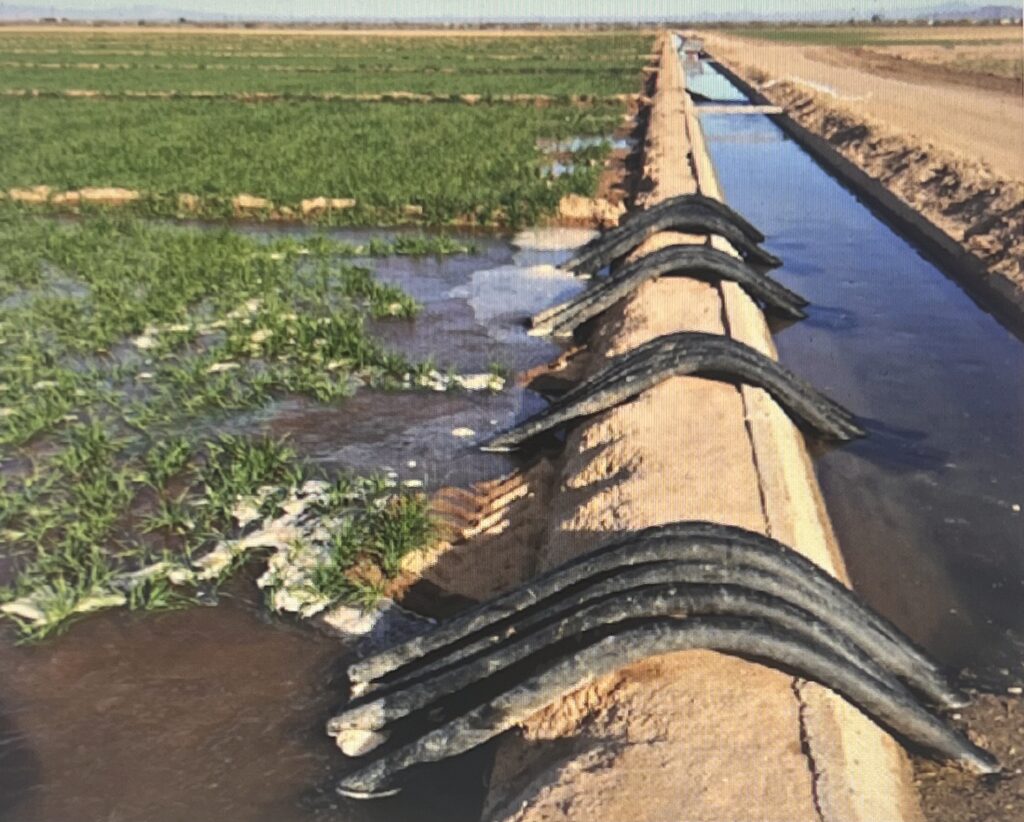
So I think the department is on firm ground here, said Kathleen Ferris. They have not changed their practices, they have just applied the science that has developed over the years and what their model has showed to the situation on the ground.
And we cannot, allow developers to build hundreds of thousands of new homes served with groundwater when we already have a problem with our groundwater supplies and when we have shortages of Colorado River water impending. The Home Builders Association basically said, “This isn’t going to do us any good.” Because they don’t want to build on ag lands. They want to build these vast, master-planned communities out in the pristine desert.
Tom Buschatzke, the director of theAz Department of Water Resources, put it best: “What is at stake in this lawsuit is the ability of the state to protect the Arizonans that are here today, by ensuring that their water supplies don’t run out or water levels fall to alarming depths of 1,000 feet due to new groundwater pumping.” Source: KJZZ, April 22 2026
2. AZ WRRC Publication Arroyo Published. Here’s one example:
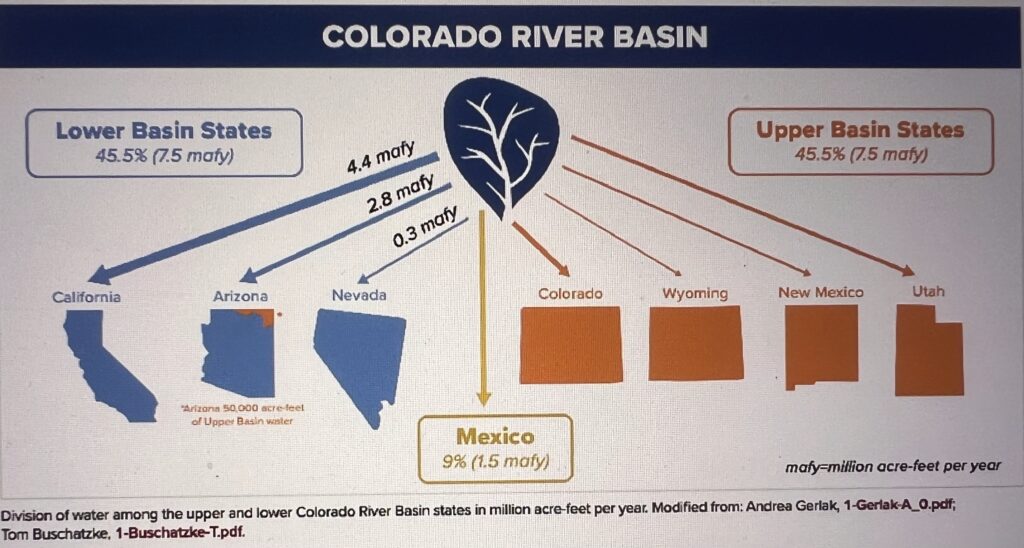
legal disputes between Arizona and California over Colorado River apportionment issues left unresolved after Arizona refused to ratify the 1922 Compact. In 1963-64, the court specified the water allocation of each of the Colorado River basin states and the reserved water rights of five ndian reservations (Fort Mojave, Fort Yuma [Quechan], Chemehuevi, Colorado River, and Cocopah).
A 1979 supplemental decree specified the amounts and priority dates of high-priority Colorado River water rights in each state and described Tribal water rights. Adjustments to these Tribal water rights claims were resolved in 2000, except for Quechan claims, which took six more years.the fact that negotiators in 1922 divided Colorado River water based on “inflated streamflow data” in a series of years when rainfall was relatively high. As a result, the negotiators allocated a total of 15 million acre-feet, when the river typically averaged closer to 13.2 million acre-feet. As a result, the compact institutionalized an imbalance that persists today– exacerbated by increasing aridity–with promised water exceeding actual supplies. Mexico and Tribal nations, which hold significant interest in the basin, were initially excluded from the compact. Mexico later received 1.5 million-acre feet through the 1944 Water Treaty. Tribal nations collectively have allocations to about 2.9 million acre-feet. Other \tribal claims to Colorado River water have not yet been resolved.
Check out the publication at https://wrrc.arizona.edu/sites/default/files/2026-04/Arroyo-2026.pdf
3. This Garden Weed Is A Nutritional Gem! Purslane is a common weed found in many gardens. Purslane (Portulaca oleracea) is good for you and your garden.
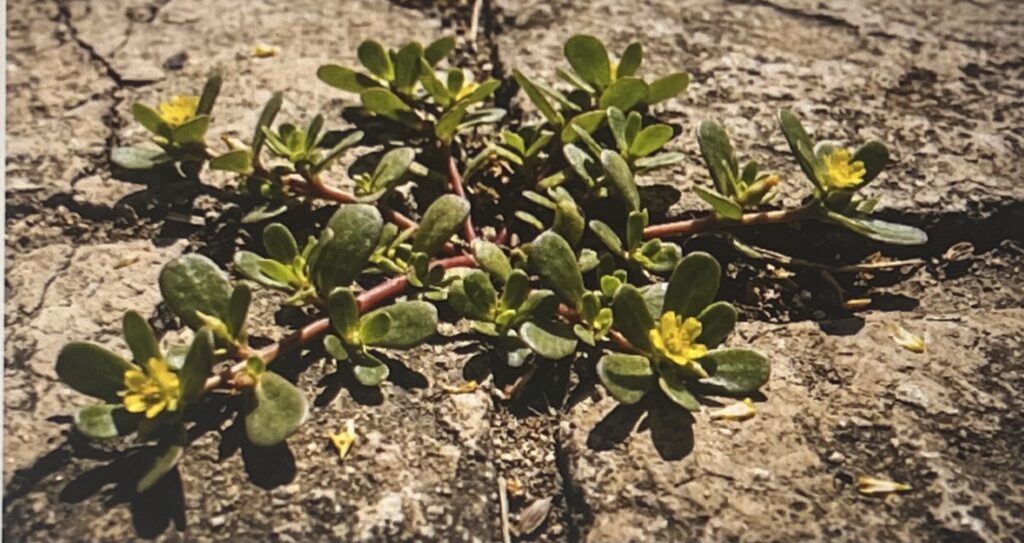
Purslane is an annual and after a growing season, it rots and adds organic matter and nutrients to the soil. It promotes local biodiversity (ie. bees, butterflies), saves as a great group cover, reducing water evaporation from the soil; and, acts as a natural pest repellent.
As a health benefit, Purslane is an incredible source of vitamins A and C. B-rich in complex vitamins; Contains zinc, potassium, iron, manganese, copper, magnesium, and calcium minerals; is very low in calories (only 16 kcal/100g).; contains potent antioxidant compounds;Purslane is rich in omega-3\, and is high in fiber.
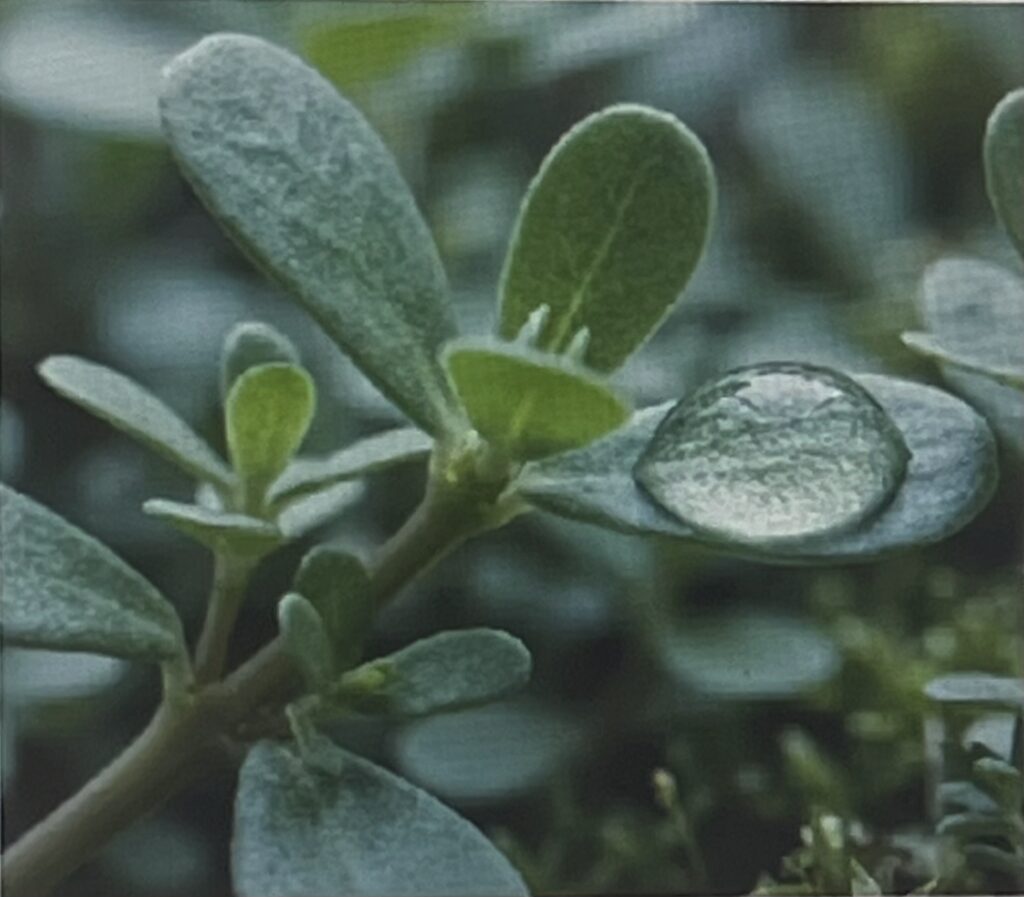
It contains a rather high concentration of soluble fiber, slowing down the absorption of sugar in the bloodstream, helping prevent spikes in blood glucose levels after eating. Besides that, the presence of natural antioxidants, like vitamin C and flavonoids, in purslane can contribute to its anti-inflammatory effects, which help alleviate insulin resistance and improve overall glycemic control. Furthermore, studies have demonstrated that bioactive compounds in purslane, including betaxanthins and betacyanins, might wield protective influences on pancreatic beta cells, which produce insulin.
Purslane is also good for bone health, heart, low cholesterol and triglycerides and is high in vitamins A and C and as an anti-inflammatory. Purslane can also help manage liver damage.
Studies show that purslane might benefit cognitive function. The antioxidants found in purslane can help protect our brain cells from inflammation and oxidative stress, which are involved in neurodegenerative diseases like Parkinson’s and Alzheimer’s. Further studies are required to explore the potential role this plant plays in supporting brain health.
Plus, this common weed contains unique antioxidants such as betaxanthins and betacyanins, which contribute to its vibrant coloration and offer additional protection against oxidative stress in the eyes. These powerful antioxidants work together with beta-carotene and vitamin A to neutralize free radicals and reduce inflammation, further improving the overall health and strength of the ocular tissues.
Furthermore, the higher concentration of omega-3 fatty acids found in purslane, particularly alpha-linolenic acid, plays a crucial role in maintaining the structure of the retina and supporting optimal visual function. Source: https://gardenersandplants.com/1088/yahoo/1149980/50014/purslane-benefit/
4. The Next El Niño Could Lock Earth Into a Hotter Climate. The Pacific heat pulse is temporary, but scientists warn that its climate impacts are not.
The Pacific Ocean is a giant climate cauldron, with a powerful heat engine that affects storms, fisheries and rainfall patterns half a world away, and scientists are watching closely to see if it’s about to boil over.
Their projections suggest the tropical Pacific is simmering toward a strong El Niño, the warm phase of an ocean-atmosphere cycle that can intensify and shift those impacts.
In a world already superheated by greenhouse gases, a strong El Niño during the next 12 to 18 months could permanently push the planet’s average annual temperature past the 1.5 degrees Celsius warming threshold enshrined in scientific documents andpolitical agreements as a turning point for potentially irreversible climate impacts.
Climate scientists also recently published a study showing that strong El Niño events can trigger what they called “climate regime shifts,” meaning abrupt, lasting changes in heat, rainfall and drought patterns.
El Niño is one of the planet’s biggest natural release valves for ocean heat. The venting starts with periodic shifts of swirling ocean currents and winds over the Pacific. That causes huge stores of tropical ocean heat to surge eastward from the Western Pacific Warm Pool, roughly between Australia and Indonesia, northward to Japan. Those tropical seas are by far the warmest ocean region on Earth, and span an area four times as large as the continental United States.
When that ocean heat spreads across the equatorial Pacific, it spills into the atmosphere in pulses that tilt weather patterns, reroute powerful high-elevation winds, raise global temperatures, bleach coral reefs and disrupt fisheries and ocean ecosystems. The effects hit continents as well, intensifying rainstorms and flooding in some regions, while amplifying extreme heat, drought and wildfires in others.
In 2015, heat from the tropical Pacific helped raise the global annual average temperature irreversibly past 1 degree Celsius above the pre-industrial baseline. And in 2024, Earth experienced the hottest year recorded in human history, aided by another El Niño boost.
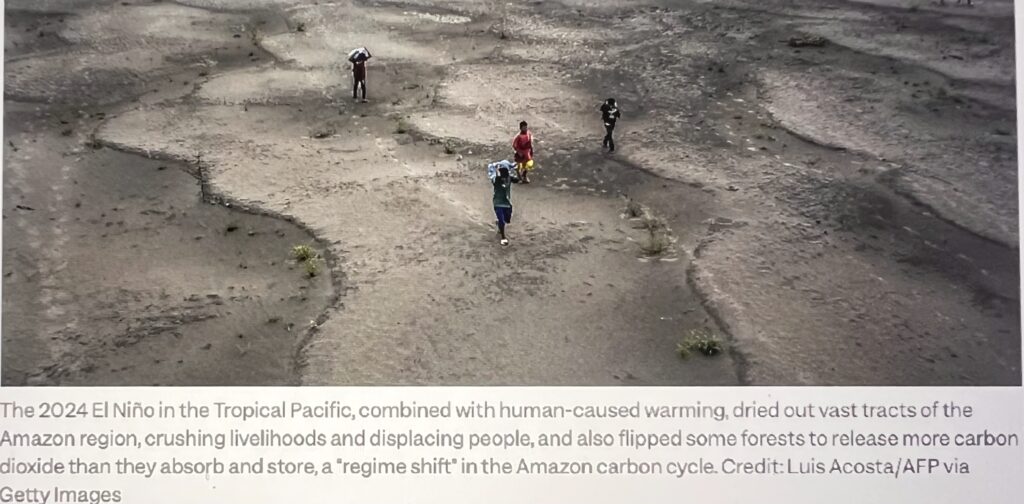
Even a moderately strong El Niño during the next 12 to 18 months could drive the average global temperature to about 1.7 degrees Celsius above the preindustrial level, climate scientist James Hansen told Inside Climate News. Hansen doubts the world will meaningfully cool back down to below the 1.5 degree Celsius mark after the El Niño fades.
Passing that threshold may not be like falling off a climate cliff, but it’s definitely the point when the edge starts crumbling, with rapid changes to relatively stable systems of forests, water, rain and temperatures that have sustained people and ecosystems for millennia.
Even below the 1.5-degree Celsius threshold, California reservoirs no longer fill in some years and overflow with extreme rainfall in others. Coral reefs from Australia to the Caribbean have bleached beyond recovery and vast tracts of forests burned up in megafires. Traditional crop calendars don’t align with seasons. Deadly nighttime heat rises in cities, killing vulnerable people in apartments that never cool. Source: “Super El Niño” Seen as Game Changer.
Climate impacts amplified by strong El Niños keep hitting the same vulnerable regions, may be more widespread than previously thought and can persist long after the tropical Pacific cools, according to an El Niño study published December 2025 in Nature Communications.
The study concluded that “super El Niños” are not just passing weather events, but more like climate shocks that can push parts of the Earth system into new states, co-author Jong-Seong Kug wrote in an email.
The study’s definition of a super El Niño is when the sea surface temperature anomaly in the tropical Pacific “exceeds 2 standard deviations above normal”—not an ordinary fluctuation, but more of a systemic warning sign.
The impacts are clustered in areas known to be sensitive to long-distance climate connections and regions “that are already prone to climate regime shifts,” wrote Kug, a climate researcher at Seoul National University in South Korea.
There are only three super El Niños on record: in 1982-83, 1997-98 and 2015-16. All of them contributed to regime shifts in regional ocean temperatures, leading to unprecedented marine heat waves that destroyed or damaged coral reefs and caused mass die-offs and starvation among many marine organisms, from starfish to seabirds and marine mammals.
Those impacts, as well as changes in drought and extreme heat over land areas, persisted for years and could shift some regional patterns for decades, according to the study.
Kug said the main “regime-shift hotspots” in oceans include the central North Pacific, the southeastern Indian Ocean, the southwestern Pacific and the Gulf of Mexico, areas where globally linked atmospheric connections “can strongly perturb the ocean surface and, in some cases, help anomalies persist.”
Kug said the study identified super El Niño regime shifts in East Africa and the Maritime Continent—the island-rich region between the Indian and Pacific Oceans around Indonesia, Malaysia and Papua New Guinea.
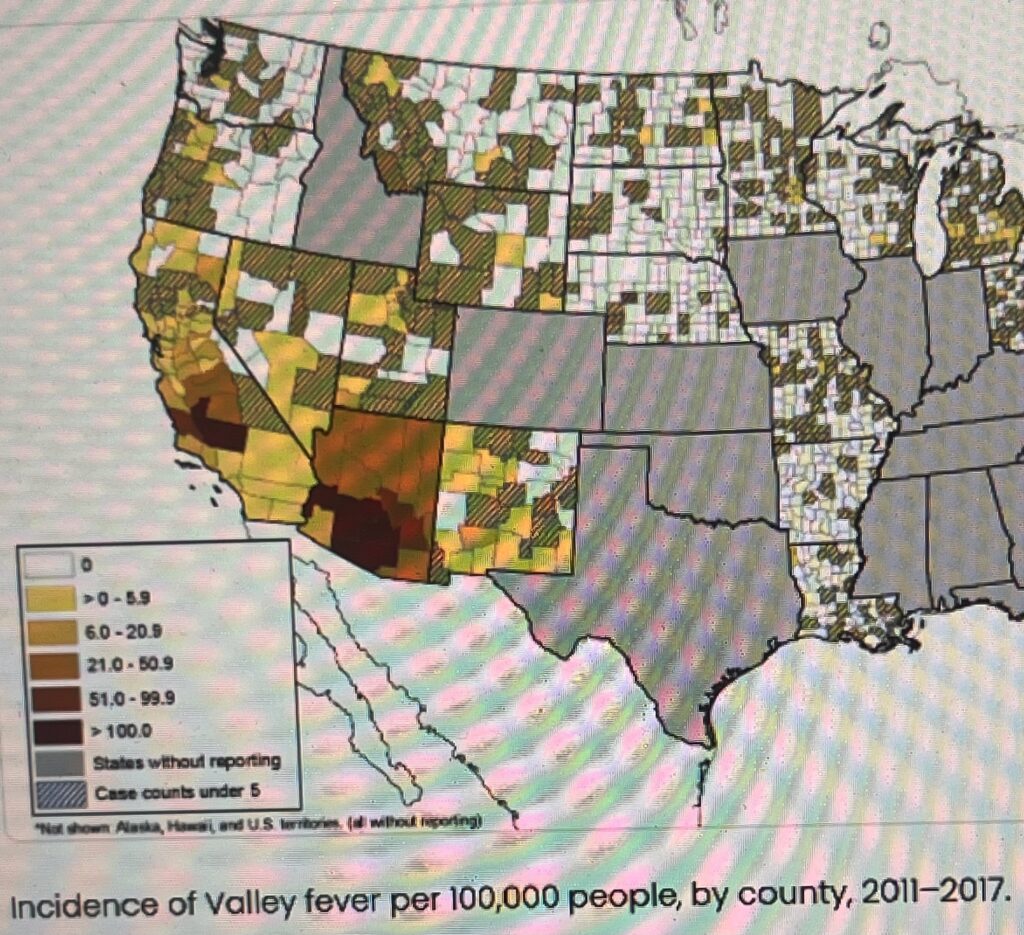
5. Frequent High Winds Across Arizona Has Residents Succumbing To Coccidioidomycosis (Valley Fever). According to the Arizona Department of Health Services, 245 residents contracted Valley Fever between April 11th and April 18, 2026.
Since January 4, 2026, 3,040 Arizona residents have contracted the disease caused by a fungus that is soil borne and spreads when the winds blow from the desert soils into the air we breathe.
If your symptoms last for more than a week, contact your healthcare provider.
Symptoms include:
- Fatigue (tiredness)
- Cough
- Fever and headache
- Shortness of breath
- Night sweats
- Muscle aches or joint pain
- Rash on upper body or legs
In extremely rare cases, the fungal spores can enter the skin through a cut, wound, or splinter and cause an infection.
When the winds start to blow, homeowners might consider closing and open windows and doors, turning off heating/air conditioning units, and turn on a air purifying unit capture any fie dust that finds t’sway into your home, before it finds a way into your lungs.
Symptoms of Valley fever may appear between 1 and 3 weeks after a person breathes in the fungal spores.
Symptoms usually last for a few weeks to a few months. However, some patients have symptoms that last longer than this, especially if the infection becomes severe.
Severe Valley fever
Approximately 5 to 10% of people who get Valley fever will develop serious or long-term problems in their lungs. In an even smaller percent of people (about 1%), the infection spreads from the lungs to other parts of the body. This could include the central nervous system (brain and spinal cord), skin, or bones and joints. Source: azhealth@public.govdelivery.com and https://www.cdc.gov/valley-fever/signs-symptoms/index.html
Copyright 2016 @ EnviroInsight.org
