
Daniel Salzler No. 1360 EnviroInsight.org Five Items May 22, 2026
—————Feel Free To Pass This Along To Others——————
If your watershed is doing something you would like others to know about, or you know
of something others can benefit from, let me know and I will place it in this Information .
If you want to be removed from the distribution list, please let me know.
Please note that all meetings listed are open.
Enhance your viewing by downloading the pdf file to view photos, etc.
The attached is all about improving life in the watershed through knowledge.
If you want to be removed from the distribution list,
please let me know. Please note that all meetings listed are open.
Check our website at EnviroInsight.org
1. Changes in AZ Law. Arizona Administrative Code – Supplement Update
The Arizona Administrative Code Supp. 26-1 Has Been Released And Is Posted Online. To access, click o9 the (blue) hot link.
Chaptered released include:
TITLE 2. Administration
2 A.A.C. 8 State Retirement System Board https://apps.azsos.gov/public_services/Title_02/2-08.pdf
2 A.A.C. 20 Citizens Clean Elections Commission https://apps.azsos.gov/public_services/ Title_02/2-20.pdf
TITLE 3. Agriculture
3 A.A.C. 8 Department of Agriculture – Pest Management Division https://apps.azsos.gov/public_services/Title_03/3-08.pdf
TITLE 4. Professions and Occupations
4 A.A.C. 23 Board of Pharmacy https://apps.azsos.gov/public_services/Title_04/4-23.pdf
4 A.A.C. 36 Department of Forestry and Fire Management https://apps.azsos.gov/public_services/Title_04/4-36.pdf
TITLE 6. Economic Security
6 A.A.C. 2 Department of Economic Security – Employment and Training https://apps.azsos.gov/public_services/Title_06/6-02.pdf
TITLE 9. Health Services
9 A.A.C. 7 Department of Health Services – Radiation Control https://apps.azsos.gov/public_services/Title_09/9-07.pdf
9 A.A.C. 8 Department of Health Services – Food, Recreational, and Institutional Sanitation https://apps.azsos.gov/public_services/Title_09/9-08.pdf
9 A.A.C. 10 Department of Health Services – Health Care Institutions: Licensing https://apps.azsos.gov/public_services/Title_09/9-10.pdf
9 A.A.C. 16 Department of Health Services – Occupational Licensing https://apps.azsos.gov/public_services/Title_09/9-16.pdf
TITLE 10. Law
10 A.A.C. 4 Arizona Criminal Justice Commission https://apps.azsos.gov/public_services/Title_10/10-04.pdf
TITLE 12. Natural Resources
12 A.A.C. 4 Game and Fish Commission https://apps.azsos.gov/public_services/Title_12/12-04.pdf
TITLE 17. Transportation
17 A.A.C. 4 Department of Transportation – Title, Registration, and Driver Licenses https://apps.azsos.gov/public_services/Title_17/17-04.pdf
TITLE 18. Environmental Quality
18 A.A.C. 11 Department of Environmental Quality – Water Quality Standards https://apps.azsos.gov/public_services/Title_18/18-11.pdf
TITLE 20. Commerce, Financial Institutions, and Insurance
20 A.A.C. 6 Department of Insurance and Financial Institutions – Insurance Division https://apps.azsos.gov/public_services/Title_20/20-06.pdf
TITLE 21. Child Safety
21 A.A.C. 5 Department of Child Safety – Permanency and Support Services https://apps.azsos.gov/public_services/Title_21/21-05.pdf
Chapters are published electronically in pdf on the Administrative Code web page.
Email sent pursuant to A.R.S. 41-1012(c) which states, “The secretary of state shall offer an email service for persons to receive notification when a quarterly supplement has been published. The service shall include a list of chapters published and where the chapters are posted.”
Sincerely
The Administrative Rules Division
Email: rules@azsos.gov
Arizona Secretary of State | https://azsos.gov/rules
1700 W. Washington St., 7th Fl. | Phoenix, AZ 85007
This message and any messages in response to the sender of this message may be subject to a public records request.
2. The New Colorado River Plan Could Force Talks Every 2 years. Is That A Good Idea?
A new federal proposal for managing the Colorado River would force states to reassess their strategy every two years over the next decade. That would mark a shift from the old way of doing things, which saw water-sharing rules implemented for 20 years at a time, with no mandatory check-ins along the way.
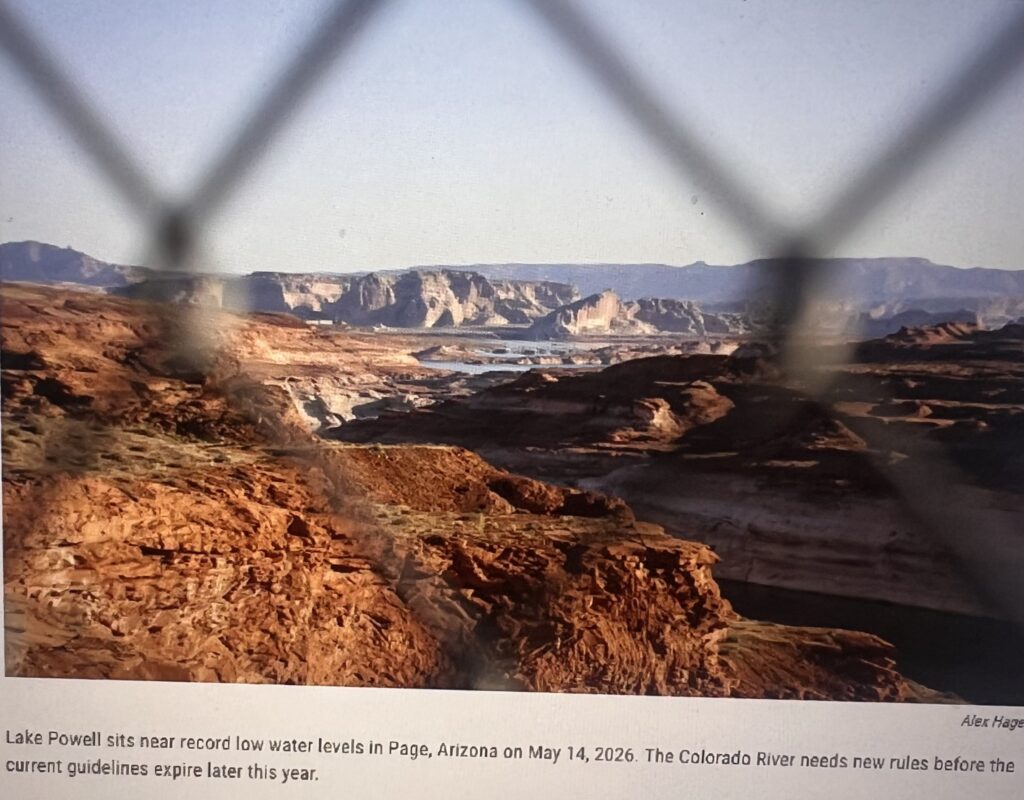
Policymakers and policy analysts say the new strategy would come with pros and cons.
Details of the new proposal are limited, but Arizona officials shared some takeaways at a recent meeting of the Arizona Reconsultation Committee, which brings the state’s water users together to talk about the future of the Colorado River.
Tom Buschatzke, Arizona’s top water official, said a system that allows for Colorado River rules to be tweaked every two years would make it hard for cities and farms to make plans for using water.
“I think it will be a huge challenge moving forward to create the level of certainty that everyone’s looking for under that process,” Buschatzke told KJZZ. “If you’re an end user of water, how do you plan not knowing how much water you’re going to have out into the future?”
He also said that a system of two-year check-ins would keep state leaders stuck in talks, which have historically been unproductive.
“It would mean essentially that we will be in continual negotiations,” Buschatzke said. “That will be a big burden.”
State water leaders may bristle at the prospect of continued negotiations because they have already been meeting repeatedly for a long time with little to show for their efforts. Talks about replacing the current rules for managing the Colorado River expire this year, and the seven states that use its water have been meeting for the better part of the last five years without producing a consensus agreement about sharing the river.
However, Buschatzke said, state leaders may be driven by desire to avoid more negotiations, and a plan built around two-year check-ins could force them to agree on a longer-term plan.
Elizabeth Koebele, who researches water policy at the University of Nevada, Reno, said states need to make lasting changes to their water use.
“I think asking the basin decision makers to have to do a major renegotiation every two years is a lot to ask,” she said. “Bigger changes on the river take a long time, and I don’t think a two-year check-in really gives states capacity to make those big changes.”
Koebele said the most recent federal proposal might be necessary to replace the rules that expire in a few months.
“It plugs in and says, ‘We’ve got the first two years covered,’” she said. “Which is a good thing, because we’re running out of time in the Colorado River Basin to come up with a plan for next water year. So if we can pair this federal framework with an immediate plan that will at least help stabilize the system for at least the first two years, then I think that’s a positive step forward.”
The Bureau of Reclamation, the federal agency which put forth the new proposal, did not agree to an interview but provided a written statement.
“Given the risk and uncertainty facing the Basin, these elements are designed to provide stability while allowing flexibility to incorporate consensus‑based recommendations as they develop,” wrote Peter Soeth, a Reclamation spokesman. “We appreciate the input provided by the basin states and are reviewing their proposals as we finalize the preferred alternative. We look forward to continued engagement and discussions with all of our partners.” Source: KJZZ May 21, 2026.
3. Judge Won’t Pause Arizona AG’s Groundwater Lawsuit Against Saudi-Owned Farm. A Maricopa County judge won’t pause a lawsuit filed by Attorney General Kris Mayes against Fondomonte, the Saudi Arabian farming company she accused of overpumping groundwater in La Paz County.
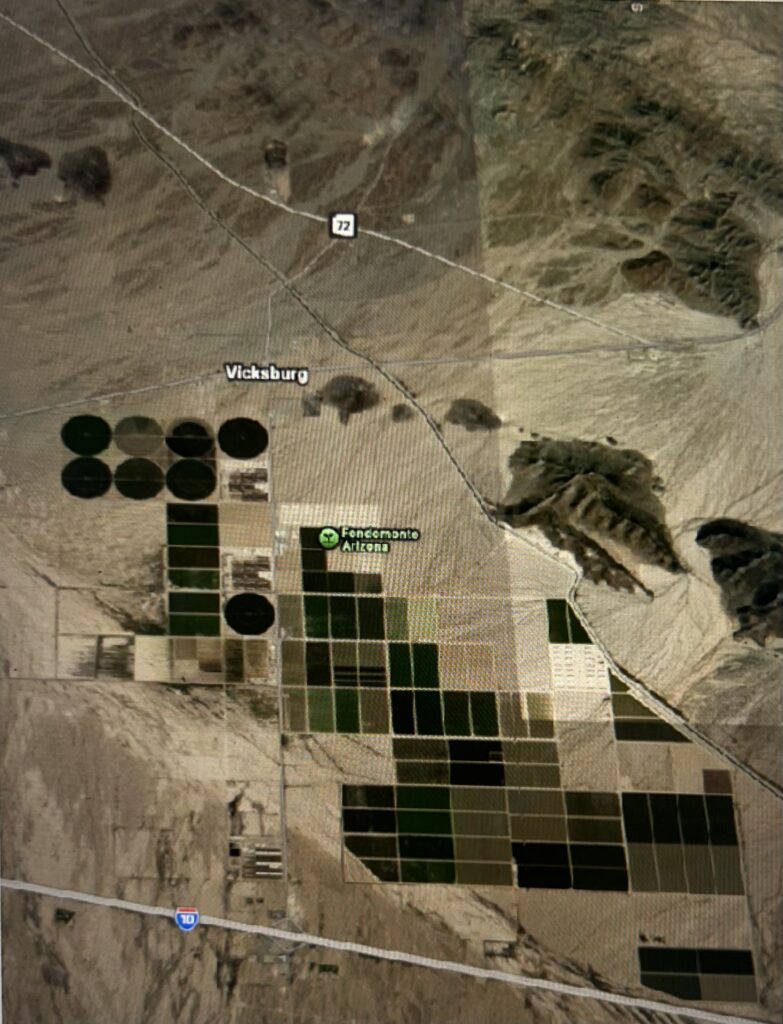
Mayes sued Fondomonte in Maricopa County Superior Court in 2024 under Arizona’s public nuisance law, which allows the attorney general to bring cases to block anything considered a threat to public health or at odds with “the comfortable enjoyment of life or property” by the community.
Earlier this year, a Fondomonte Judge Scott Minder paused the case after the Arizona Depaartment of Water Resources established a groundwater protection zone, called an active management area, in the Ranegras Plain basin.
Attorneys for the company argued new groundwater protections that come with that designation could resolve the issues in Mayes’ lawsuit.
Minder disagreed.
In an order issued Thursday (May 14, 2026), Minder acknowledged that the analysis ADWR is conducting in the area will be valuable for the court as it considers the case. But he concluded Mayes’ lawsuit is about more than just groundwater protections.
For instance, she wants the court to force Fondomonte to create an “abatement fund” to reimburse people who have been affected by its groundwater use.
“ADWR will not address all aspects of the State’s complaint or allegations, such as potential damages or the requested abatement fund,” Minder wrote in an order denying Fondomonte’s request for a stay.
Minder also questioned whether ADWR’s work will definitively resolve Mayes’ allegation that Fondomonte is overpumping groundwater, because that analysis will cover the entire basin, not just Fondomonte.
And the judge pointed out that the active management area process started by ADWR in January can take years to complete.
“A complete stay may also serve (to) lengthen this lawsuit,” Minder wrote.
Instead, the judge allowed the case to move forward and said both sides can include analysis produced by ADWR as they make their arguments in court while also tackling the issues not addressed by the department.
Mayes praised the ruling.
“I am grateful for today’s ruling, which keeps our lawsuit against Fondomonte on track,” she said in a statement. “My office will keep fighting to protect the people of La Paz County and hold Fondomonte accountable for the public nuisance we allege they have created due to their overuse of groundwater.”
The judge ordered both sides to create a proposed plan for the case moving forward that “considers and incorporates” ADWR’s active management area process for the Ranegras Plain Groundwater Basin into the schedule.
Fondomonte framed that as a victory.
“This is a significant victory for justice. The court understood the need to coordinate any action by the Attorney General’s office with the state effort to create an AMA in the basin. Fondomonte looks forward to working with the Attorney General‘s office to create a timetable to present to the court,” according to a statement provided by a spokesman.. Source: May 15, 2026 KJZZ
4. Fighting For Colorado River Water Is Nothing New, But It Once Nearly Led To War
With California. LA PAZ COUNTY, AZ — Arizona and the other Colorado River Basin states are once again fighting over how to share one of the West’s most important resources. Negotiations over the future of the river recently broke down, leaving the federal government to decide how the Colorado River will be managed moving forward.
But fights over this water are nothing new.
Nearly a century ago, the battle became so intense that Arizona sent armed troops to the banks of the Colorado River. The conflict became known as the “Parker Dam War.”
The little-known ‘Parker Dam War’ shows how deep Arizona’s fight for Colorado River water runs.
The roots of the fight go back to 1922, when the seven Colorado River Basin states negotiated the Colorado River Compact. The agreement was meant to divide the river’s water across the growing Southwest.
Arizona refused to ratify it. State leaders believed the deal gave California too much control over the river and left Arizona’s future water supply uncertain.The roots of the fight go back to 1922, when the seven Colorado River Basin states negotiated the Colorado River Compact. The agreement was meant to divide the river’s water across the growing Southwest.
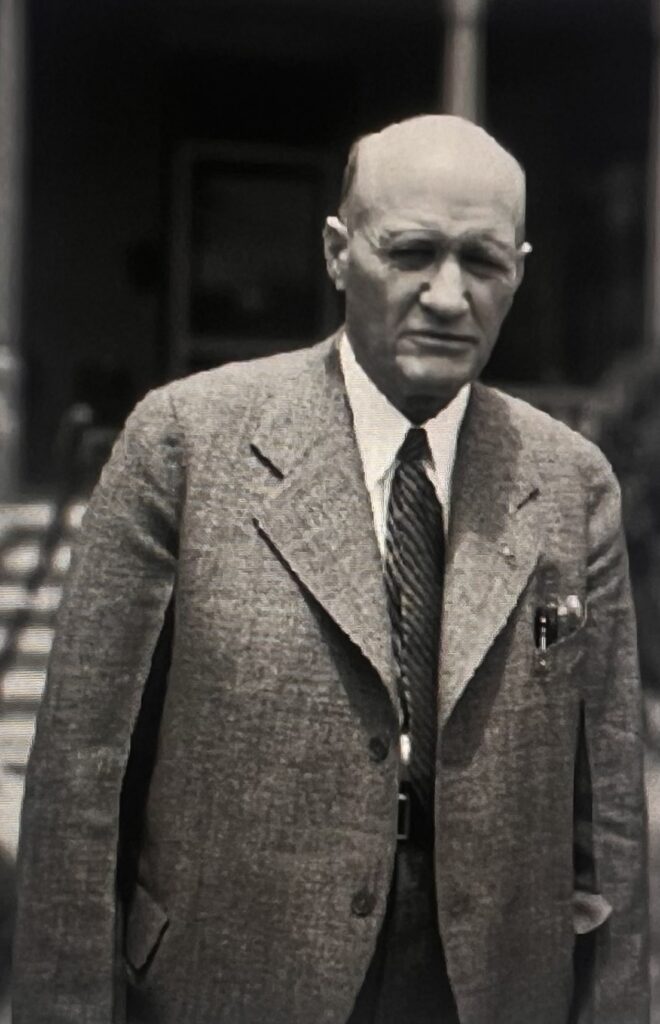
“Governor Moeur recognized in the compact that while it started creating provisions for seven lower states to receive water. He recognized the fact that the compact didn’t, in fact, provide the percentages of water each state was going to get. That infuriated him, and quite frankly, the state of Arizona. They didn’t know how much,” Arizona historian Dan Delasantos said.
In the early 1930s, California received federal approval to build Parker Dam along the Colorado River. The project would help move water west to California farms and eventually create Lake Havasu. But building the dam required work along the Arizona side of the river. To Arizona Governor Benjamin Moeur, that was a step too far.
“He was known as being very stern,” Delasantos said.
In 1934, Moeur declared martial law and sent the Arizona National Guard to the Colorado River.
“The governor sent in over 100 military individuals with machine guns and armory,” Delasantos said.
Photos from the time show troops camped along the river in the desert, even dipping their canteens into the water they were sent to defend. Their mission was to stop construction of the dam.
“The military was there to show a sense of force,” Delasantos said.
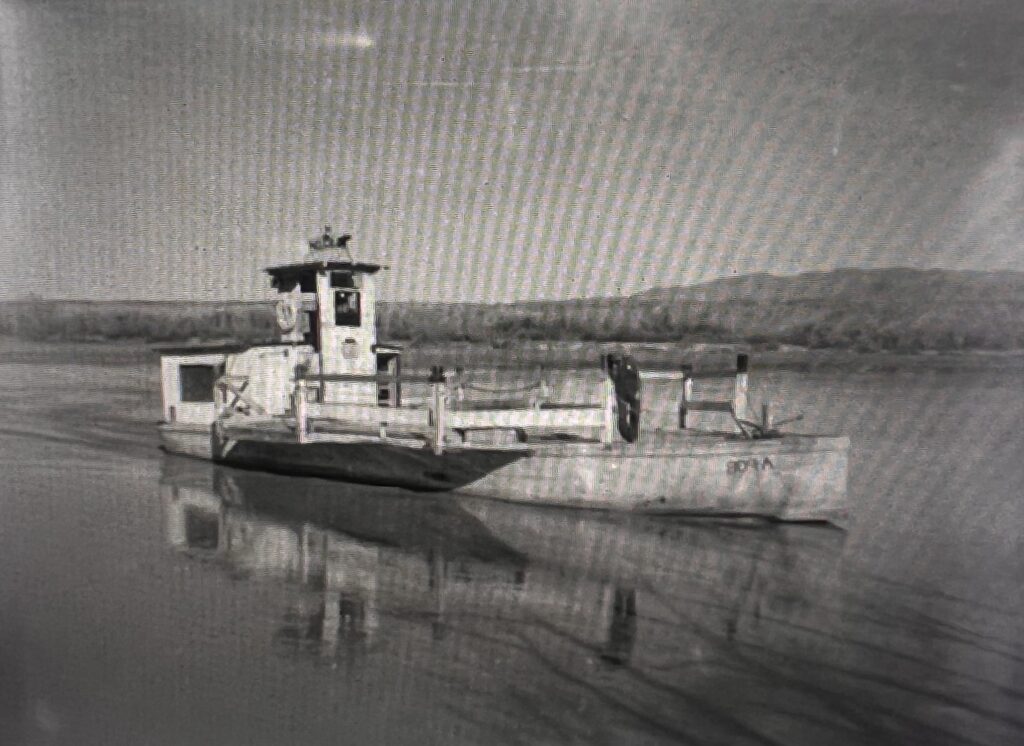
The standoff also produced one of the strangest symbols in Arizona history: the Arizona Navy. Its fleet was made up of two wooden ferry boats, the Julia B. and the Nellie Jo. Nellie Bush, who operated the boats with her family, was named the state’s one and only admiral.
The Navy’s first mission did not exactly go smoothly. Delasantos said the boats became tangled in dam construction cables and had to be rescued by the same workers Arizona was trying to intimidate.
Still, for a time, the dramatic move worked. News of a potential battle reached Washington, D.C., and construction on the dam was temporarily halted. No shots were fired. But Arizona’s victory was short-lived.
The federal government sued Arizona for interfering with the project. In 1935, the U.S. Supreme Court ruled that the federal government had the authority to continue the work.
Construction resumed, and Parker Dam was completed in 1938.
Today, water from the Colorado River flows into Phoenix and Tucson through the Central Arizona Project, a more than 300-mile canal system completed in 1993. But almost 100 years after the Parker Dam War,
“The reality is we’re still back here battling how much water each state should get,” Delasantos said.
This time, the battle is not over building a dam. It is over a shrinking river, a mega-drought, and a water supply strained by millions more people across the West. The troops and gunboats are gone. But the pressure on the Colorado River is higher than ever.
“Take care of the water,” Delasantos said, “because that’s the only water you got.” Source: abc 15 News, May 17, 2026
5. One Easy Fix For Farmers. Crop farmers in this country haven’t faced prospects this bleak since the 1980s. But by using less fertilizer, they could preserve both their operations and the environment.
Except for the beef sector, where prices are up and costs are down, most farmers today are facing high costs of operations and low prices for their crops, making this an extremely tough time to stay in business. US crop farmers lost more than $34 billion last year Agriculture (USDA) expected farm debt to reach a record high.
As a result, 15,000 farming operations called it quits in 2025—part of a total loss of 166,000 farms since 2017. A number of factors are at play, including extreme weather such as droughts, floods, and fires that have all been made worse by climate change. Some trends, like falling commodity prices and rising costs for farming equipment and chemicals (what farmers call inputs), have been exacerbated by Trump administration policies. Those policies seem almost designed to hurt farmers in spite of that demographic’s strong political support of the president.
Research also suggests that as much as half of the nitrogen fertilizer applied to US commodity crops is wasted. Because plants can only absorb a certain amount of nitrogen, the rest runs off farm fields into waterways or leaches into ground-water. “Our brains automatically think of pristine green and rolling fields when we imagine farms,” says Omanjana Goswami, one of two authors of the UCS report. “But despite that beautiful picture, agriculture is actually a major source of pollution.”
Fertilizer runoff can lead to contaminated drinking water and accelerated algae growth, which in turn can consume all the oxygen in water that fish and shellfish need to survive.
In addition, the production and application of synthetic nitrogen fertilizer, which is derived from fossil gas, releases heat-trapping emissions including carbon dioxide and nitrous oxide. Nitrous oxide has 273 times more climate-warming potential than carbon dioxide, and agricultural soil produces more of it than any other US economic sector. The UCS analysis found that excessive application of nitrogen fertilizer in the United States results in as much as 60 million metric tons of climate pollution a year—equivalent to the amount produced by 14 million gasoline-powered vehicles.
One of the best ways to reduce the damaging overuse of nitrogen fertilizer is nutrient management: a systematic and science-based approach to using chemical inputs cost-effectively, maximizing productivity while protecting the environment. The USDA estimates that if all the farmland in the United States where fertilizer is being overapplied were to adopt a nutrient management plan, farmers would save a total of $2.6 billion.Factors to be considered when developing such a plan can be described with the shorthand SMART:
SOURCE—matching the input to the crop, soil, and local climate
METHOD—how the input should be applied (injected or incorporated into the soil versus spread over the surface)
ASSESSMENT—taking into account conditions of the land and practices that may affect nutrient needs
RATE—testing and technology can determine precise amounts of inputs needed
TIMING—considering both the growing season and expected weather. In combination with other responsible practices such as no-till farming, cover crops, and buffer strips, nutrient management can help farmers increase yields while keeping costs down and preserving both soil and water quality
Source: Catalyst, Vol 26 Spring 2026 Union of Concerned Scientists
Copyright 2026 @ EnviroInsight.org
