
Daniel Salzler No. 1307 EnviroInsight.org Four Items May 23, 2025
—————Feel Free To Pass This Along To Others——————
If your watershed is doing something you would like others to know about, or you know
of something others can benefit from, let me know and I will place it in this Information .
If you want to be removed from the distribution list, please let me know.
Please note that all meetings listed are open.
Enhance your viewing by downloading the pdf file to view photos, etc.
The attached is all about improving life in the watershed through knowledge.
If you want to be removed from the distribution list,
please let me know. Please note that all meetings listed are open.
Check our website at EnviroInsight.org
1. Wildfires Continue To Ravage Arizona This Year As Well As In Years Past.Wildfires are not just costly to put out but can present other issues. Take the quiz and see what you know. Answers at end of newsletter
- How Does The Climate Crisis Worsen Wildfires?
A) Global temperatures are rising, which is leading to warmer and drier conditions – perfect wildfires to start and spread.
B) More frequent and severe droughts are putting stress on plants and trees, making them more susceptible to fire.
C) Warmer temperatures allow some destructive insects to survive winters and reproduce more quickly, killing more trees that become wildfire fuel.
D) Climate change is likely causing more lightning strikes – a major cause of wildfires – in parts of the world.
E) All of the above.
2. What is the relationship between wildfires and flooding?
A) Wildfires are less common in areas prone to flooding.
B) Flooding is rare after wildfires.
C) There is an increased risk of flooding in areas affected by wildfires.
D) None of the above.
3. Compared to the air pollution emitted from burning fossil fuels, wildfire smoke is…
A) More toxic.
B) Less toxic.
C) Equally toxic
4. Approximately how many acres of land in the United States were consumed by wildfires in 2024?
A) 1.2 million acres
B) 2.5 million acres
C) 5.2 million acres
D) 8.9 million acres
5. True or False: Wildfires and wildfire smoke affect all people the same amount.
True
False
Source: The Climate Reality Project
2. Watching Your Watch. Prior to the mid 1800’s, watches were worn in a pocket, connected by a chain. By the second half of the 1800s, watches started to appear on wrists. Who was one of the first to wear a wrist watch on their wrist? Answer at end of the n
a. Zachary Taylor,12th U.S. President
b. Rachel Jackson, wife of. Andrew Jackson, 7th U.S. President
c..Mary Todd Lincoln, wife of President Lincoln
d. Carl Gauss, Greatest mathematician of all time
3. CLIMAS: Climate Assessment For The Southwest, April 2025.
Precipitation and Temperature
In Arizona, precipitation was near normal for much of the state, ranging into above normal for parts of central and northern Arizona, and below normal in the southwest and northeast of the state.
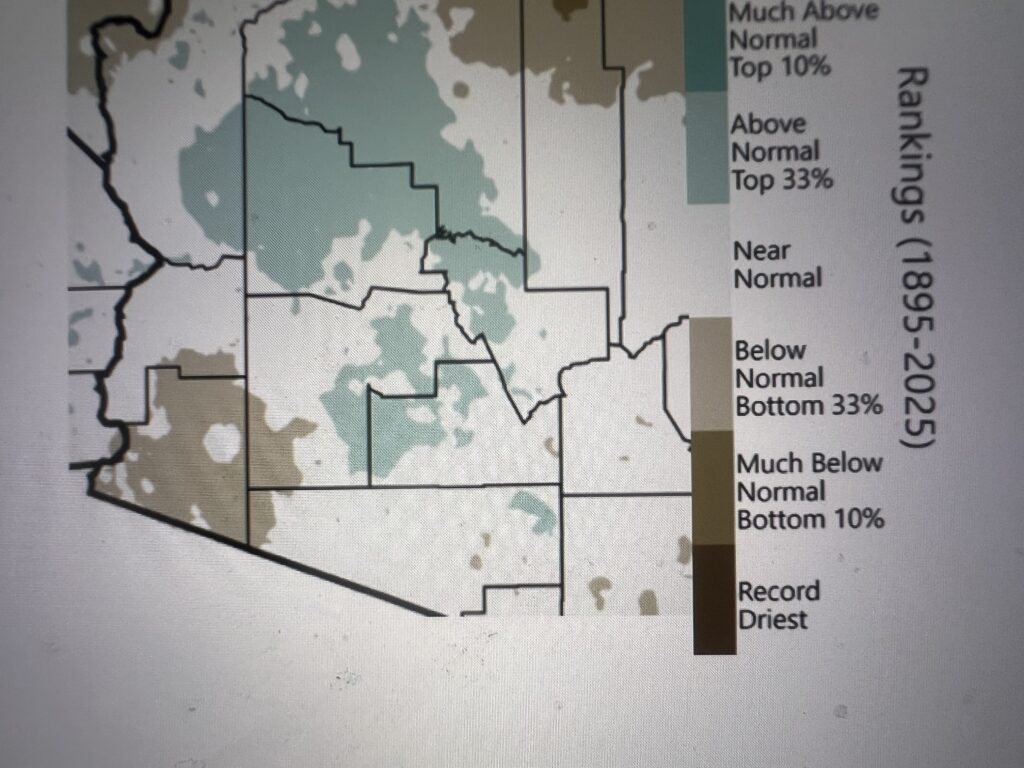
Precipitation
March 2025
January – March 3-month precipitation totals ranked as below normal or much-below normal across Arizona. It was the driest January – March season on record for some areas scattered across the region.
January – March 3-month precipitation totals ranked as below normal or much-below normal across Arizona. It was the driest January – March season on record for some areas scattered across the region.
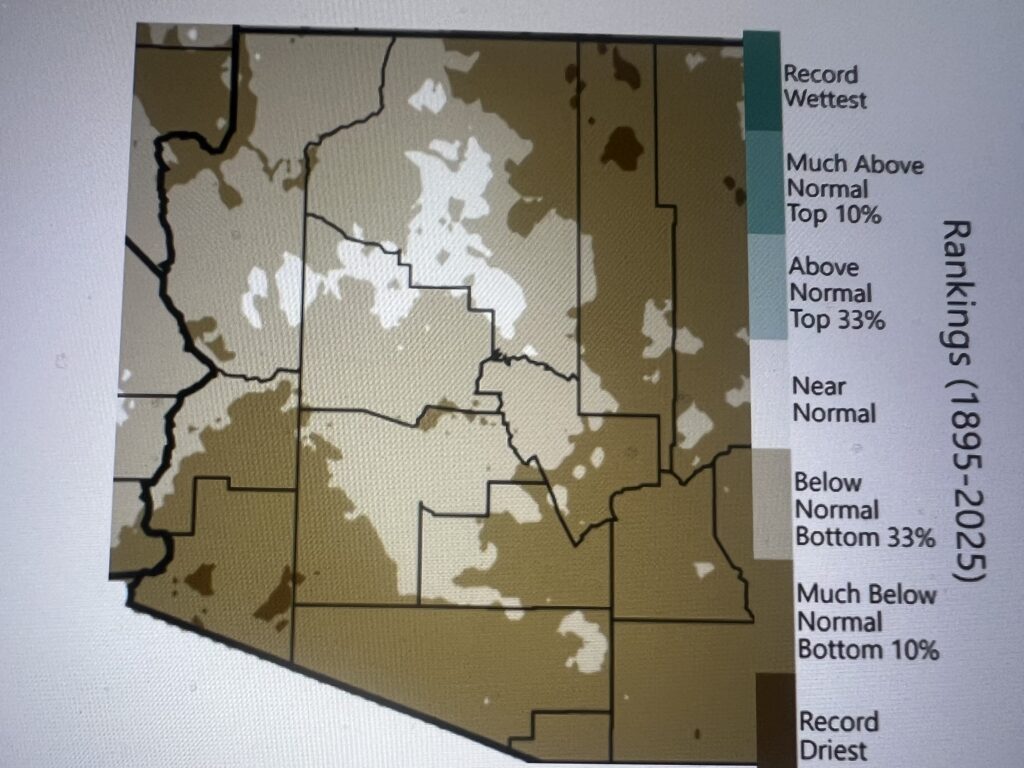
Precipitation
January – March 2025
Precipitation totals for the 2025 water year so far (October 2024 – March 2025) rank below normal to much-below normal across Arizona and much of New Mexico, and for areas of southern and western Arizona it was the driest October – March on record.
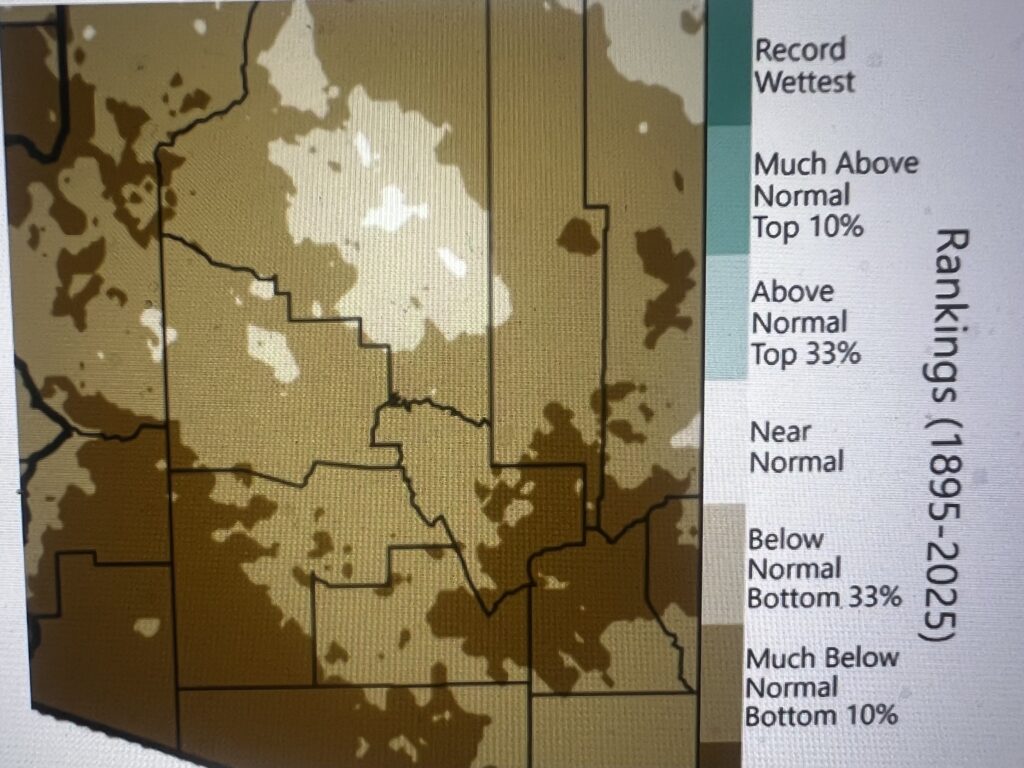
Precipitation
October – March 2025
Temperature
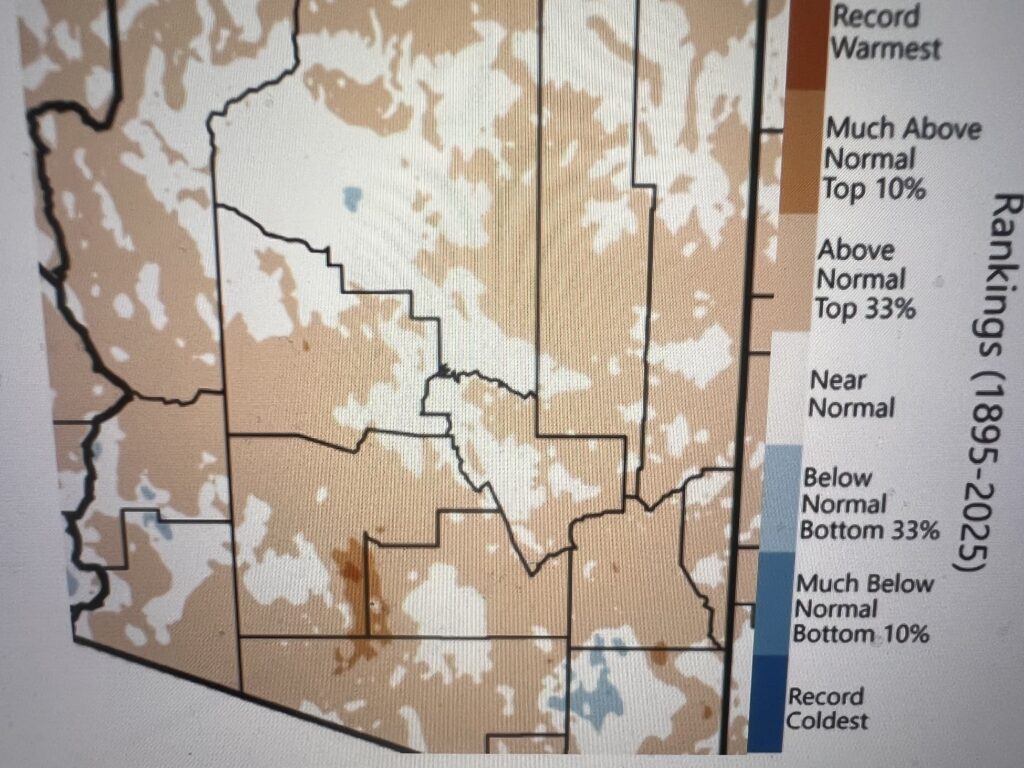
March temperatures were generally above normal to near normal across Arizona.
Mean Temperature
March 2025
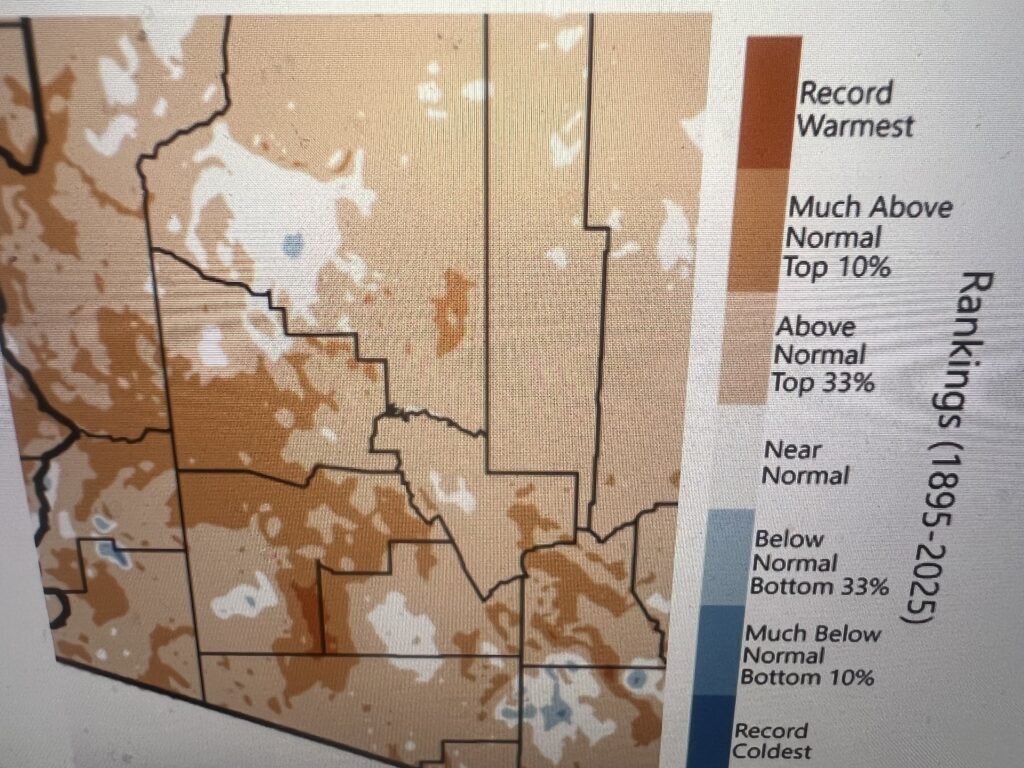
January – March three-month average temperatures were above normal across Arizona, much-above normal for areas of central and western Arizona.
Mean temperature
January – March 2025
Drought April 22, 2025
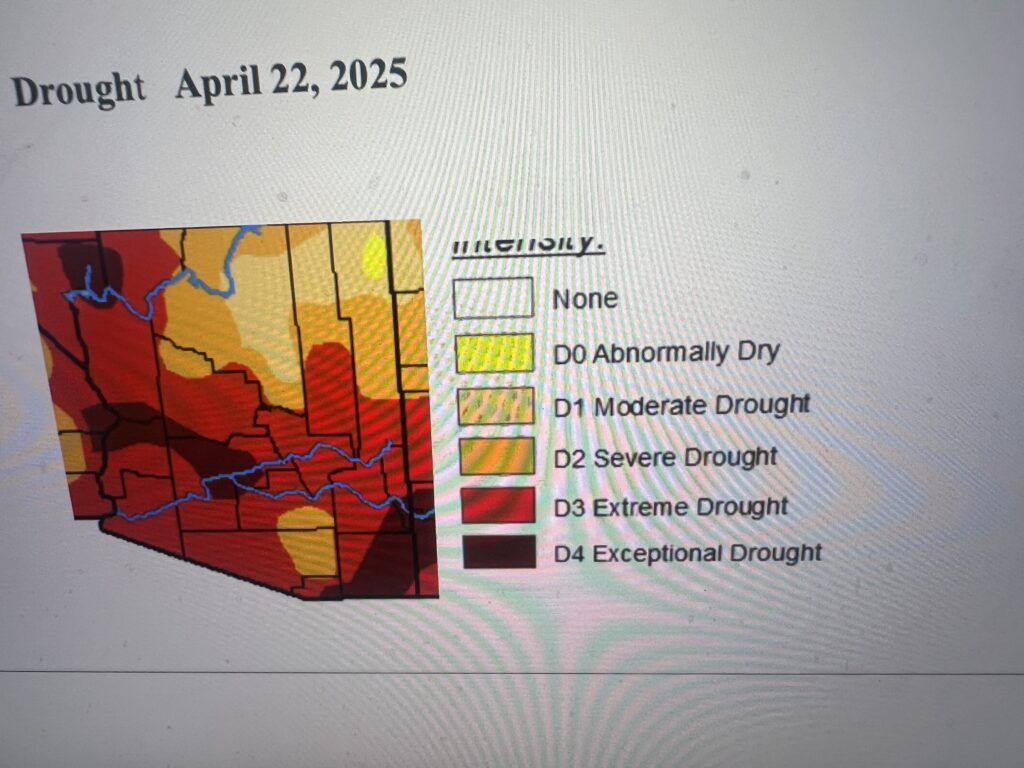
Snowpack and Streamflow
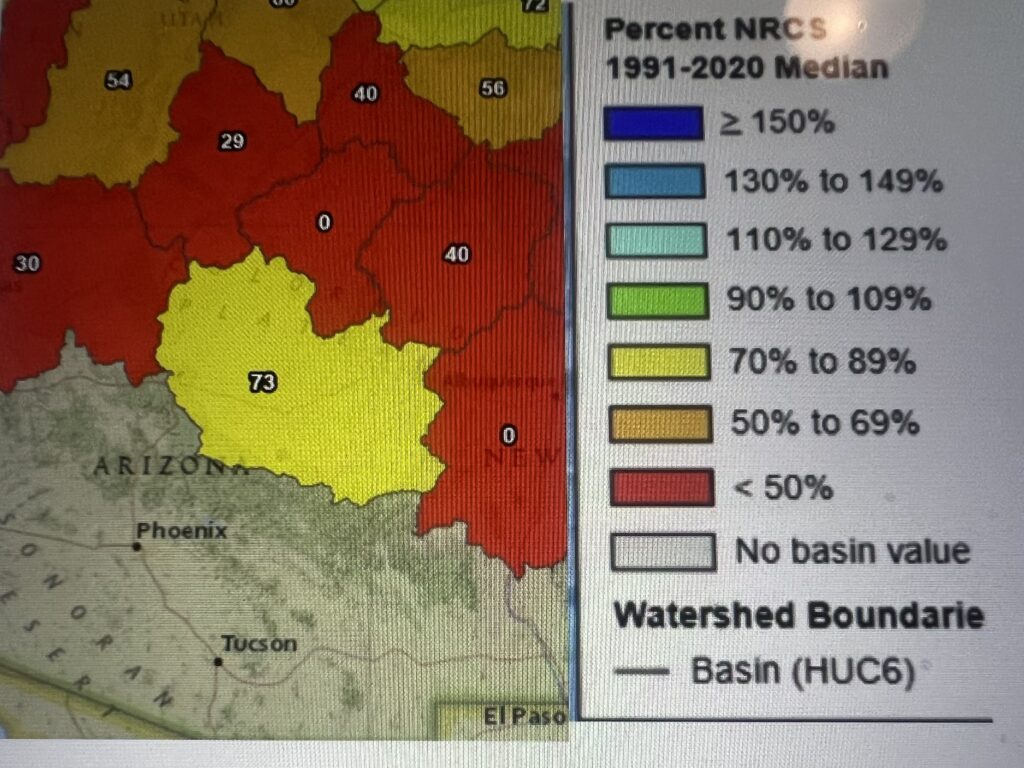
Streamflow forecasts generally predict below normal or much-below normal flows for basins of Arizona ranging from a projected 73% of normal for the Verde River to 4% of normal for the middle Gila. Upper Colorado River Basin streamflow forecasts aggregate to 85% of normal.
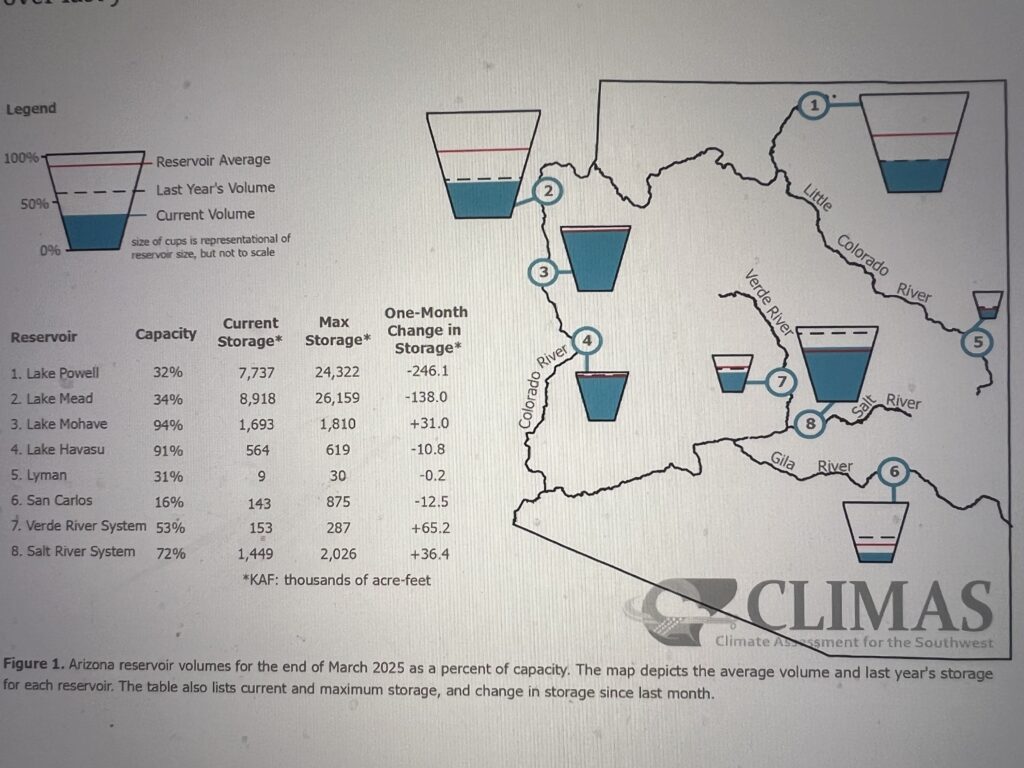
Water Supply
Reservoir storage in Arizona and New Mexico is generally down compared to last year. Lake Mead and Lake Powell levels remain much below long-term average because of decades of long-term decline.
4. The Trump Administration Plans to Undo Standards on Toxic ‘Forever Chemicals’ in the U.S. Drinking Water Supply. The Trump administration on Wednesday announced plans to rescind and postpone rules limiting “forever chemicals” in drinking water that were enacted under the Biden administration and designed to prevent millions of people from exposure to these persistent and dangerous contaminants.
Lee Zeldin, the administrator of the Environmental Protection Agency, said the agency plans to issue new rules this fall that would repeal drinking water levels for four PFAS chemicals and delay the implementation of limits on two others.
PFAS—or per- and polyfluoroalkyl substances—have been used in the manufacturing of a huge range of products for decades, becoming ubiquitous in water and soils despite the dangers they pose to human and environmental health. Research has shown that roughly half of the U.S. population consumes water contaminated with PFAS, which are linked to cancers, reproductive and neurological problems and low birth weights. New data shows that PFAS are found at more than 8,500 drinking water sources across all 50 states and Washington, D.C.
Recent research has foundthat PFAS in ocean waters can disrupt carbon cycles, increasing climate-warming greenhouse gas emissions. Source: Inside Climate News
Answers to No. 1
Answers:
1. All of the above.1 The climate crisis impacts wildfires in numerous ways, causing them to become more extreme in terms of their size, frequency, and severity. The first three factors in particular – longer fire seasons caused by rising temperatures, dry conditions caused by droughts, and infestations that kill trees and bush and leave them to dry out – combine to create favorable conditions for dangerous wildfires, while the increase in lightning acts as a match.
2.C, there is an increased risk of flooding in many areas affected by wildfires for two to five years after the fire. This is because burned vegetation and charred soil create environmental conditions that block water absorption during heavy rains, increasing the likelihood of flash flooding. These areas are also more susceptible to dangerous and destructive mudflows as the water travels and picks up ash, rocks, boulders, and burned trees.
3. A, more toxic.1 By some estimates, wildfire smoke can be ten times as toxic as the air pollution emitted from fossil fuels. Factors like the intensity of the fire and the objects and vegetation being burned impact the toxicity of wildfire smoke as they can cause harmful gases and fine particulate matter to be released. When fine particulate matter penetrates the lungs and enters the bloodstream, it can cause damage to the nervous and cardiovascular systems and more.
4. D.1 In 2024, wildfires burned 8,924,884 acres of land in the United States spread across 64,897 reported wildfires, compared to 2,693,910 acres from 56,580 reported wildfires in 2023. These numbers are higher than both the five- and ten-year averages. Additionally, 4,552 structures were destroyed by wildfires in 2024. The southern United States had the highest number of wildfires, accounting for over a third of total reported wildfires, while the Northwest area had the largest number of acres burned.
5. True or False: Wildfires and wildfire smoke affect all people the same amount
False.1,2 People with pre-existing health conditions such asthma, other respiratory diseases, and cardiovascular disease are at a higher risk for adverse health effects from wildfire smoke exposure. Children, pregnant people, older adults, outdoor workers, and people “of low socioeconomic status” may also be at increased risk.
One recent study found that poor communities and communities of color are hospitalized at disproportionately high rates as a result of extreme heat and wildfire smoke inhalation. Another study found that majority Black, Hispanic, and Native American communities experience 50% “greater vulnerability to wildfires” when compared to other communities.3
3. https://journals.plos.org/plosone/article?id=10.1371/journal.pone.0205825
Answer to No. 2
The wrist watch as we know it originated in the second half of the 1880s. It first appeared as an expensive piece of women’s jewelry.. Mary Todd Lincoln owned one, an enamel bangle, set with diamonds and a tiny watch movement fashioned by a Swiss maker. Source: Smithsonian Magazine.
Copyright: 2025 EnviroInsight.org
