
Daniel Salzler No. 1316
EnviroInsight.org Four Items July 25, 2025
—————Feel Free To Pass This Along To Others——————
If your watershed is doing something you would like others to know about, or you know
of something others can benefit from, let me know and I will place it in this Information .
If you want to be removed from the distribution list, please let me know.
Please note that all meetings listed are open.
Enhance your viewing by downloading the pdf file to view photos, etc.
The attached is all about improving life in the watershed through knowledge.
If you want to be removed from the distribution list,
please let me know. Please note that all meetings listed are open.
Check our website at EnviroInsight.org
1. What to Do When It’s Too Hot for PPE? Wearing PPE (Personal Protective Equipment) and certain clothing ensembles can often increase your risk for heat-related illnesses.
PPE reduces the body’s normal way of getting rid of heat by sweating and other means and increases the physical effort to perform duties while carrying the extra weight of the PPE.
Wearable PPE that protects against heat exposures are called auxiliary cooling systems or personal cooling systems (e.g., water-cooled garments, air-cooled garments, cooling vests, and wetted overgarments) and can range in simplicity, cost, and maintenance.
Personal cooling systems can be active or passive and comprise a cooling technology and a garment, usually a vest. Active devices usually involve a circulating fluid, e.g., air or chilled water, and require a power source. They provide maximum cooling for the duration of use and are the most expensive.
Passive systems have no moving parts and do not require a power source. They provide cooling only for a limited time and are fairly inexpensive. First responders generally require portable systems, but some cooling technologies work well when the user is tethered to either a vapor compression device or a source of compressed air.
Evaporative Cooling
Evaporative cooling systems use water’s ability to absorb heat as it evaporates.
These systems consist of a garment and water absorption crystals, which are soaked in water before use. They are readily available, inexpensive, and do not require external power. However, they are not effective at high relative humidity or when there is little air movement. Evaporative cooling systems are not frequently used by first responders because they are not effective if worn inside of non-ventilated outer garments, such as personal protective equipment.
Phase Change Technology
Phase change material (PCM) vests have pockets that hold PCM packs and are made off a wicking material that draws perspiration to the outside of the garment (Figure 1). They depend on the change of phase of a substance, frequently paraffin, from a solid to a liquid to cool the user. They act as heat sinks and are activated when the temperature rises above a certain level (from 55°F to 65°F). PCM vests are usually considered passive because they don’t have any moving parts or an external power supply. However, they remain cold only for a limited time and must be recharged in a refrigerator. The temperatures of PCM packs are not cold enough to freeze the skin or cause condensation, and they can be worn without an undershirt.System Assessment and Validation for Emergency Responders (SAVER)
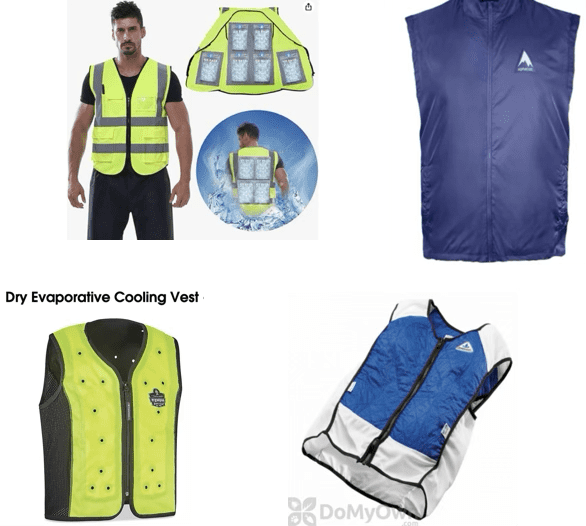
Figure 1. Cooling PPE
Ice Pack cooling Vest – Amazon
AlphCool 5V Cooling Vest -Scheels
DryEvaporative Coiling Vest – Uline
TechNiche Hybrid Sport Cooling Vest 4531- DoMyOwn
Packs
Cooling duration is up to 2 hours depending on ambient conditions and the responder’s
workload.
Gel or Ice Pack Vests
Gel or ice pack vests consist of a garment containing pockets that hold ice or gel packs. Gel is a mixture of starch, water, and other ingredients that when frozen has a cooling capacity similar to ice. These passive products are slightly heavier than phase change products, have high cooling power, and provide body core temperature reduction. They are nontoxic but require freezing to activate. Since they operate below typical dew point temperatures, water vapor from the environment can condense on the packs, which may cause skin irritation.
The extreme cold may also cause vasoconstriction, ultimately leading the body to retain heat.
Liquid Circulating Products
Liquid circulating products work by pumping a chilled fluid through a heat transfer garment lined with a network of tubing (Figure 2). Metabolic heat is transferred to the circulating fluid, which is pumped back to the cooling unit where the heat is rejected. The coolant fluid is chilled in the cooling unit, using either a vapor compression system or thermoelectric cooling, and recirculated back to the heat transfer garment to continuously cool the user. Both of these methods require the cooling unit to be located external to the user’s uniform since heat must be rejected to the ambient environment. Both methods also require electrical power from batteries.
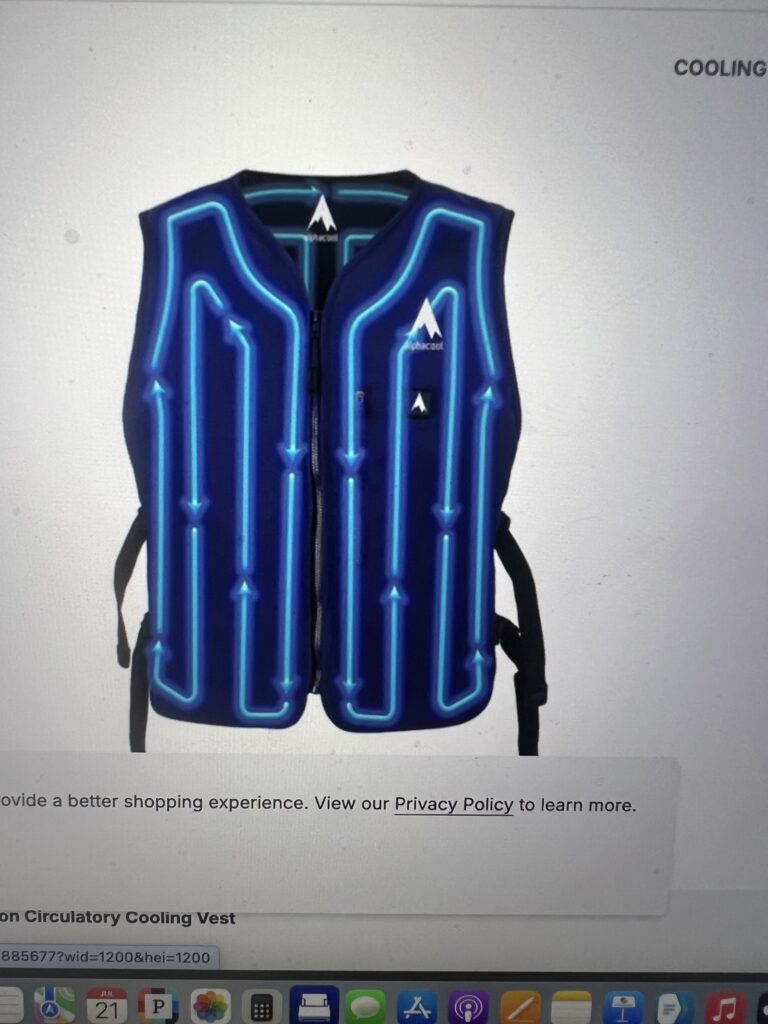
Advances in vapor compression technology have reduced the size, weight, and power needs of these systems, greatly enhancing their portability. Ice can also be used as the cooling source in a liquid circulation system. A battery-powered pump draws chilled ice water from a reservoir and circulates it through the garment. The ice water is usually carried in a backpack for portable units. The system requires replenishment of the ice and batteries. These garments can be worn directly against the skin without danger of freezing. They are relatively expensive and heavy but are very effective.
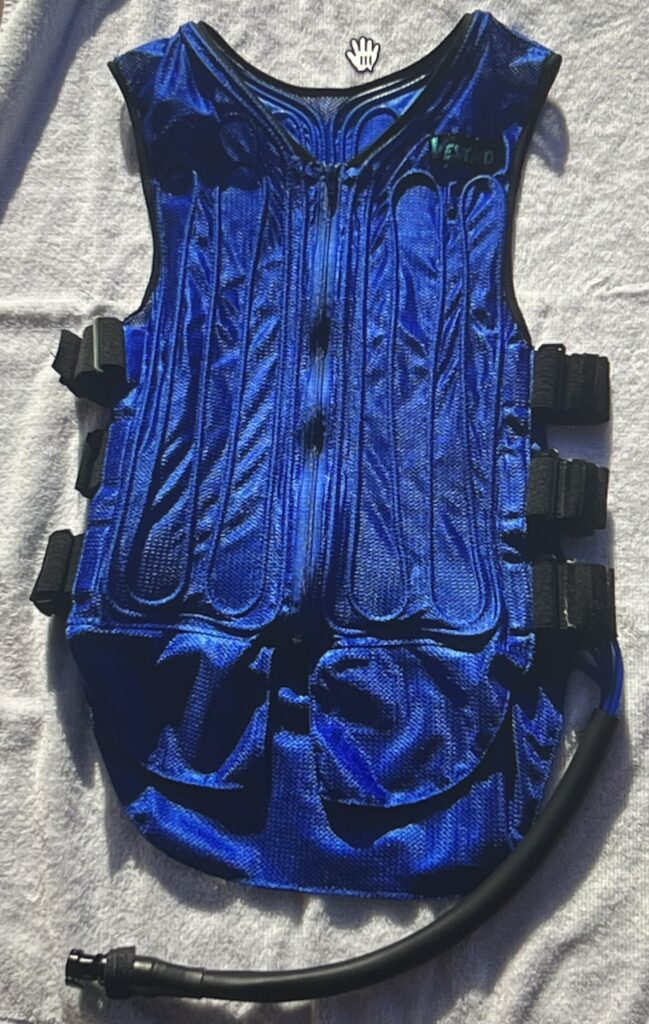
Figure 2. Backpack Ice-Based Liquid Circulation System
Photo courtesy of Veskimo Personal Cooling Systems™
Ambient Air Systems
Ambient air systems work by blowing air between the protective outer garments and the inner layers of clothing, increasing both convective and evaporative heat losses. They typically use a battery-powered blower to circulate air through an air distribution garment. Systems are available that weigh less than 5 pounds. Air cooling is not as efficient as water cooling because the air heat transfer coefficient is only 1/25 that of water. However, ambient air systems are fairly effective at low relative humidities.
Source: McCullough, Elizabeth A., and Eckels, Steve, Evaluation ofPersonal Cooling Systems for Soldiers, Institute for Environmental Research, Kansas State University, August 2009.
2. EPA & SRFs Witness Cuts In 2026 House Appropriations Bill. The House Interior Subcommittee’s FY 2026 appropriations bill proposes significant cuts to the EPA and State Revolving Funds, impacting environmental programs and management.
The House Interior Subcommittee released its appropriations bill for FY 2026 Interior, Environment and Related Agencies Bill on July 14, 2025. The proposed spending bill includes cuts to the U.S. Environmental Protection Agency (EPA) and the Clean Water and Drinking Water State Revolving Funds (SRFs). The bill now moves to the Senate.
Proposed EPA cuts
The bill proposes a $2.12 billion cut to the EPA, which is a 23% reduction in funding compared to FY 2025. If enacted, the cuts would include programs like:
- Science and Technology: $233.7 million cut – 30.9% reduction compared to FY 2025.
- Environmental Programs and Management: $922.9 million cut– 28.9% reduction compared to FY 2025.
- State and Tribal Assistance Grants: $679.8 million cut– 15.5% reduction compared to FY 2025.
The bill also proposes $282.75 million for the Hazardous Substance Superfund program, which is equal to the budget request.
Drinking Water State Revolving Funds
According to the bill, $894,737,000 would be made available for the Drinking Water State Revolving Funds (DWSRF), down from $1.1 billion in FY 2025 – a 19% cut.
The Drinking Water State Revolving Loan Fund was established by the 1966 amendments to the Safe Drinking Water Act (SDWA). It is a financial assistance program to help water systems and states to achieve the health protection objectives of the SDWA. EPA awards the capitalization grants.
Clean Water State Revolving Funds
According to the bill, $1,208,314,000 would be made available for the Clean Water State Revolving Funds (CWSRF), down from $1.6 billion in FY 2025 – a 25% cut.
Under the CWSRF, the EPA provides grants to all 50 U.S. states and Puerto Rico. It was created by the 1987 amendments to the Clean Water Act (CWA) as a financial assistance program for a wide range of water infrastructure projects.
The $2.1 billion in SRF fundingwould be the lowest levels since 2008.
Other proposed cuts
The Interior, Environment, and Related Agencies Appropriations Bill, 2026, if enacted, would cut funding for the following:
- Bureau of Land Management: $110.4 million cut – 8% reduction compared to FY 2025.
- U.S. Fish and Wildlife Service: $108.7 million cut– 6.5% reduction compared to FY 2025.
- U.S. Geological Survey (USGS): $81.18 million cut – 5.6% reduction compared to FY 2025.
- Bureau of Ocean Energy Management: $30.96 million cut – 20% reduction compared to FY 2025.
- Bureau of Safety and Environmental Enforcement: $24.1 million cut – 15% reduction compared to FY 2025.
Source; WaterWorld, Alex Cossin
3. A Matter Of Perspective: If the Sun were hollow, how many Earths could fit inside the
Sun?
A. 800,000
B. 1.3 million
C. 2.1 million
D. 3.2 million
Answer at the end of the newsletter
4. Lake Powell Forecasts Show Hydropower Generation Is At Risk Next Year As Water Levels Drop. If the next two years are drier than usual, the immense reservoir’s water levels could drop too low to generate electricity, federal report says.
Federal officials reported Tuesday that the water level in Lake Powell, one of the main water storage reservoirs for the Colorado River Basin, could fall low enough to stop hydropower generation at the reservoir by December 2026.
The reservoir’s water levels have fallen as the Colorado River Basin, the water supply for 40 million people, has been overstressed by rising temperatures, prolonged drought and relentless demand. Upper Basin officials sounded the alarm in June, saying this year’s conditions echo the extreme conditions of 2021 and 2022, when Lake Powell and its sister reservoir, Lake Mead, dropped to historic lows.
The basin needs a different management approach, specifically one that is more closely tied to the actual water supply each year, the Upper Colorado River Commission’s statement said.
The seven basin states, including Colorado, are in high-stakes negotiations over how to manage the basin’s water after 2026. One of the biggest impasses has been how to cut water use in the basin’s driest years.
“You can’t reduce what doesn’t come down the stream. And that’s the reality we’re faced with,” Commissioner Gene Shawcroft of Utah said in the statement. “The only way we’re going to achieve a successful outcome is if we’re willing to work together — and not just protect our own interests.”
Lake Powell, located on the Utah-Arizona border, collects water from Colorado, New Mexico, Utah, Wyoming, part of Arizona and tribal reservations in the Colorado River’s Upper Basin. Glen Canyon Dam releases the reservoir’s water downstream to Lake Mead, Native American tribes, Mexico, and Lower Basin states, including Arizona, California and Nevada.
Lake Powell and Lake Mead make up about 92% of the reservoir storage capacity in the entire Colorado River Basin.
The Bureau of Reclamation’s July report, called a 24-month study, shows the potential for Lake Powell to decline below two critical elevations: 3,525 feet and 3,490 feet.
It could drop below 3,525 feet in April 2026, which would prompt emergency drought response actions. That’s in the most probable scenario, but the federal agency also considers drier and wetter forecast scenarios. The dry forecast shows that the reservoir’s water levels would fall below this elevation as soon as January.
Lake Powell would have to fall below 3,490 feet in order to halt power generation.
At-risk hydropower
Hydroelectric power generation takes a hit with lower water levels at Lake Powell and Lake Mead.
Reclamation’s dry conditions forecast says Lake Powell could fall below 3,490 feet by December 2026, and Lake Mead’s water level could fall below a key elevation, 1,035 feet, by May 2027. At that point, Hoover Dam would have to turn off several turbines and its power production would be significantly reduced, said Eric Kuhn, a Colorado water expert.
In more typical or unusually wet forecasts, neither reservoir would fall below these critical elevations in the next two years, according to the report.
Lake Powell and other federal reservoirs provide a cheap and consistent source of renewable energy. Without that, electricity providers would have to look to other, more expensive sources of energy or nonrenewable supplies. Some of those costs can get handed down to customers in their monthly utility bills.
Glen Canyon’s hydropower is normally pooled with other power sources to serve customers in Wyoming, Colorado, Arizona, New Mexico, Nevada, Texas and Utah. Its power generation has already been impacted: Fourteen of the lowest generation years at the dam have occurred since 2000.
A strong monsoon season this summer could help elevate the water levels in the major reservoirs, as could a heavy winter snowpack in the mountains this coming winter. Source: “Colorado Sun”, July 17, 2025.
ANSWER TO NO.2
B. 1.3 million Earths
Copyright 2025 EnviroInsight.org
