
Daniel Salzler No. 1315 EnviroInsight.org Four Items July 18, 2025
—————Feel Free To Pass This Along To Others——————
If your watershed is doing something you would like others to know about, or you know
of something others can benefit from, let me know and I will place it in this Information .
If you want to be removed from the distribution list, please let me know.
Please note that all meetings listed are open.
Enhance your viewing by downloading the pdf file to view photos, etc.
The attached is all about improving life in the watershed through knowledge.
If you want to be removed from the distribution list,
please let me know. Please note that all meetings listed are open.
Check our website at EnviroInsight.org
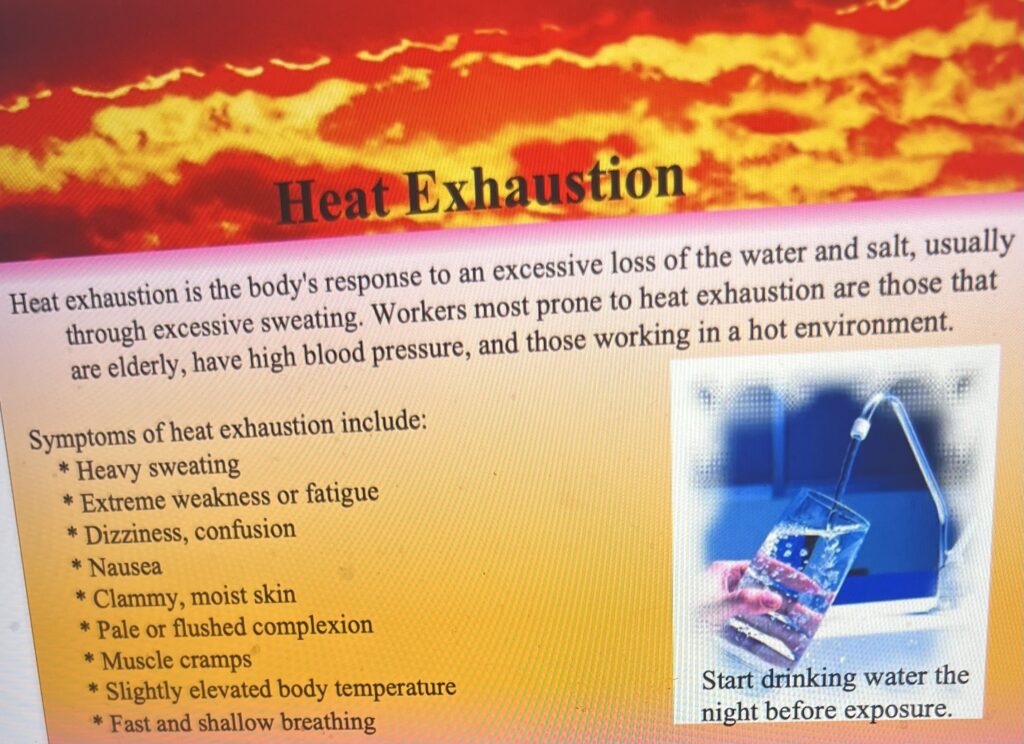
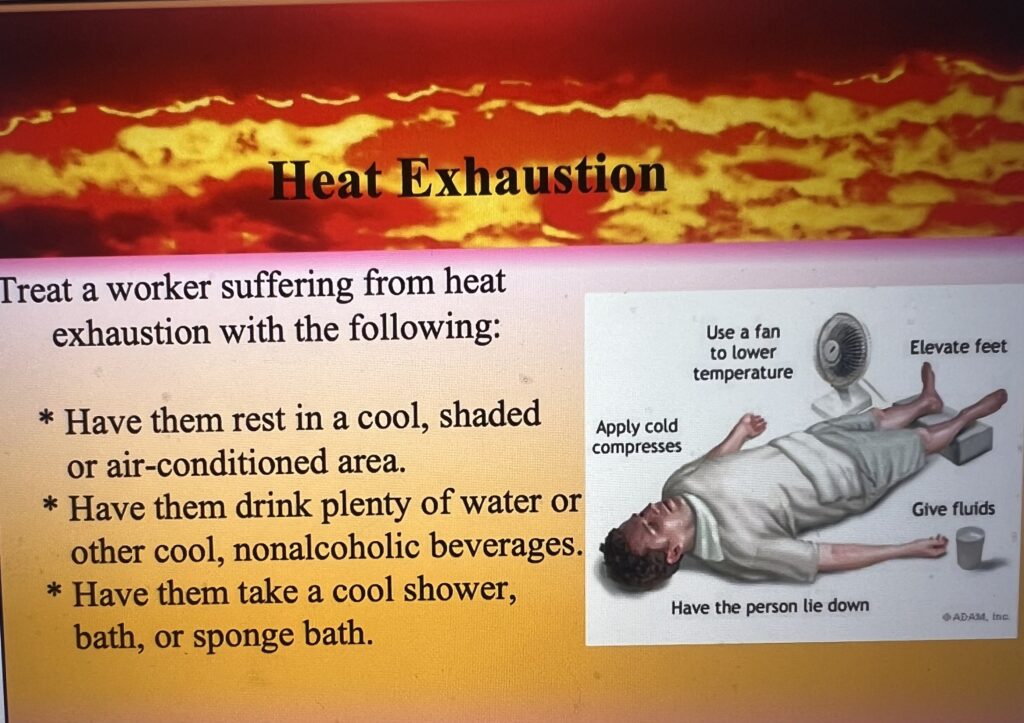
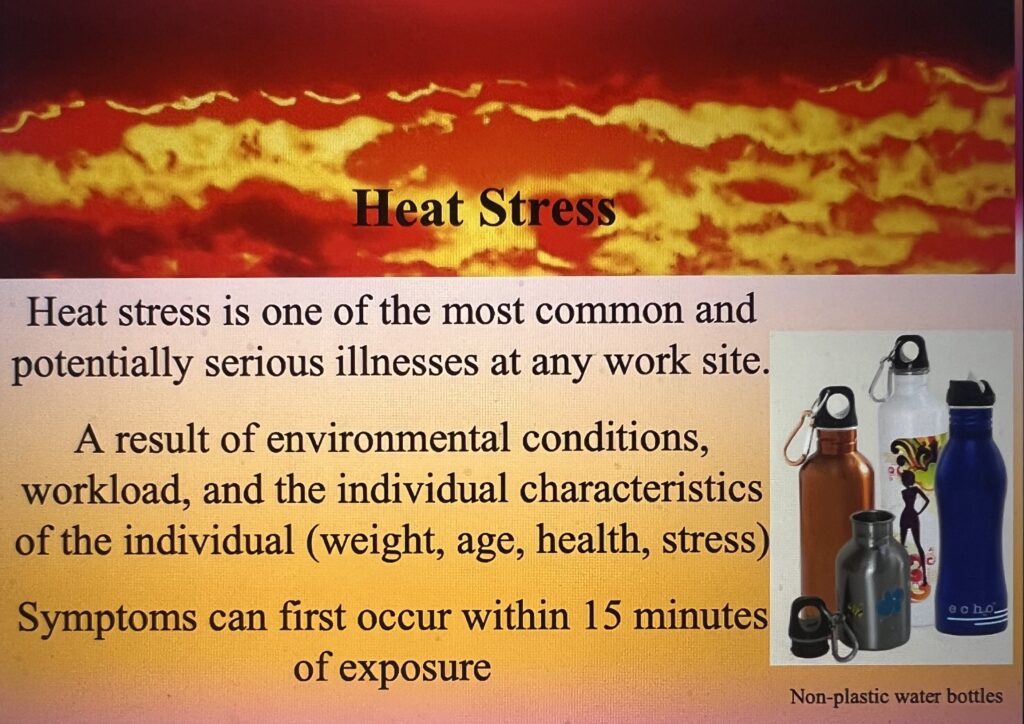
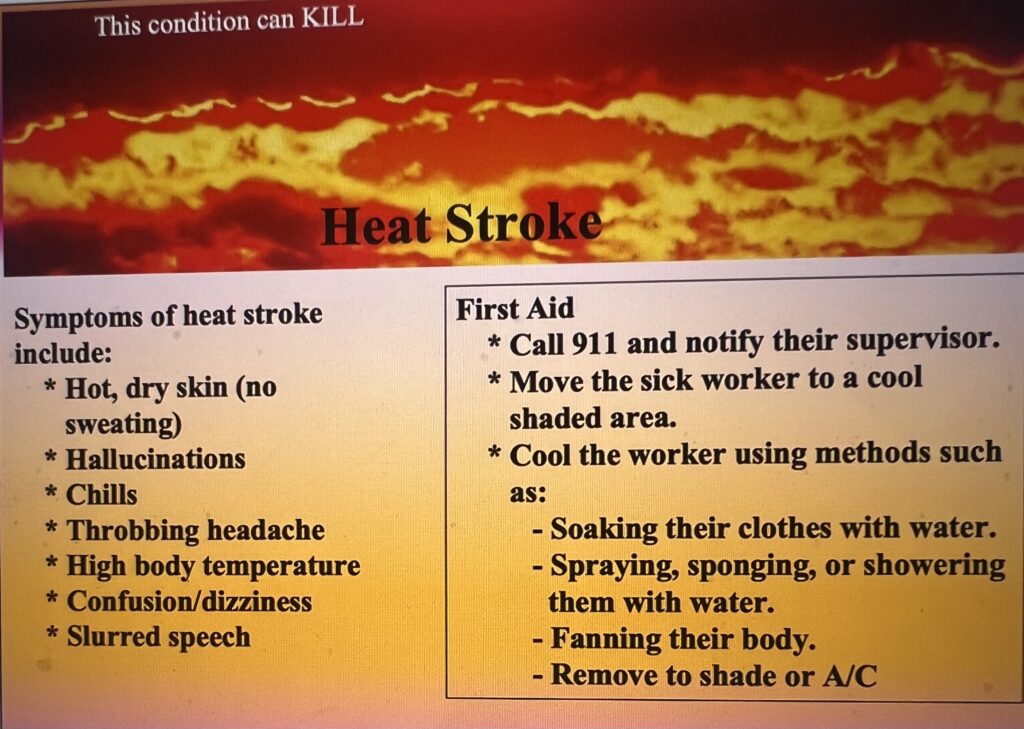
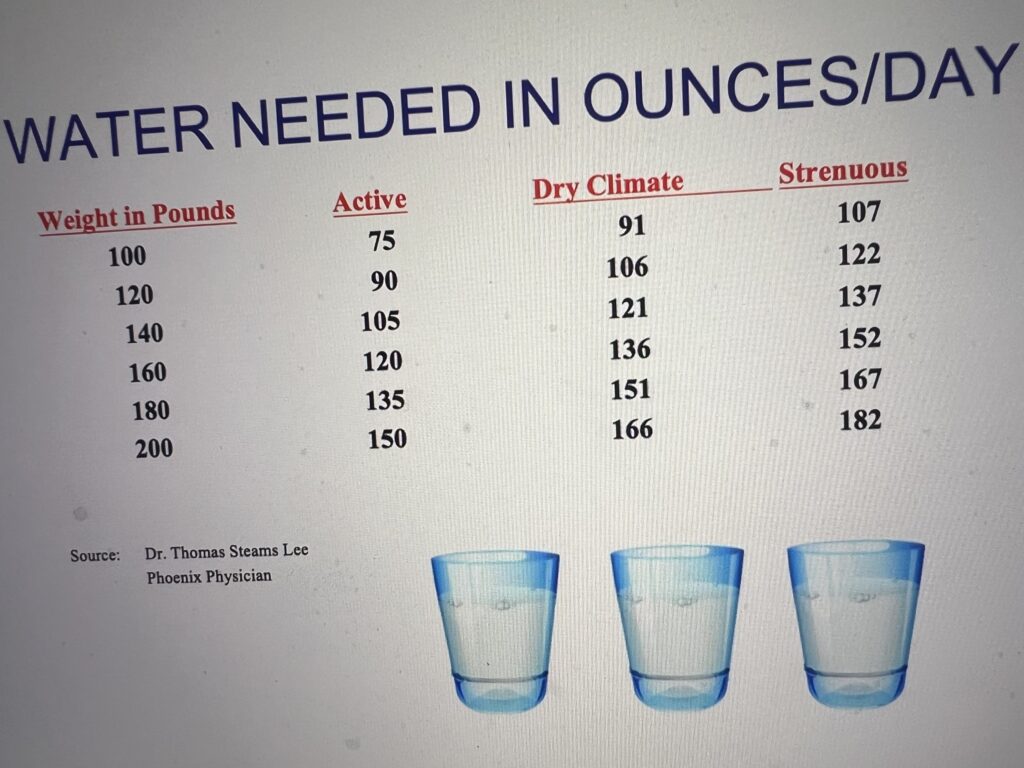
- It’s Hot Out There. Be Aware Of What It Is Doing To You! Use the followings as your OSHA reference guide to keep yourself out of trouble. [From least serious to most serious – death]
Heat Rash
Signs and Symptom
‘ • Red cluster of pimple or small blisters
• It is more likely to occur on the neck and upper chest, in the goin, under the breast, and in elbow creases.
First Aid
• Keep affected area dry
• Work in a less humid and cooler environment
Heat Cramps
Signs and Symptoms
• Muscle spasms in the abdomen, arms of legs
First Aid
• Move victims to a cooler place
• Have victim stop activity
• Administer 1/2 glass of water every 15 minutes as tolerated
2.GROUNDWATER REPLENISHMENT LEFT HANGING BY NEW ARIZONA LAW
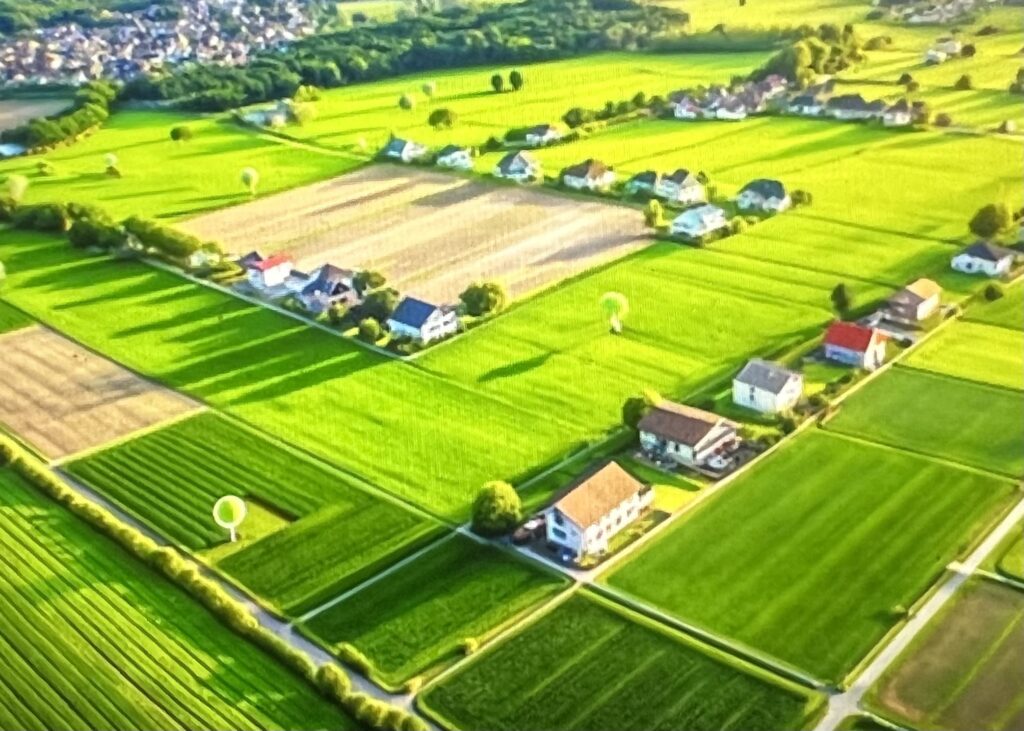
A newly signed bill giving developers the ability to buy and retire farmland in favor of subdivisions has been hailed by supporters as the single biggest improvement in state water law since the landmark Arizona Groundwater Management Act passed 45 years ago. It’s been promoted as a ticket to water savings, since homes typically use significantly less water than cotton fields. It’s also seen as a path to more affordable housing in the Phoenix area and Pinal County, where the law would have an impact. … But what’s called the Ag to Urban law comes with a big question mark that centers on the often downplayed concept of groundwater replenishment. The law will significantly increase the amount of water that must be recharged into the aquifer to compensate for groundwater pumped by new homes that are built on retired farmland. As of now, it’s not clear where that extra water will come from. Source: July 8, 2025 Arizona Daily Star (Tucson) July 8, 2025 Arizona Daily Star (Tucson)
3. Climate Change And Aerosols Drive Persistent Drought And Lower Rainfall In Southwest, Study Finds Source: Caitlin Hayes, Cornell University
A study by Lehner and his team, published in Nature Geoscience, shows that climate change and aerosols have indeed led to lower precipitation in the Southwest and made drought inevitable. The research is the first to isolate the variables of human-caused climate change and air pollution to show how they directly affect the region’s precipitation; the study predicts that drought conditions will likely continue as the planet warms.
“What we find is that precipitation is more directly influenced by climate change than we previously thought, and precipitation is pretty sensitive to these external influences that are caused by humans,” said Lehner, senior author and assistant professor of earth and atmospheric sciences in the College of Agriculture and Life Sciences.
A trend toward lower precipitation in the Southwest started around 1980, with the onset largely attributed to La Niña-like conditions, a climate phenomenon that results in cooler surface temperatures in the tropical Pacific Ocean. The new research shows that even if El Niño-like conditions had prevailed instead, the Southwest would not have experienced a corresponding increase in precipitation.
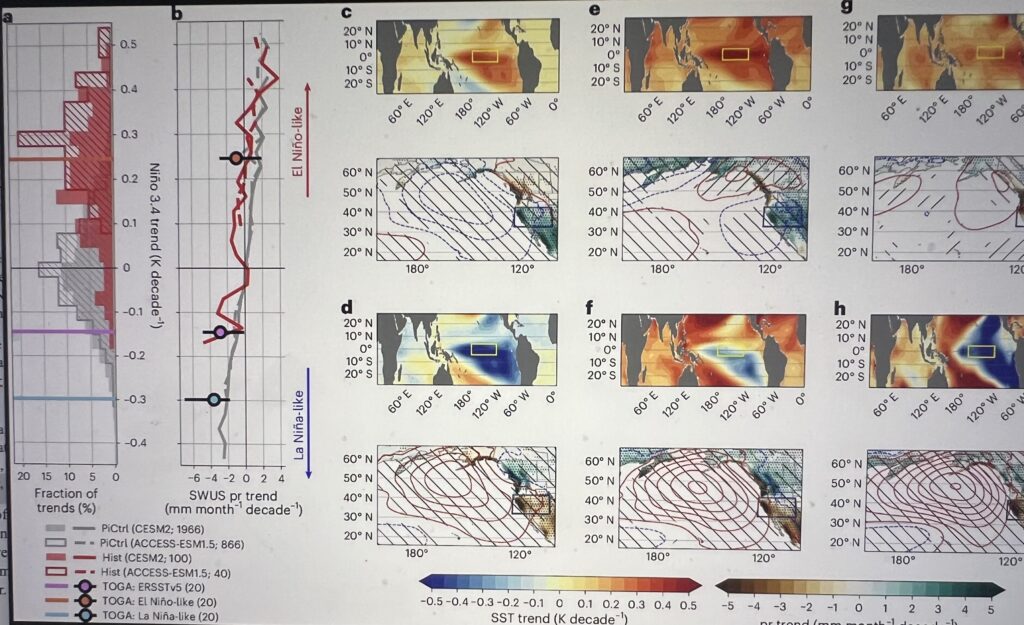
“In our models, if we see a warming trend in the tropical Pacific, we would expect more precipitation in the Southwestern United States, but that’s not the case here,” said first-author and doctoral student Yan-Ning Kuo.
“On top of the El Niño and La Niña sea surface temperature trends, there’s a uniform warming trend because of historical climate change, as well as emissions from anthropogenic aerosols, that both create a certain circulation pattern over the North Pacific. Those two factors prevent the precipitation for the Southwestern U.S. from increasing, even under El Niño-like trends.”
There is some good news. Researchers expect that the concentration of aerosols—which includes the emissions from vehicles and industry—will drop as China and other countries in East Asia implement policies to improve air quality [ but not in the U.S. under the Trump
“Most experts expect the world as a whole to reduce air pollution, and globally, it’s already going down quite quickly. That’s good news on the precipitation side,” Lehner said. “At the same time, the warming is going to continue as far as we can tell, and that will gradually outweigh those benefits, as a warmer atmosphere tends to be thirstier, gradually drying out the Southwest.”
The researchers were able to determine the role of climate change and aerosols by eschewing prevailing climate models that in recent years have not been able to accurately reflect the sea surface temperatures observed in real-time. The team designed their own simulations that allowed them to plug in data from satellites and statistical models to understand the impact of each contributing factor.
4. Sarah Porter, Director Of The Kyl Center For Water Policy: “The Future Of Arizona’s Water Policy.” In many parts of Arizona, there is virtually no natural groundwater recharge. And I think that is something people don’t appreciate. In much of Arizona, probably well over half of Arizona … the groundwater recharge is so low that it’s almost immaterial, in vast swaths of the state. That’s just a hydrological reality that it took some time for me to come to terms with.
The exception to this is the White Mountains and the Coconino aquifer in the northeast, but in most of the state, less than 2% of the water that falls on the ground in snow or rain makes its way to the aquifer.
This was another year where the state didn’t pass a groundwater management framework for rural areas. How will the lack of a framework affect some of these rural areas?
It’s the status quo, continuing with how it was. In the vulnerability of different areas, there’s a great deal of difference. We have 51 sub basins in the state, which are like misshapen, leaky bathtubs holding groundwater aquifers. And in some of those sub basins, we see a very high rate of depletion. And in some, not so high. Most of the northern half of the state is really not at risk. Let’s say the northern third. It’s in the southern parts of the state where we have more groundwater reliant agriculture — where we see more risk. And the most depleted, or rapidly depleting aquifer, currently is the Gila Bend Basin. Mostly, the economic activity that’s going on there is farming.
So it means that those people who have farms there are going to be grappling with the costs of pumping deeper and deeper. There are other places where there are communities. In La Paz County, there are people with fairly shallow wells who probably can’t afford to dig deeper wells, and they’re finding that their groundwater table is declining. The impacts may be greater for those … there may be more people in that situation in a sub basin that isn’t (in) as much trouble. How to assess impacts is really complicated. So, it just means we have the status quo for now.
There are some interesting developments occurring up in the Prescott area. There is a group … they have an intergovernmental agreement, and they’re working at a more local and, to some extent, voluntary level, to get a grip on groundwater use. And I think we could see more of that in southeastern Arizona and Sulphur Springs. There’s a group that’s (trying) to figure out if there are ways they can work through voluntary agreement to collectively reduce their groundwater consumption.
They kind of differed, but essentially the legislation that has been contemplated … would enable local areas to decide they want groundwater regulation if they met certain conditions. The other version that made its way through the Legislature was limiting the sub basins that actually could have groundwater regulation. The framework wouldn’t be available to every sub basin in the state that met the conditions. I think there’s traction. There is some very good thinking that’s happened in the last few years that maybe a future Legislature can build on.
What do people misunderstand about water in Arizona?
There’s a really important thing that I wish people understood. Cities don’t need much water. I mean, in context of water demand currently, cities in Arizona are responsible for maybe 20% of demand, all of the water that cities deliver, that cities and towns and any water provider. And why this is important is that, if we were looking at a water shortage or a predominantly agricultural economy, we would be looking at very expensive and I would say, arguably, very disruptive solutions. How do we move the water from a large water supply from a river, to where we want to farm? That’s historically what has been done in the U.S. It was the policy of the United States in the 19th and first part of the 20th century, because there was such a priority on settling the U.S. and feeding people.
Now, we’re at a different time. We have different technology. We can grow more with less water. We don’t need to have that as our priority. And so when we’re looking at cities that are at risk of water supply shortages, the solutions for getting more efficient and finding water supplies to make up whatever cuts there are, the solutions are much more manageable and less disruptive than historically. A combination of … making sure that we’re being efficient with water and new water supplies from multiple sources will be sufficient. It’ll be enough water for growth, enough water for lots of economic activity and have a nice place to live.
I wanted to make sure to say that, because it’s easy to feel really, really anxious about what’s going on with water. You hear cuts to the Colorado River and groundwater. But we’ve been working on this for a long time. I would say earnestly working on this for arguably 100 years, (and) certainly since the Groundwater Management Act in 1980. We’re facing challenges, but we also have a lot of solutions out there.
Copyright 2025@ EnviroInsight.org
