
Daniel Salzler No. 1305 EnviroInsight.org Two Items May 29, 2025
—————Feel Free To Pass This Along To Others——————
If your watershed is doing something you would like others to know about, or you know
of something others can benefit from, let me know and I will place it in this Information .
If you want to be removed from the distribution list, please let me know.
Please note that all meetings listed are open.
Enhance your viewing by downloading the pdf file to view photos, etc.
The attached is all about improving life in the watershed through knowledge.
If you want to be removed from the distribution list,
please let me know. Please note that all meetings listed are open.
Check our website at EnviroInsight.org
1. New Rules Open Doors For More Arizona Cities To Recycle Wastewater Into Drinking Water.
The Arizona Department of Environmental Quality said the rules create a regulatory framework ensuring safe and reliable purification of wastewater for drinking.
SCOTTSDALE, Ariz. — Arizona has taken another step forward in securing the future of water in the desert. New rules for turning wastewater into drinking water have been approved.
The purification process is one that the Arizona Department of Environmental Quality said more local utilities could adopt. An oversight council has just approved the new advanced water purification rules.
ADEQ said the rules create a regulatory framework ensuring safe and reliable purification of wastewater for drinking.
With the new steps, Arizona cities and water providers can apply for a permit to use advanced water purification. By doing that, ADEQ said it creates a crucial tool for managing water resources amid ongoing drought and increasing demand.
“The real benefit to this is it gives those utilities another option in their toolbox to responsibly manage their water portfolio and ensure that Arizonans have access to water, both today and into the future.
The new approval follows an extensive public engagement process. It ensures the state’s advanced water purification process reflects the highest standards in water treatment.
ADEQ’s Water Quality Division said the process sends treated water to rivers or aquifers for reuse. This new technology allows the utilities to remove that environmental buffer and treat the water directly through Advanced Water Purification (AWP) technology. It would go straight to drinking water.
The new rule approval is aiming to open the door for more Arizona cities to adopt an advanced water purification process. It’s a process that’s been happening in Scottsdale for more than 30 years and one the city said is one of the most sophisticated recycled water facilities in the world. Scottsdale’s Advanced Water Purification system is the first permanent facility in Arizona, according to the city. There, up to 20 million gallons of recycled water can be treated per day.
The city said it brings the water up to standards that exceed those of bottled water. The Advanced Water Purification plant is in the northern part of the Valley, north of the 101.
Here’s how it works: the City sends the water to golf courses and also takes the water, cleans it and sends it to the aquifer. After the aquifer, the city said Mother Nature takes over, cleaning it even further. Over time, the water is used in wells and sent to residents and customers.
The cleaning process takes treated recycled water and then further treats it through ozonation, membrane ultrafiltration, reverse osmosis and ultraviolet photolysis. Kevin Rose, Scottsdale’s Interim Water Director, said the water meets and exceeds all EPA standards.
ADEQ said Scottsdale and Phoenix have both been actively involved in developing and supporting the Advanced Water Purification rules. Scottsdale said they could see the new rules implemented in the city in late 2029 or early 2030. ADEQ said they’ll keep working with Arizona cities and water providers on upcoming water purification projects that could be coming near you. Source: 12 News OR ADEQ.gov
2. Groundwater Measure Seeks To Protect Rural Interests, Satisfy Stakeholders
Jamar Younger, Arizona Capitol Times//April 26, 2025
Lawmakers are once again attempting to craft a groundwater management policy that preserves the state’s groundwater supply in rural areas while appeasing the interests of a wide variety of stakeholders. Legislators have introduced multiple measures this session, with only one of the bills advancing through the legislative process.
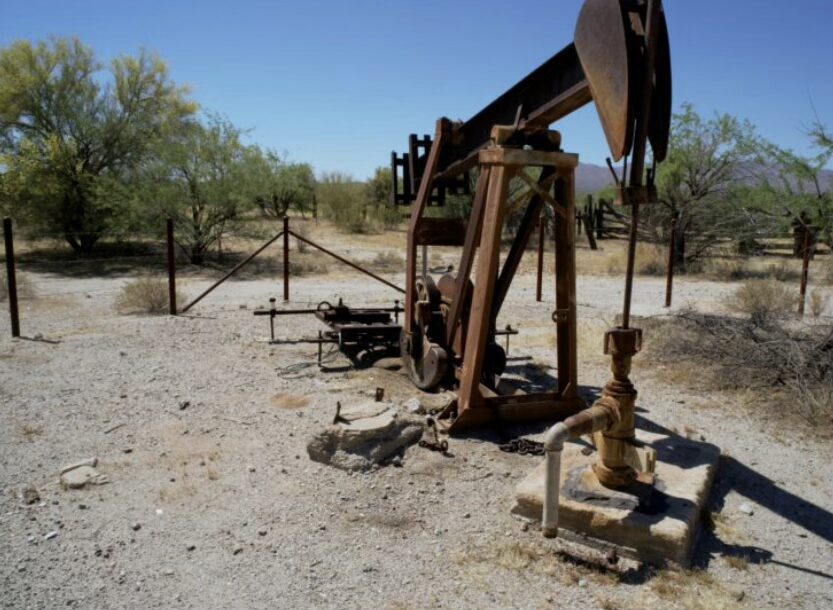
Senate Bill 1520 would allow the creation of Basin Management Areas which would impose a series of restrictions intended to preserve groundwater in Gila Bend, Hualapai Valley and the Willcox Groundwater Basin. The Willcox Active Management Area, established to preserve the existing groundwater supply in the Willcox Basin, would be converted into a Basin Management Area.
That bill, sponsored by Sen. Tim Dunn, R-Yuma,
passed the House Natural Resources, Energy & Water and Rules committees last month and is waiting to be heard in the House Committee of Whole.
Another set of twin bills introduced earlier this session by Sen. Priya Sundareshan, D-Tucson, and Rep. Chris Mathis, D-Tucson, would also enact groundwater preservation measures in certain rural areas but never received a hearing despite support from Gov. Katie Hobbs and a group of Republican rural lawmakers. [ Blocked by Republican lawmakers]
The bills, Senate Bill 1425 and House Bill 2714, would establish Rural Groundwater Management Areas (RGMAs) in the Gila Bend Basin, Hualapai Valley Basin, Ranegras Plain Basin, and San Simon Sub-basin and establish certain requirements and restrictions for groundwater pumping in those areas. Under this legislation, the Willcox Active Management Area would be converted to a RGMA.
Legislators have been working for years to establish groundwater regulations for rural areas, but potential legislation has been hindered by lawmakers on both sides of the aisle, environmentalists, the agricultural community and municipalities who disagree on the restrictions needed to preserve groundwater in mostly unregulated rural areas.
The debates primarily centered on how much groundwater pumping needs to be reduced to protect the aquifers in rural basins and the desire for regulatory structures that increase local control in those areas.
Some stakeholders have blamed committee chairs for not allowing bills to be heard and denying those bills an opportunity to advance through the Legislature.
“Most of the people at the Legislature have sort of ceded their understanding of the issue to whoever their perceived expert is in that body,” said Nick Ponder, senior vice president for governmental affairs at public affairs firm HighGround, Inc.
“I’m continuing to agree to be at the table and work with others, not just with both sides of the aisle, but with the different industries and the residential people as well,” Griffin said at the hearing.
John Boelts, president of the Arizona Farm Bureau, said Dunn’s proposal strikes a balance between maintaining conservation efforts, addressing the needs of the farming, ranching, industrial and mining industries, and preserving local control.
Boelts said some previous proposals, such as Mathis and Sundareshan’s bills, called for groundwater reductions that could hurt the agricultural industry.
For example, the two Democrats’ legislation calls for up to a 40% reduction in groundwater pumping over 40 years while Dunn’s bill would reduce pumping by 10% — 1% each year — within 10 years of the formation of a Basin Management Area.
Critics say the bill doesn’t do enough to reduce groundwater pumping and would continue to benefit large farming corporations.
“I think, fundamentally, it has been hard to get people to seriously negotiate because the status quo is hurting Arizona residents, but it benefits big farming corporations,” Sundareshan said. “Large industrial agriculture benefits from the status quo, being able to pump as much water as they need without worrying about long-term sustainability.”
Although lawmakers and stakeholders may disagree on certain issues, Ponder said residents in rural areas who usually oppose big government actually want politicians to reach a solution that’ll protect groundwater levels in those areas.
3. What Happens When Colorado River Drought Plans End in 2026?
Arilynn Hyatt Special for the Arizona Republic
With seven states, 30 tribes and Mexico, the Central Arizona Project and the Gila River Indian Community addressed the uncertainty of the Colorado River Basin water shortage at the 2025 Society of Environmental Journalist Conference.
Facing water shortages in the Colorado River Basin in the early 200s, the 2007 Colorado River Interim Guidelines and later the 2019 Drought Contingency Plans were created to mitigate water use.
These plans expire in 2026. New agreements could potentially lead to less availability of water.
“We’re looking at a new water supply someday. It might not only be Colorado River water going through the canal system,” said DeEtte Person, communications strategist for the Central Arizona Project.
The Central Arizona Project, (CAP), is a 336-mile wide system that delivers Colorado River water across the state. The system includes four tunnels, 10 siphons, 14 pumping plants, 39 radical gates and more than 50 turnouts.
The Colorado River Basin has been in a prolonged drought, being categorized as tier one shortage, DeEtte said.
Being in a tier one shortage means Arizona, along with other states, is facing reductions to the amount of water allocated under the agreements. The seven states under the agreements also use a priority system, said Patrick Dent, assistant manager over water policy at CAP.

The Colorado River Basin allocates 2.8 million acre-feet of water to Arizona annually with 60% of that water coming through CAP and the rest gets used on the Colorado River, Yuma area and on tribal lands, according to CAP.
“Those on river uses were established in a time before the Central Arizona Project and consequently, for the most part, have higher priorities,” Dent said.
Most of the shortages fall to CAP, which has its own priority system on whose water supply gets cut first. Excess groundwater, agricultural districts and municipalities are on the bottom of the CAP priority list, Dent said.
As states begin negotiations over new water agreements, Cynthia Campbell, director of policy innovation for the Arizona Water Initiative said the uncertainty surrounding 2026 means Arizona is starting to consider options.
“There are scenarios where you could be talking about at certain times of the year, or maybe on an ongoing basis, there might be such low levels of water in the canal that you don’t have enough head to operate the water treatment plant,” said Campbell.
Campbell previously worked as the water resources management advisor for the City of Phoenix, where she managed the water resource portfolio and advised city officials.
She said Arizona cities know there will be cuts to CAP in the post-2026 water agreements, the question is how much. “That’s where the real difficulty comes from,” she said.
The Colorado River Basin allocates 2.8 million acre-feet of water to Arizona annually with 60% of that water coming through CAP and the rest gets used on the Colorado River, Yuma area and on tribal lands, according to CAP.
“Those on river uses were established in a time before the Central Arizona Project and consequently, for the most part, have higher priorities,” Dent said.
Most of the shortages fall to CAP, which has its own priority system on whose water supply gets cut first. Excess groundwater, agricultural district
As states begin negotiations over new water agreements, Cynthia Campbell, director of policy innovation for the Arizona Water Initiative said the uncertainty surrounding 2026 means Arizona is starting to consider options.
“There are scenarios where you could be talking about at certain times of the year, or maybe on an ongoing basis, there might be such low levels of water in the canal that you don’t have enough head to operate the water treatment plant,” said Campbell.
Campbell previously worked as the water resources management advisor for the City of Phoenix, where she managed the water resource portfolio and advised city officials.
She said Arizona cities know there will be cuts to CAP in the post-2026 water agreements, the question is how much. “That’s where the real difficulty comes from,” she said.
The Colorado River Basin allocates 2.8 million acre-feet of water to Arizona annually with 60% of that water coming through CAP and the rest gets used on the Colorado River, Yuma area and on tribal lands, according to CAP.
“Those on river uses were established in a time before the Central Arizona Project and consequently, for the most part, have higher priorities,” Dent said.
Most of the shortages fall to CAP, which has its own priority system on whose water supply gets cut first. Excess groundwater, agricultural districts and municipalities are on the bottom of the CAP priority list, Dent said.
As states begin negotiations over new water agreements, Cynthia Campbell, director of policy innovation for the Arizona Water Initiative said the uncertainty surrounding 2026 means Arizona is starting to consider options.
“There are scenarios where you could be talking about at certain times of the year, or maybe on an ongoing basis, there might be such low levels of water in the canal that you don’t have enough head to operate the water treatment plant,” said Campbell.
Campbell previously worked as the water resources management advisor for the City of Phoenix, where she managed the water resource portfolio and advised city officials.
She said Arizona cities know there will be cuts to CAP in the post-2026 water agreements, the question is how much. “That’s where the real difficulty comes from,” she said.
The Colorado River Basin allocates 2.8 million acre-feet of water to Arizona annually with 60% of that water coming through CAP and the rest gets used on the Colorado River, Yuma area and on tribal lands, according to CAP
“Those on river uses were established in a time before the Central Arizona Project and consequently, for the most part, have higher priorities,” Dent said.
Most of the shortages fall to CAP, which has its own priority system on whose water supply gets cut first. Excess groundwater, agricultural districts and municipalities are on the bottom of the CAP priority list, Dent said.
As states begin negotiations over new water agreements, Cynthia Campbell, director of policy innovation for the Arizona Water Initiative said the uncertainty surrounding 2026 means Arizona is starting to consider options.
“There are scenarios where you could be talking about at certain times of the year, or maybe on an ongoing basis, there might be such low levels of water in the canal that you don’t have enough head to operate the water treatment plant,” said Campbell.
Campbell previously worked as the water resources management advisor for the City of Phoenix, where she managed the water resource portfolio and advised city officials.
She said Arizona cities know there will be cuts to CAP in the post-2026 water agreements, the question is how much. “That’s where the real difficulty comes from,” she said.
The Colorado River Basin allocates 2.8 million acre-feet of water to Arizona annually with 60% of that water coming through CAP and the rest gets used on the Colorado River, Yuma area and on tribal lands, according to CAP.
“Those on river uses were established in a time before the Central Arizona Project and consequently, for the most part, have higher priorities,” Dent said.
Most of the shortages fall to CAP, which has its own priority system on whose water supply gets cut first. Excess groundwater, agricultural districts and municipalities are on the bottom of the CAP priority list, Dent said.
As states begin negotiations over new water agreements, Cynthia Campbell, director of policy innovation for the Arizona Water Initiative said the uncertainty surrounding 2026 means Arizona is starting to consider options.
“There are scenarios where you could be talking about at certain times of the year, or maybe on an ongoing basis, there might be such low levels of water in the canal that you don’t have enough head to operate the water treatment plant,” said Campbell.
Campbell previously worked as the water resources management advisor for the City of Phoenix, where she managed the water resource portfolio and advised city officials.
She said Arizona cities know there will be cuts to CAP in the post-2026 water agreements, the question is how much. “That’s where the real difficulty comes from,” she said.

Now, the Gila River Indian Community is trying to recharge the aquifers on its land, to bring back the indigenous plants and ensure more water availability for the future.
It’s the Managed Aquifer Recharge site 5, (MAR 5), better known as the Gila River Interpretive Trail. There are multiple recharge sites throughout the reservation all tasked with the same job, to store groundwater.

“Tribes play a key role in this,” said Governor Stephen Roe Lewis of the Gila River Indian Community.
Tribes have their own water rights. Typically through litigation. The Gila River Indian Community and other Arizona tribes fight to make sure water remains untouched on their lands.
“Think of it like a bank account,” David DeJong, director of the Pima-Maricopa Irrigation Project, said. The irrigation project’s goal is to develop a water delivery system that is beneficial to the community and its resources.
The community puts water in the ground to restore the aquifer, then they market that water. Municipalities, companies and farmers can buy “credits” from the Gila River Water Storage, LLC. Anyone who buys from the company can take water from the canal at a later date or pump groundwater from an active management area, Dejong said.
MAR 5 can store up to 40,000 acre feet of water per year, said the Pima-Maricopa Irrigation Project.
With this process, the land not only benefits but so does the companies that buy credits and the community’s economic growth, Dejong said. Since the creation of the recharge sites in 2015, the community has recharged 178,691 acre-feet of water on the reservation, which can supply around 536,073 single-family households.
Additionally, the community has started a Solar-Over-Canal pilot program at the Casa Blanca Canal. “A concept that we actually looked at about 10 years ago, when reclamation did a couple of studies encouraging the Central Arizona Project to consider solar over a canal,” Dejong said.
The $5.6 million project has generated 488,098 kilowatt hours, which is enough energy to power 1,000 homes for 8 hours. The goal of this program is to generate enough solar energy to offset the reservation’s power demand.
“We’re trying to find a way to conserve every drop as possible,” he said.
The Gila River Indian Community still has to study if the panels are more solar efficient over the canal or not. Dejong said they are hoping to publish data over the next three years.
In the meantime, the Gila River Indian Community will continue to keep the federal government accountable when it comes to water rights. “Water connects us all. Water is life,” Lewis said.
Source: Ariylnn Hyatt is a junior studying journalism at the University of Arizona and is part of a student newsroom led by The Arizona Republic.
4. “The Trump administration is quietly carrying out a plan that aims to kill hundreds of bans of highly toxic PFAS (Per- and Polyfluoroalkyl substances) ‘forever chemicals’ and other dangerous compounds in consumer goods. EPA has identified more than 120,000 facility sites around the U.S. and about 30,000 industrial sites where EPA says people may be exposed to PFAS. (Source: Science, Public Health Policy And The Law )
The bans, largely at the state level, touch most facets of daily life, prohibiting everything from bisphenol in children’s products to mercury in personal care products to PFAS in food packaging and clothing.
If successful, the public would almost certainly be exposed to much higher levels of chemicals linked to a range of serious health issues such as cancer, hormone disruption, liver disease, birth defects, and reproductive system damage, the plan’s opponents say.” (Source: PFAS Project Lab)
Trichloroethylene (TCE)* is a clear, colorless liquid with a sweet odor that has proven itself for decades as an especially effective way for dry-cleaning shops to lift stubborn stains off of clothing, be it eye makeup, shoe polish, or ballpoint ink. NMP (N-Methyl-2-pyrrolidone: Threshold level: 0.07mg/Kg **) is another all-but-magic solvent, although it usually has a slightly yellow tint and a fishy odor. It is such a potent paint remover that if you spray it on a wall — as many city governments have done for years — you then can use a rag to simply wipe graffiti away.
There is just one complication with both of these modern conveniences: These substances are extremely harmful to your health. In fact, high levels of exposure to TCE in particular, can kill you, while NMP causes birth defects, research shows.
Similarly, on pesticides, the Trump-era EPA rejected a proposed ban on the use of chlorpyrifos***, which is used on more than 60 crops, particularly in California, and has been blamed for sickening farm workers and causing development disabilities in their children. Instead, the EPA has agreed to simply to do more studies on the threats of chlorpyrifos.
The proposal to ban the commercial use of methylene chloride as a paint stripper is still being considered, but the draft final rule now awaiting final action by the White House would significantly narrow the ban, according to information collected from environmental groups, as it would likely only apply to sales to consumers, not commercial users of the product.
It is a choice the Trump-era EPA has made. Source: Yale 360
See MSDS sheets below
*TCE Material Safety Data Sheet
Acute toxicity
Oral
LC50 Inhalation – Rat – male – 4 h – 67,41 mg/l Remarks: (ECHA)
LD50 Dermal – Rabbit – > 20.000 mg/kg
Skin corrosion/irritation
Skin
Result: Skin irritation (OECD Test Guideline 404)
Serious eye damage/eye irritation
Eyes
Result: Eye irritation – 24 h Remarks: (RTECS)
Respiratory or skin sensitization
OECD Test Guideline 429)
Germ cell mutagenicity
In vitro tests showed mutagenic effects Test Type: Ames test
Test system: S. typhimurium Method: OECD Test Guideline 471 Result: negative
Test Type: In vitro mammalian cell gene mutation test Test system: mouse lymphoma cells
Metabolic activation: with and without metabolic activation Method: OECD Test Guideline 476
Test Type: Chromosome aberration test in vitro Test system: Chinese hamster ovary cells
Metabolic activation: with and without metabolic activation Result: negative
Remarks: (ECHA)
Test Type: in vivo assay Species: Mouse
** NMP (N-Methyl-2-pyrrolidone
Reproductive toxicity From Material Safety Data Sheet MSDS
May damage the unborn child.
Specific target organ toxicity – single exposure
May cause respiratory irritation.
Specific target organ toxicity – repeated exposure
Shall not be classified as a specific target organ toxicant (repeated exposure).
Aspiration hazard
Shall not be classified as presenting an aspiration hazard.
Endocrine disruptor for human health
Shall not be classified as an endocrine disruptor for human health.
Symptoms related to the physical, chemical and toxicological characteristics
• If swallowed: diarrhorea, vomiting, nausea
• If in eyes: Causes serious eye irritation
• If inhaled: Irritation to respiratory tract, cough, Dyspnoea
• If on skin: causes skin irritation
*** Chlorpyrifos Material Safety Data Sheet
Ingestion : Not irritating to skin but irritation may occur on prolonged contact
: If swallowed, this substance is considered to be toxic and likely to cause damages to internal
organs
Inhalation : Repeated exposure may cause organophosphate type cholinesterase inhibition.
Sign and symptoms of excessive exposure\may be headache, dizziness, diarrhea, excessive urination & convulsions.
Environmental Hazards : The product is an organophosphate insecticide
Ecological Information
Acute Oral Toxicity in Birds
Acute Toxicity in Fish (96 hrs LC50)
Acute Toxicity Honey bees Contact LC50 hrs > 70 ng/bee
: In Mallard ducks >490 mg/kg of body weight
: Rainbow trout : 0.007 – 0.053 mg/L
: Oral LC50 48 Hrs. > 360 ng/bee
Spills in water should be contained as much as possible by isolation of the contaminated water. The contaminated water must be collected and removed for treatment or disposal through incineration.
Hazardous product of Combustion
: On decomposition it may give Hydrochloric acid, Ethyl sulphide,
Diethyl sulphide and Nitrogen oxides
|
Chemicals like formaldehyde and phthalates may harm reproductive health, an investigation into a possible cancer cluster at a state university, the only national program tracking blood lead levels in adults. Source: NPR
Copyright: EnviroInsigt.org
