
Daniel Salzler No. 1357 EnviroInsight.org Five Items May 8, 2026
—————Feel Free To Pass This Along To Others——————
If your watershed is doing something you would like others to know about, or you know
of something others can benefit from, let me know and I will place it in this Information .
If you want to be removed from the distribution list, please let me know.
Please note that all meetings listed are open.
Enhance your viewing by downloading the pdf file to view photos, etc.
The attached is all about improving life in the watershed through knowledge.
If you want to be removed from the distribution list,
please let me know. Please note that all meetings listed are open.
Check our website atEnviroInsight.org
- Verde River Trip Offers Astounding Cruise For Amateurs On The Water. Every river-runner, every rafter and just about anyone who’s ever peered over the edge of Arizona’s greatest natural wonder has probably dreamed of floating down the state’s mightiest river: the Colorado.
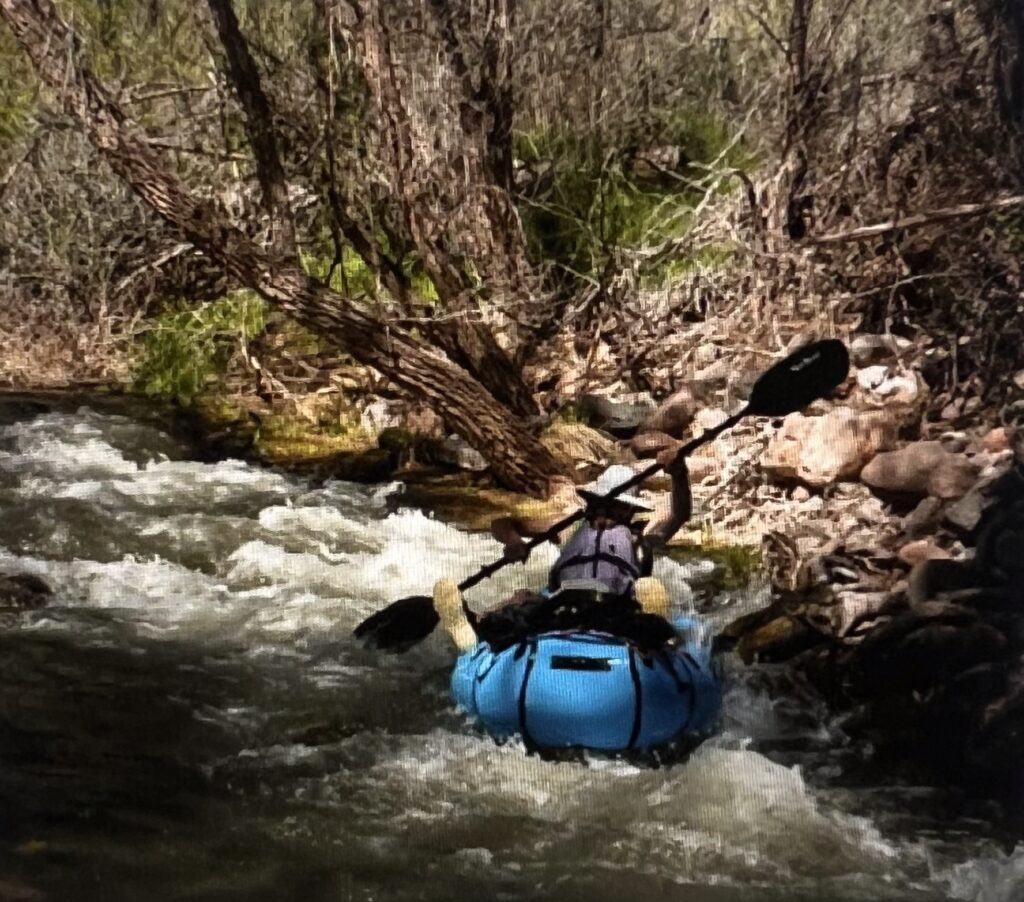
Unfortunately, voyaging down the Colorado River is an expensive and intimidating endeavor. But there’s another option for those of us willing to settle for a more approachable whitewater experience: northern Arizona’s Verde River, just a short drive south from Flagstaff.
To be clear, the Verde is nowhere near the size of the Colorado, nor is it quite as awe-inspiring. But it does offer a variety of rapids, from trivial riffles to a few more serious drops, and it won’t cost you thousands of dollars.
Last month some friends and Flagstaff Daily San reporter, Sam McLaughlin made the worthwhile effort to float a lesser-traveled stretch just outside Cottonwood, taking advantage of the unseasonably warm March weather.
The Verde River flows about 190 miles from its headwaters near Paulden to its junction with the Salt River near Phoenix. Portions of the river southeast of Camp Verde are officially part of the National Wild and Scenic Rivers system — the only river in the state to bear that designation. But the river is also readily accessible where it passes close to communities such as Clarkdale, Cottonwood and Camp Verde.
From the Cottonwood and Clarkdale area, local outfitters offer day trips beginning at the river access point near the remains of the old TAPCO power plant, which supplied electricity to the United Verde Copper Company until the region’s mining boom sputtered out. We chose instead to make that our end point, driving up a Forest Service road to a more remote access point around 8 miles upstream.
FR 131 is a little rough and loose in spots, but a sedan parked at the end of the road was proof that a careful driver (or at least a confident one) can manage the trip without four-wheel drive or high clearance.
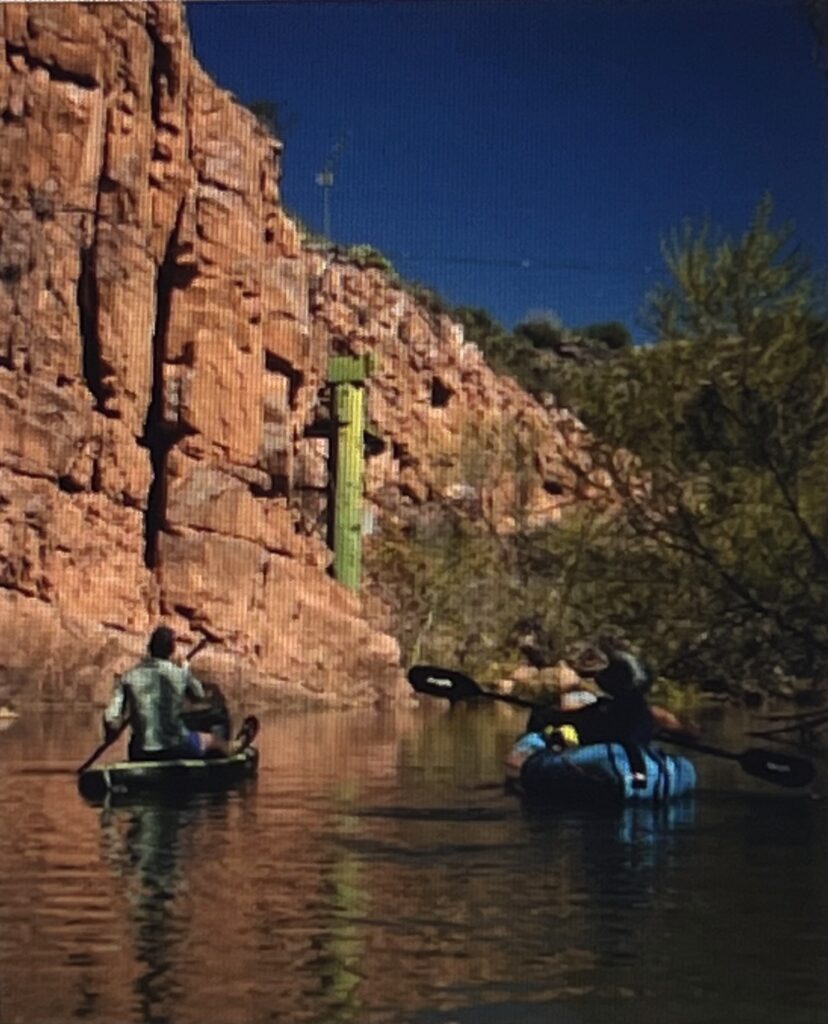
By the time we had all of our equipment ready to go, it was nearly noon and feeling like summer. After a sweaty hike down a rough access road, the cold water of the river was a welcome relief, and we finally launched our motley armada of three packrafts and one paddleboard.
As we were setting out, a train rumbled by along the tracks of the Verde Canyon Railroad.
Like the old power plant, the railroad originally served the region’s mining and smelting operations. It found a second life in the 1950s serving a cement plant, which supplied material for the construction of Glen Canyon Dam, and a third incarnation from 1990 onward as a popular tourist excursion.
Our progress downstream came in fits and starts. Where the river narrowed into small but entertaining rapids, the current carried us along with alacrity — except for the frequent instances when we bottomed out on barely submerged rocks, and had to resort to an undignified scooch to regain momentum. In one or two spots we had to simply stand up and drag the boats along.
The canyon walls retreated from the edges of the river as we paddled along. Early in the afternoon, we saw the splash of a beaver’s tail as it dove beneath the river’s surface. Once trapped for their valuable furs along this stretch of the river, the industrious mega-rodents are now recognized as an ecologically critical species, whose dams support healthy riparian habitats. For the rest of the day, we would see gnawed-off stumps of small trees along the riverbanks — evidence of the beavers’ efforts.
(Beaver dams and overhanging trees along the stretch we floated do create some risk of getting stuck or snagged if you aren’t paying attention, but these hazards were easily avoidable.)
Other wildlife sightings included mallard ducks, cantankerous Canada geese, red-tailed hawks riding thermals high above and a single bald eagle perched in a scraggly tree.
Just be sure to check the water level before you go. And take a boat you aren’t afraid to scratch. Source: Flagstaff Daily Sun
2. Cleaner Air, Low To No Fuel Costs And Unencumbered Travel. The Best Affordable Long-Range Electric Vehicles of 2026. EVs’ lower prices and longer ranges are making it easier to curb emissions
One of the best ways you can act on climate is by switching to an electric vehicle. Yes, there are many other ways we can all do our part—like recycling, avoiding plastic, and eating less red meat. But few personal choices reduce emissions as much as ditching the tailpipe. According to David Reichmuth, a senior scientist in the Union of Concerned Scientists’ Clean Transportation program, “EVs overall have less than half the emissions of the average gas vehicle, and that remains true when factors such as manufacturing and charging are factored in.”
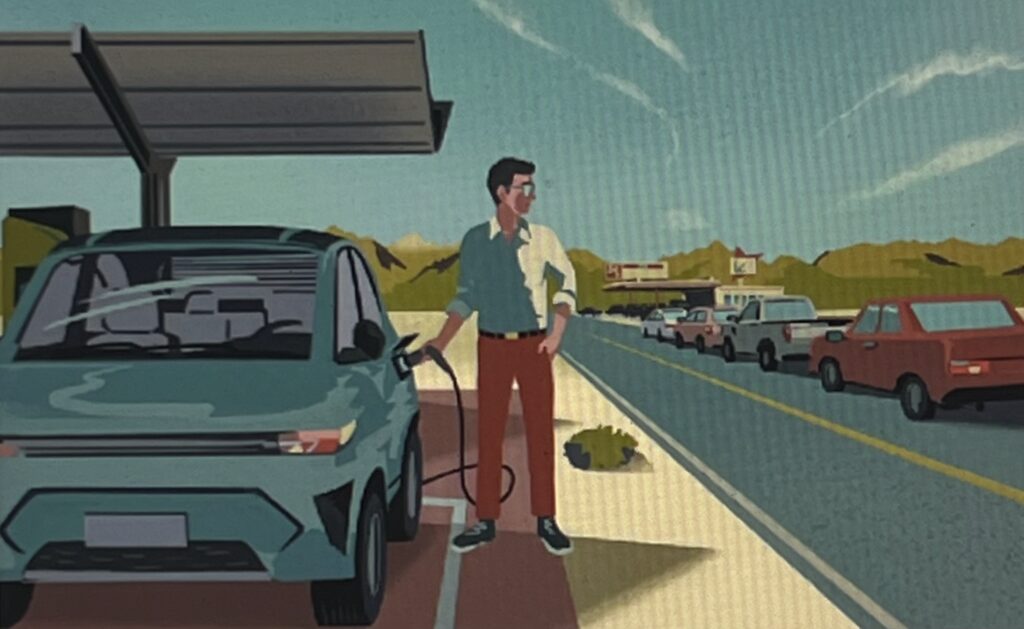
With EV prices continuing to fall, gas prices spiking, and driving ranges expanding across all models, there’s never been a better time to go electric.
Why should I switch?
According to the Environmental Protection Agency, transportation is responsible for approximately 28 percent of US greenhouse gas emissions, making it the nation’s single largest contributor to climate change. What’s more, between 1990 and 2022, emissions from the transportation sector increased more than those from any other sector.
You might be thinking, “Yes, but doesn’t the manufacturing process for EVs also pollute?” It does, but the industry has gotten cleaner and more efficient. A study by the International Council on Clean Transportation found that the lifetime emissions of a midsize US battery-electric car, including those from its production, are 66 to 69 percent lower than those of a comparable gas-powered vehicle. And EVs will continue to get cleaner over time, as will the US electrical grid.
Can I afford an EV?
Affordability has long been one of the biggest concerns about electric vehicles. But prices are coming down rapidly, in part because batteries—by far the most expensive component—are getting cheaper. In a recent study, the International Energy Agency reported that lithium-ion battery pack costs fell by 20 percent in 2024 alone.
EVs would be more affordable if the Trump administration hadn’t taken away the $7,500 federal tax credit. Even without it, a growing number of EVs now hit the magic number: a price under $40,000 (well below the average cost for all new cars, which is about $50,000).
Hyundai, for instance, just lowered the price for its single-motor 2026 Ioniq 5 SE from $46,650 to $37,500. The rear-wheel-drive version of the car can go as far as 318 miles between charges. The 2026 Chevrolet Equinox EV (starting price $35,000) offers a range of 319 miles. And the cheapest EV on the US market is the venerable and recently redesigned 2026 Nissan Leaf, which starts at just $30,000, with a range of up to 303 miles.
Where will I charge it?
The other big concern is range anxiety and whether charging will be a problem, especially for drivers who don’t own a Tesla. But that’s changing. Most new EVs come equipped with a North American Charging Standard (NACS) plug, giving drivers access to Tesla’s exceptionally robust US charging network of 7,685 stations and over 48,000 individual ports, according to the Department of Energy. Many older EVs can tap in with an inexpensive adapter. Tesla owners have been driving coast-to-coast for years—now other EV drivers can too.
Arizona has1,583 EV Charging: Stations in 102 Cities (https://usevchargingstations.info/arizona/) . Many hotels have rapid EV charging stations also.
What’s new?
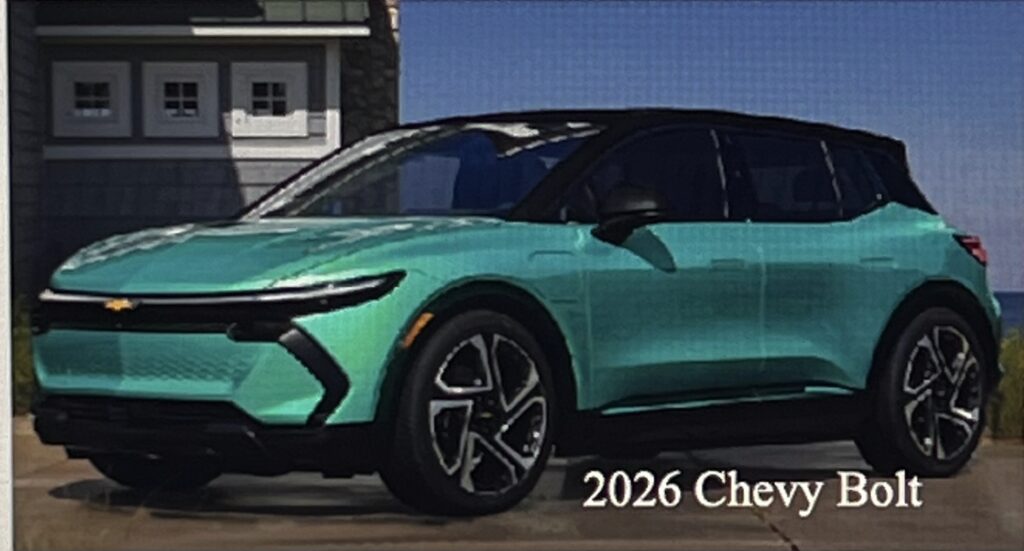
This year will see the return of the Chevy Bolt, with more range than the previous model’s 259 miles and an approximately $30,000 price tag. The 2027 Bolt will come with a NACS port.
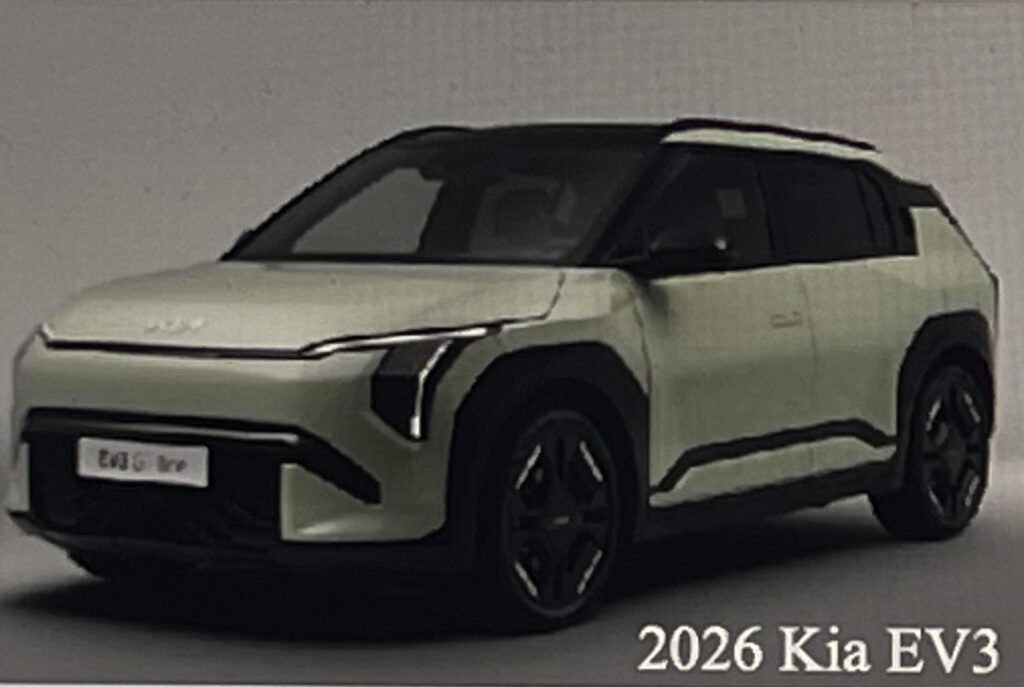
Kia will bring its compact SUV EV3 to the US in 2026 for around $35,000, offering more than 300 miles between charges. The automaker is planning a future rollout of the larger EV4 compact sedan, with a range of up to 330 miles and a price likely starting below $40,000.
Europe is seeing a flood of well-built, low-priced Chinese EVs, many equipped with innovative and relatively cheap lithium iron phosphate batteries. But high tariffs mean we’re unlikely to see Chinese cars in the US anytime soon. Source: Sierra magazine, Spring
3. California, Arizona And Nevada Propose Water-Saving Plan For Colorado River. Proposal includes cutbacks for three years as negotiations over future of shrinking reservoirs have been unsuccessful.
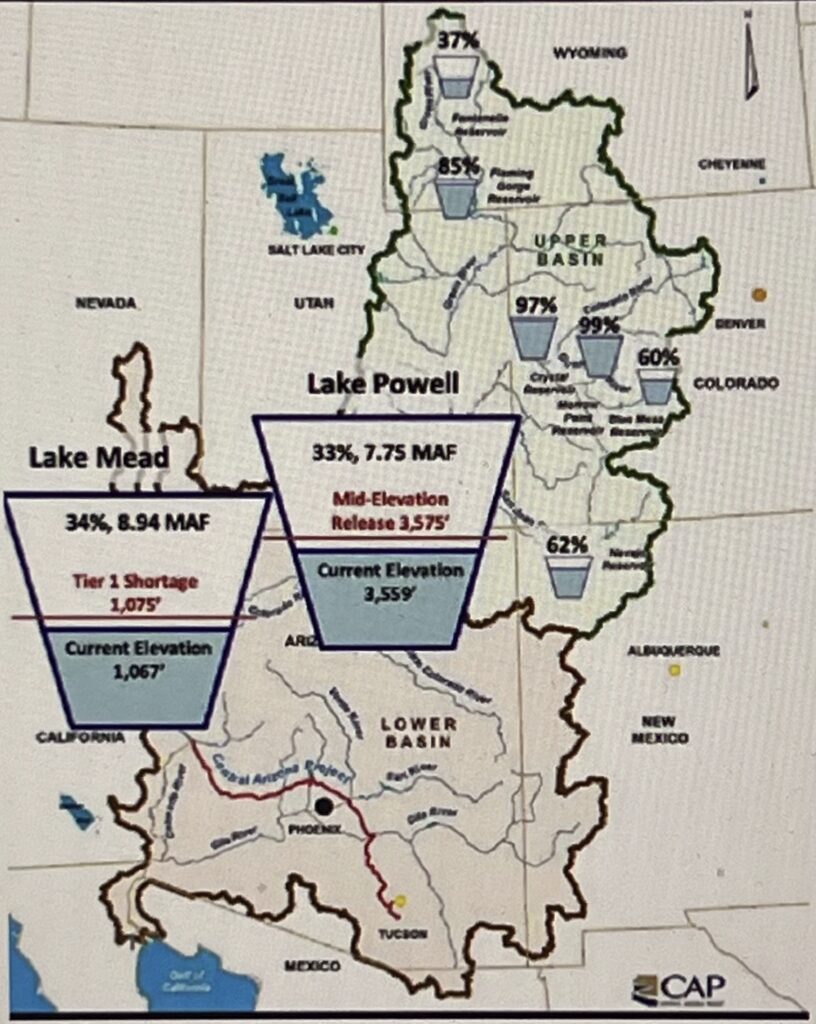
The states of California, Arizona and Nevada have proposed voluntary water-saving measures for the next three years aimed at buying time while negotiations remain deadlocked over the future of shrinking reservoirs filled by the Colorado River.
The Colorado River provides water to some 40 million people in the American west. But the two vast reservoirs filled by the river, Lake Mead and Lake Powell, both stand at historically low levels, after consistent overdrawing coupled with reduced snowpack and warming from climate change.
The seven states with legal rights to water from the Colorado River have so far failed to agree on how to spread the pain of lost access to the dwindling resource.
The lower basin states’ plan would save 3.2m acre-feet of water with the help of voluntary cutbacks through 2028. The plan also envisions saving an additional 700,000 acre-feet of water through conservation measures and infrastructure improvement, along with the creation of a conservation pool to ensure that the federal government meets its trust obligations to tribes in Arizona.
“With this proposal, the Lower Basin is putting forth real action to stabilize water supply along the Colorado River,” JB Hamby, the chair of California’s Colorado River Board, wrote in a statement. “We’re putting forward additional measurable water contributions for the system. Without that, the system will continue to decline.”
The proposed plan still requires approval from the states’ water agencies and the Arizona legislature, as well as cooperation from the federal government. The states said the plan was “structured as a unified package” that should be implemented or rejected in full, rather than piecemeal. Source: The Guardian
4. Reminder: Deadline Is June 1 For CAP Award For Water Research Submissions. College students: Don’t forget to submit your academic research through the CAP Award for Water Research program by June 1, 2026.
This CAP program rewards and recognizes students for their efforts. The first-place winner will receive $3,500; the second-place winner will receive $2,000. Winners will be notified in August or September.|
Suggested topics include but are not limited to:
- Drought management
- Environmental law
- Groundwater resources
- Indian water rights
- Public perception of water issues
- Recharge/replenishment
- Riparian habitat
- Subsidence
- Surface water
- Threatened/endangered species
- Water law
- Water policy/politics
- Water rights
- Water supply/use
Goals
- Encourage and support excellence in water research in Arizona’s colleges and universities.
- Reinforce CAP’s commitment to water education to hundreds of faculty members and students.
- Increase public interest in water issues associated with the use of Colorado River in Central and Southern Arizona.
- Reach and encourage college-level students interested in pursuing careers in water resource management.
Research Criteria - The CAP Award is available to graduate and undergraduate students at any college, university or trade school in the State of Arizona.
- Papers should address water issues facing the Lower Basin States and should be of interest to CAP and other water users. Priority will be given to papers addressing Colorado River issues.
- Papers should represent original, unpublished work produced primarily by the students(s) and not exceed 25 pages (inclusive of references and supporting attachments).
- Submission Guidelines
- If you would like to submit the entry form, the complete paper and a one page abstract electronically, please complete the form below. Submissions for the CAP Award for Water Research are accepted anytime during a given year. The deadline for submissions is June 1.
- Review Process
- Submissions are reviewed by a committee comprised of a member of CAP’s popularly elected Board of Directors, CAP staff members and CAP water customers. All applicants are notified of the results of their applications through electronic correspondence.
- Entry form can be found at https://www.cap-az.com/community/education/award-for-research/#entryform
5. Boredom: Is It Good For You? Summer Vacation Is Fast Approaching Fir Students– Science Vs podcast. They Say We Need More Boredom. We keep hearing that we need to be BORED more, with people online swearing that boredom can work magic — restoring your mind, and even supercharging your creativity. So, is boredom secretly good for us? We talk to cognitive neuroscientist Prof. James Danckert and organizational psychologist Prof. Guihyun Park to find out.
Find our transcript here: https://tinyurl.com/ScienceVsBoredom
In this episode, we cover:
(00:00) They say we need more boredom
(02:06) This is your brain on boredom
(12:30) Does boredom push us into creativity?
(22:08) Should you try to be more bored?
(23:53) When you give your brain time to rest
Copyright 2026 EniroInsight.org
