
Daniel Salzler No. 1351 EnviroInsight.org Seven Items March 27, 2026
—————Feel Free To Pass This Along To Others——————
If your watershed is doing something you would like others to know about, or you know
of something others can benefit from, let me know and I will place it in this Information .
If you want to be removed from the distribution list, please let me know.
Please note that all meetings listed are open.
Enhance your viewing by downloading the pdf file to view photos, etc.
The attached is all about improving life in the watershed through knowledge.
If you want to be removed from the distribution list,
please let me know. Please note that all meetings listed are open.
Check our website atEnviroInsight.org
1. Arizona Border Communities Gain New Water Funding Opportunities Through WIFA, NADBank Partnership Partnership. Border communities applying for WIFA funding can also be considered for additional NADBank.
[Phoenix, March 19, 2026] – The Water Infrastructure Finance Authority (WIFA), is coordinating with The North American Development Bank (NADBank) to co-fund opportunities along the border within their jurisdiction.
Water Supply Development Revolving Fund (WSDRF) applications will now include language allowing communities within 62 miles (100 km) north of the U.S.-Mexico border to automatically be considered for additional low-interest loan funding from NADBank, with the possibility of grant funding, depending on availability. NADBank will review applications alongside WIFA’s due diligence process to expedite decisions.
The WSDRF is structured to address the distinct water demands faced by Arizona’s rural communities. Director Chelsea McGuire notes “Rural Arizona faces unique water challenges. This partnership creates opportunities for Arizona’s border towns to access additional financing options to fund crucial water infrastructure projects to meet those demands.”
WIFA’s WSDRF supports water supply infrastructure outside of major metro areas. Eligible projects include conveyance systems, storage, treatment facilities, groundwater recovery, and more.
“For years, NADBank and WIFA have partnered to finance critical water infrastructure in border communities on a project-by-project basis,” said John Beckham, Managing Director of NADBank. “This new approach allows us to take that collaboration to the next level by catalyzing programmatic investments that strengthen water security and help Arizona’s border communities expand and diversify their water supplies.”
For more information on the WSDRF and a complete list of eligible projects, visit WIFA’s WSDRF page. Learn more about the Water Resiliency Fund by NADBank at their website.
About WIFA
WIFA is a state agency dedicated to ensuring the sustainability of Arizona’s present and future water supply through financial investments in effective augmentation, conservation, reuse, and water quality. WIFA has invested nearly $3 billion through Arizona’s Clean Water and Drinking Water State Revolving Funds, providing low-cost financing and technical assistance for water projects. WIFA has also provided more than $200 million for conservation projects and programs and more than $85 million for water supply projects for rural water providers. Most recently, WIFA has advanced into Phase 2 of its Long-Term Water Augmentation Fund, working with selected development teams to further scope and evaluate large-scale water importation projects to secure Arizona’s water future.
About NADBank
The North American Developme nt Bank is a binational financial institution that supports environmental infrastructure projects along the U.S.-Mexico Border. By promoting investments in water, clean energy and other critical sectors, NADBank works to improve the quality of life in border communities and advance sustainable economic growth throughout the region. www.nadbank.org
2. Navajo Nation Urges Congress To Pass Water Rights Bill. The proposed legislation seeks to resolve longstanding water disputes tied to the Colorado River, providing federal funding for infrastructure and water conservation efforts, with input from tribal leaders emphasizing cultural and economic benefits.
Navajo Nation President Buu Nygren is calling on Congress to pass S. 953, the Northeastern Arizona Indian Water Rights Settlement Act, citing urgent drinking water access challenges facing tribal communities.
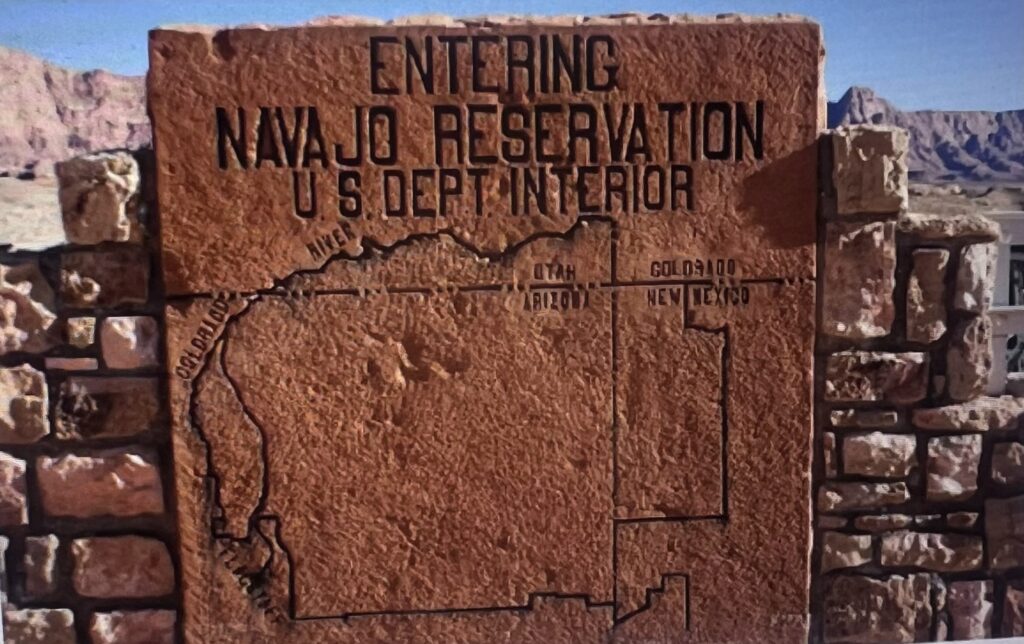
Testifying before the Senate Committee on Indian Affairs, Nygren highlighted the continued lack of basic water infrastructure across the Navajo Nation.
“Roughly a third of Navajo households still lack running water,” President Nygren said in a press release. “I grew up hauling five-gallon buckets with my mom and grandma. Today, thousands of our people still travel over 30 miles round trip to meet basic water needs. It costs on average $600 a month per family—crippling for those living below the poverty line.”
The proposed legislation would resolve long-standing tribal water rights claims tied to the Colorado River, while providing federal funding for water infrastructure and contributing to water savings in Lake Powell. Under the agreement, tribes would waive certain basin water claims in exchange for investment in drinking water systems and economic development.
Nygren said the settlement includes provisions to create a 17,050 acre-feet-per-year water savings pool in Lake Powell for 20 years and emphasized that any leasing of water to Lower Basin users would require congressional approval.
He also pointed to the long-term economic impacts of the Navajo Generating Station closure on tribal communities. Source: WaterWorld, March 17.
3. U.S. Department Of The Interior Announces $889 Million For Western Water Infrastructure Projects. The U.S. Department of the Interior has allocated $889 million for water infrastructure projects across the western United States, focusing on modernization, storage, and conveyance improvements.
The U.S. Department of the Interior announced $889 million in funding for water infrastructure projects across the western United States, targeting improvements to water conveyance, storage and aging systems managed by the Bureau of Reclamation.
The funding, authorized through the One Big Beautiful Bill Act, will support projects in California, Idaho, North Dakota, South Dakota, Utah and Wyoming aimed at strengthening water supply reliability for communities and agriculture. [Arizona is not included in this Trump water allocation] Source: WaterWorld, March 19, 2026
4. Conference Sessions to Explore Land–Water–Energy Nexus and Water Stewardship. The WRRC 2026 Annual Conference on April 14–15 will explore the interconnected challenges shaping Arizona’s future through a series of sessions examining the relationships between land use, water resources, energy systems, and economic development.
On the afternoon of Day 1, Session 2: Land–Water–Energy Nexus, moderated by Rachael L’Heureux, Water Resource Specialist with the City of Phoenix, will focus on how water availability and infrastructure increasingly influence business and development decisions. Amanda Long, Associate at WestWater Research, will discuss how water markets and water availability factor into locational decision-making for industries such as technology, mining, and energy. As companies consider where to build new facilities, reliable water supplies and regulatory conditions are becoming critical components of site selection. The session will also explore the growing relationship between the land–water–energy nexus and data centers. Mary Ann Dickinson, Land and Water Policy Director at Lincoln Institute of Land Policy, will examine the important links between these sectors and offer considerations for communities facing increased resource demands from data center development.
On Day 2, Sessions 4 and 5: Impacts, Strategies & Stewardship, will highlight emerging technologies, industry perspectives, and the policy considerations shaping resource management.
Session 4, moderated by Alice Templeton, Client Relations Specialist at Stantec, will feature presentations from Sophie Dessart, Communications & Public Affairs Manager at Florence Copper LLC, on advances in copper production; Krishna Muralidharan, Professor of Materials Science and Engineering at the University of Arizona, on the concept of space-based data centers; and Brad Berles, Senior Director of Palo Verde Water Strategy at Arizona Public Service (APS), on the role of nuclear power generation in Arizona.
Following a networking break, Session 5 will turn to the broader impacts of resource development. Speakers include Pat Risner, Hermosa President at South32, on critical mineral mining and water use; Nathan Lothrop, Assistant Professor at the University of Arizona’s Zuckerman College of Public Health, on mining and public health in Santa Cruz County; Pilar Thomas, Adjunct Professor at the University of Arizona School of Law, on energy and Tribal sovereignty; and Kelly Osborne, Senior Technologist at Intel, on water stewardship in semiconductor manufacturing.
Together, these sessions will offer attendees a deeper look at the complex intersections between water, energy, industry, and community well-being across Arizona and the broader region.
Register at https://www.eventbrite.com/e/wrrc-2026-annual-conference-tickets-1962777175368?aff=oddtdtcreator
5. Why You Never See B Cell Batteries. The most common batteries you encounter are A, AA, AAA, C and D. Why are there no B size batteries?
It’s hard to forget the classifications of the most common batteries. Unless you need a 9-volt for your smoke alarm or those round, flat ones for your key fob, batteries often use the letters A, C and D. Why are there no B size batteries? Did they ever make them? The answers are surprisingly layered, touching on history, design standards and shifting consumer needs.
The first portable dry cell batteries were invented in the late 1800s, but by World War I it became apparent that there needed to be a way to standardize sizes and performance criteria. Battery manufacturers, government agencies and the War Industries Board developed criteria and presented their recommendations to the National Bureau of Standards (today’s National Institute of Standards and Technology, or NIST).
In 1924, a uniform size classification system based on ascending letters of the alphabet was introduced, with A being the smallest—and yes, B batteries were included. The largest battery, called a No. 6, was grandfathered into the classification system due to its popularity at the time. The criteria was officially published in 1928, and expanded in 1934. Smaller AA and AAA batteries had been in use since the early 1900s, but not standardized until World War II and later.
Why are there no B size batteries now?

So what happened in the nearly 100 years since B batteries were standardized by NIST’s predecessor? Basically, they just stopped being needed. And when you understand what they were used for, it will all make sense.
According to the American National Standards Institute (ANSI), B batteries were primarily used in vacuum tubes, which were electrical components in radios and early TVs. As radios became portable, B batteries were used as a compact power source for the vacuum tube. (The much larger TVs used power from a wall outlet.)
By the 1950s, transistors started replacing vacuum tubes and B batteries became less common. Soon, transistor radios started using 9-volt batteries, which are still sometimes called “transistor batteries” by hobbyists. Technology tends to skew smaller as time goes by, especially in personal electronics, so the need for a mid-size battery like B just doesn’t exist anymore.
Today, unless you’re buying them on eBay or at a garage sale or vintage electronics store, you won’t find B batteries anywhere. According to an ANSI standards committee report from 2002, the B battery has “disappeared altogether.”
Sources:ANSI: “American National Standards Institute Accredited Standards Committee C18 on Portable Cells and Batteries”. Mental Floss: “Why Aren’t There B Batteries?”,Ultralife: “Over 65 years of 9V batteries”
6. Upper Basin States Test Methods To Fill Powell Pool. States say automatically turning to agriculture isn’t always reliable.
With a Lake Powell conservation pool nearly guaranteed for the future of Colorado River management, the four Upper Basin states are exploring and refining the ways they could fill it.
Conservation by those states (Colorado, New Mexico, Utah and Wyoming) could be one of the keys to reaching a deal among the seven states that share the Colorado River and an important part of the framework for managing the drought-stricken river after this year. The water saved by the Upper Basin states could be stored in Lake Powell as a means of maintaining higher water levels and as an insurance policy against drastic cuts.
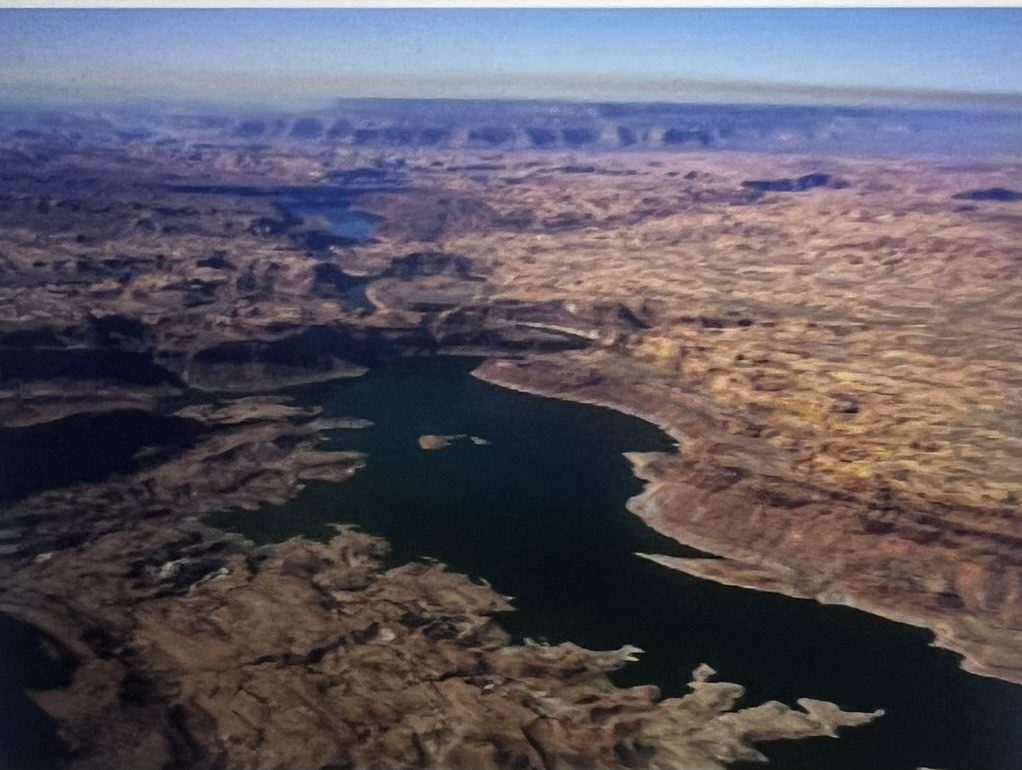
This type of pool isn’t yet being used in Lake Powell; it would have to be established by an agreement among the seven states. An agreement in the 2019 Drought Contingency Plan allowed for a 500,000 acre-foot Upper Basin storage pool in Lake Powell, but so far, the states have not utilized this and the agreement expires this year.
The Upper Basin and Lower Basin (California, Arizona and Nevada) have been at an impasse for more than two years about how the nation’s two largest reservoirs — Lake Powell and Lake Mead — will be managed and shortages shared in the future. The situation has never been more dire: The current guidelines for river management expire at the end of the year, while record-low snowpack is expected to push reservoir levels below critical thresholds. The seven states haveblown past two deadlines to come up with a plan, and the federal government is gearing up for emergency actions to manage reservoirs.
The crux of the disagreement between the two basins has been over who should take shortages in drought years. The Lower Basin has committed to 1.5 million acre-feet of reductions annually and wants cuts beyond that to be shared by the Upper Basin. The Upper Basin says its water users already take cuts in some years because streams run dry by midsummer and any contributions they make must be voluntary.
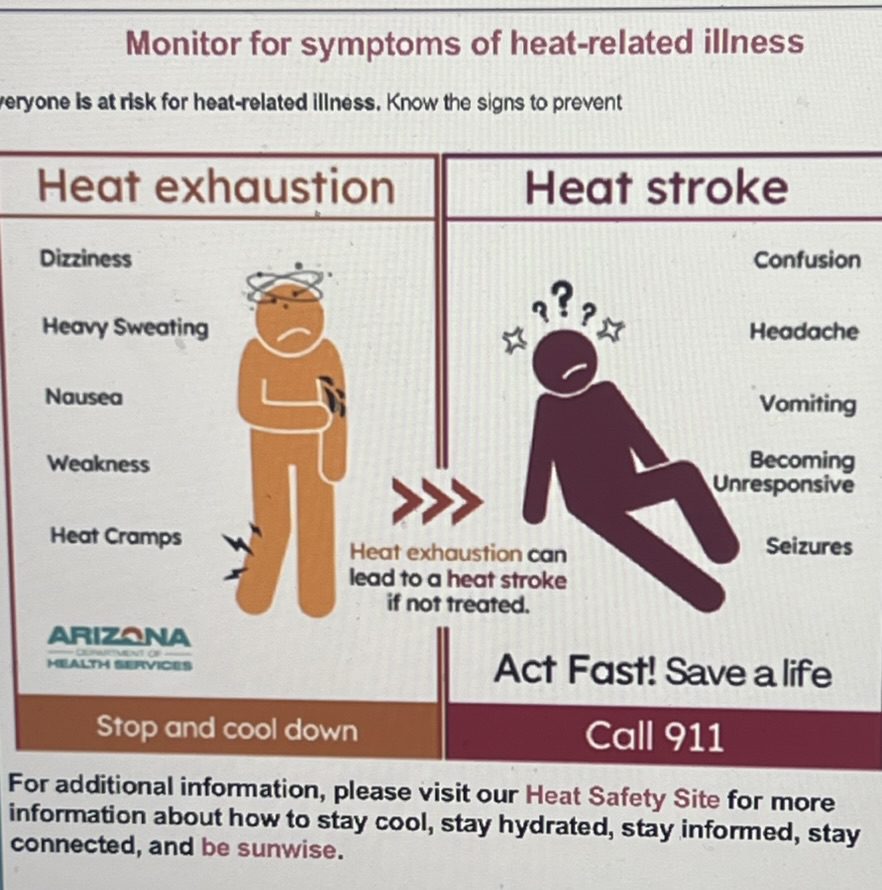
7. .High Temperatures Are Here Two Months Early. Stay hydrated and learn the signs when heat starts to consume your body and mind. Remember that coffee, tea, soda and alcohol promote dehydration. Source: AZ Deptartment of Health Services
Copyright 2026: EnviroInsight.org
