
Daniel Salzler No. 1371 EnviroInsight.org Three Items August 14 2026
—————Feel Free To Pass This Along To Others——————
If your watershed is doing something you would like others to know about, or you know
of something others can benefit from, let me know and I will place it in this Information .
If you want to be removed from the distribution list, please let me know.
Please note that all meetings listed are open.
Enhance your viewing by downloading the pdf file to view photos, etc.
The attached is all about improving life in the watershed through knowledge.
If you want to be removed from the distribution list,
please let me know. Please note that all meetings listed are open.
Check our website at EnviroInsight.org
1.State of the Climate: A Dimming, Overheated Planet, With Degraded Oceans
A new American Meteorological Society report paints a grim picture of the global climate.
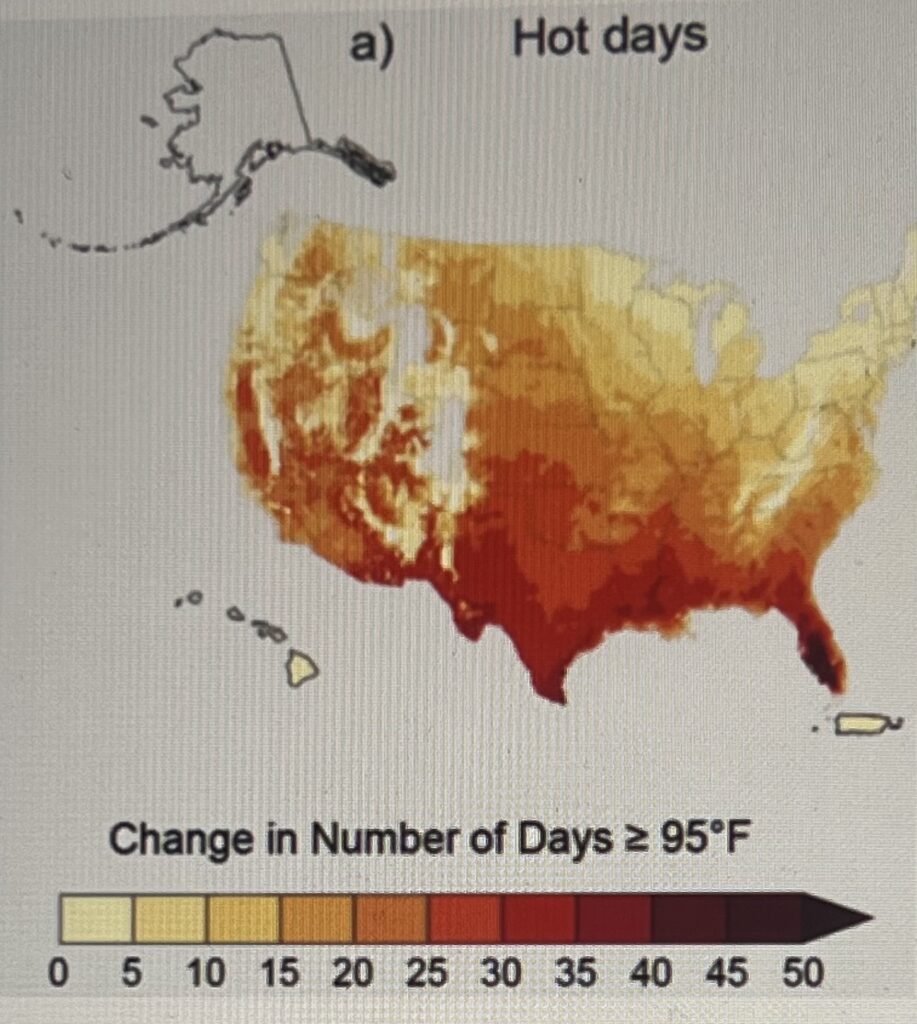
As global warming continued to reshape Earth’s climate, the planet’s oceans reached record high temperatures for the third year in a row in 2025. Some northern forests and tundra released more carbon dioxide than they absorbed. And the Greenland Ice Sheet lost about 129 gigatons of ice, enough to form a cube of ice about three miles wide on each side.
Those were among the findings in the 2025 State of the Climate report, released Monday by the American Meteorological Society and led by scientists at the National Oceanic and Atmospheric Administration.
The report identified continued burning of fossil fuels as the primary source of record-high greenhouse gas levels, which are raising global temperatures and intensifying extreme weather. In Europe, for example, average temperatures have risen about 3.6 degrees Fahrenheit since the 1960s, while extreme high temperatures have shot up by as much as 18 degrees Fahrenheit.
The findings carry added significance in light of an advisory opinion on climate change issued last year by the International Court of Justice, which concluded that countries may be liable for cross-border climate damage they knowingly cause or fail to prevent. As a result, governments that continue to promote fossil fuel use face increasing legal scrutiny and could be held responsible for ongoing and future climate-related harm.
“Anyone who still doubts the reality or severity of the climate crisis needs to read this report,” The report foreshadows the even more intense climate extremes erupting around the world, from the March heatwave in western North America to extreme drought and wildfires in Europe this summer that have already caused more than $3 billion of economic damage.
The report’s key takeaway is that climate extremes that impact communities and economies “show no signs of diminishing,” said Alan Sealls, president of the American Meteorological Society. That means continued climate disruptions, he said, adding that the rising intensity and persistence of extremes shouldn’t be underestimated “compared to what the past delivered.”
Finally, he said, “Take personal action in becoming more resilient and encourage your political representatives to protect and fortify your community, knowing the changes that are happening.”
Oceans absorb about 90 percent of the “excess heat” from human-caused warming, which manifested in marine heatwaves that were observed over 87 percent of the planet’s oceans last year, while marine cold spells reached their lowest occurrence on record, the report found. At the same time, ocean waters keep acidifying, which threatens marine life, and have lost oxygen at the rate of 0.45 percent per decade since 1965 due to “warming, reduced ventilation, ocean circulation changes, and enhanced biological respiration.”
The scientific facts presented in the annual climate review counter climate disinformation pushed by the Trump administration as part of “the bad faith assault on climate science by polluters and their abettors, which began decades ago,” said Mann, who did not contribute to the report. Science Under Siege, a book Mann co-authored with Peter Hotez, a vaccine and tropical disease researcher at Baylor University, outlines how the attacks have been “a long-term project of the right that is now paying dividends for them.”
Colorado State University atmospheric scientist Scott Denning, who did not contribute to the report, wrote via email that every chapter “shows the very serious impacts of our self-destructive reliance on carbon combustion.” Source: “Inside Climate News” August 10,2026

2. July Southwest Outlook – CLIMAS
Precipitation and Temperature
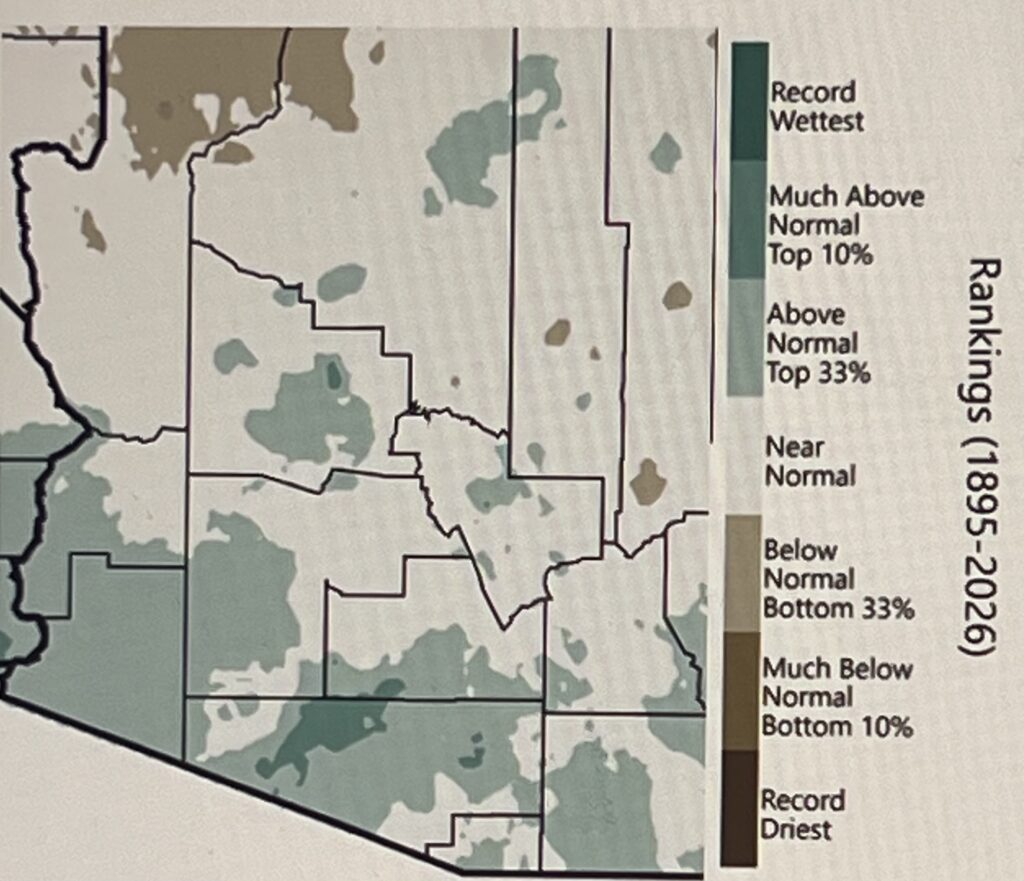
June precipitation totals were near normal or above normal across much of Arizona. Areas with above normal June precipitation totals—amounts that would rank among the upper one-third of all years on record—include parts of southern Arizona.
Southwest precipitation
June 2026 Percentile
Southwest mean Temperature
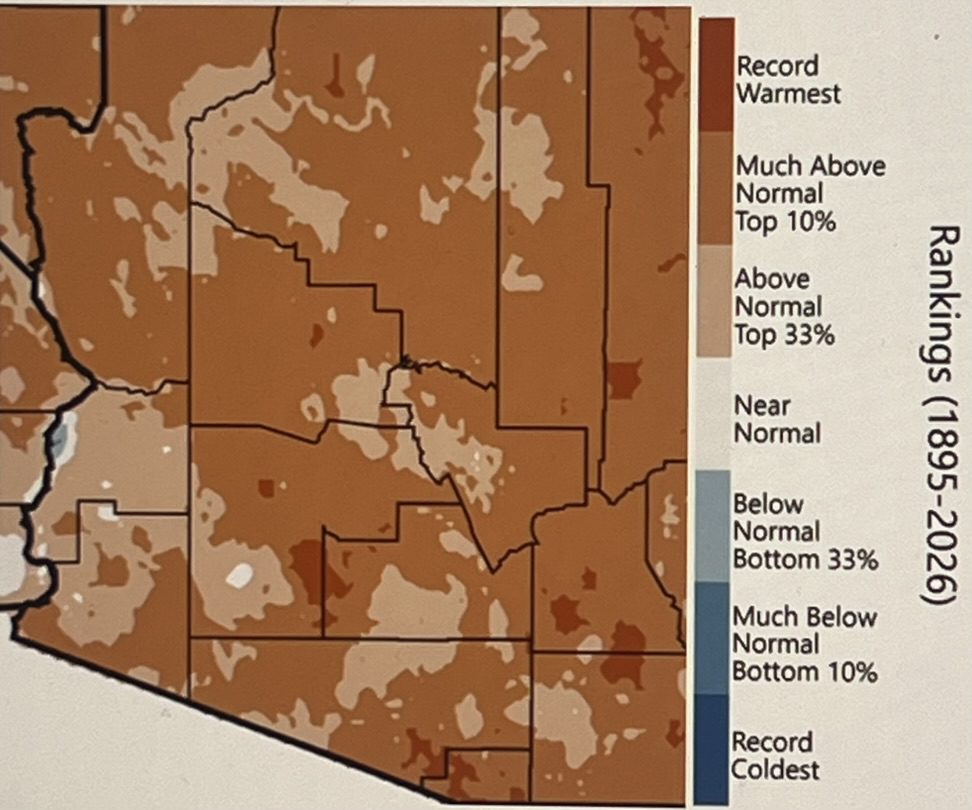
Southwest percentile
Precipitation totals for the water year so-far (October 2025–June 2026) range from below normal in the northern Colorado Plateau, and northwestern Arizona, to near normal totals across much of Arizona
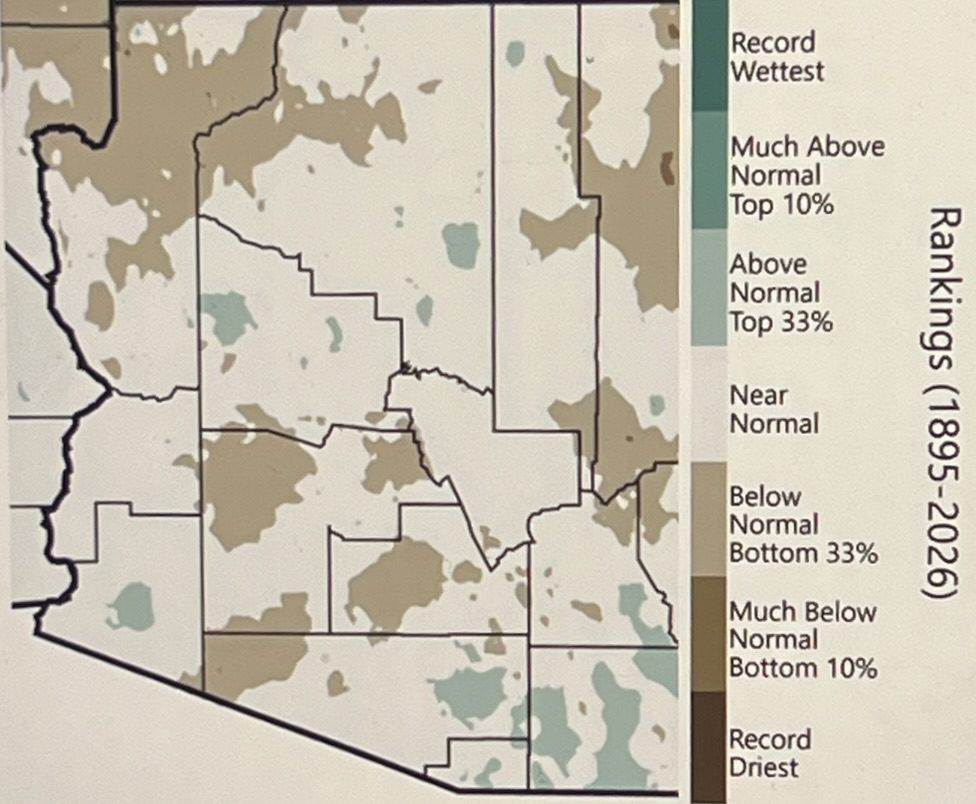
Southwest Precipitation October 2025 to June 2026
Precipitation totals for the water year sofar (October 2025–June 2026) range from below normal in the northern Colorado Plateau, and northwestern Arizona, to near normal totals across much of Arizona,
Drought
July 21,2026
As of July 23, 2026
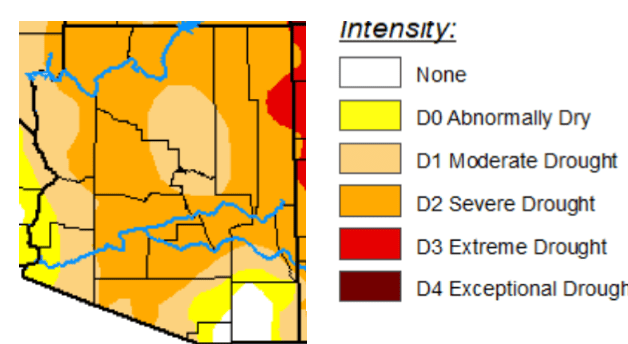
Drought conditions have not improved in the past month—96% of lands in Arizona and New Mexico are considered in drought or abnormally dry. Drought conditions are Severe (D2; conditions that occurred historically every 10-20 years) or worse for 77% of lands within New Mexico and 62% of Arizona.
Large parts of northern and western New Mexico—amounting to more than a third of the state’s area—are classified under Extreme (D3) drought, which are conditions that historically have occurred every 20–50 years, on average.
Monsoon
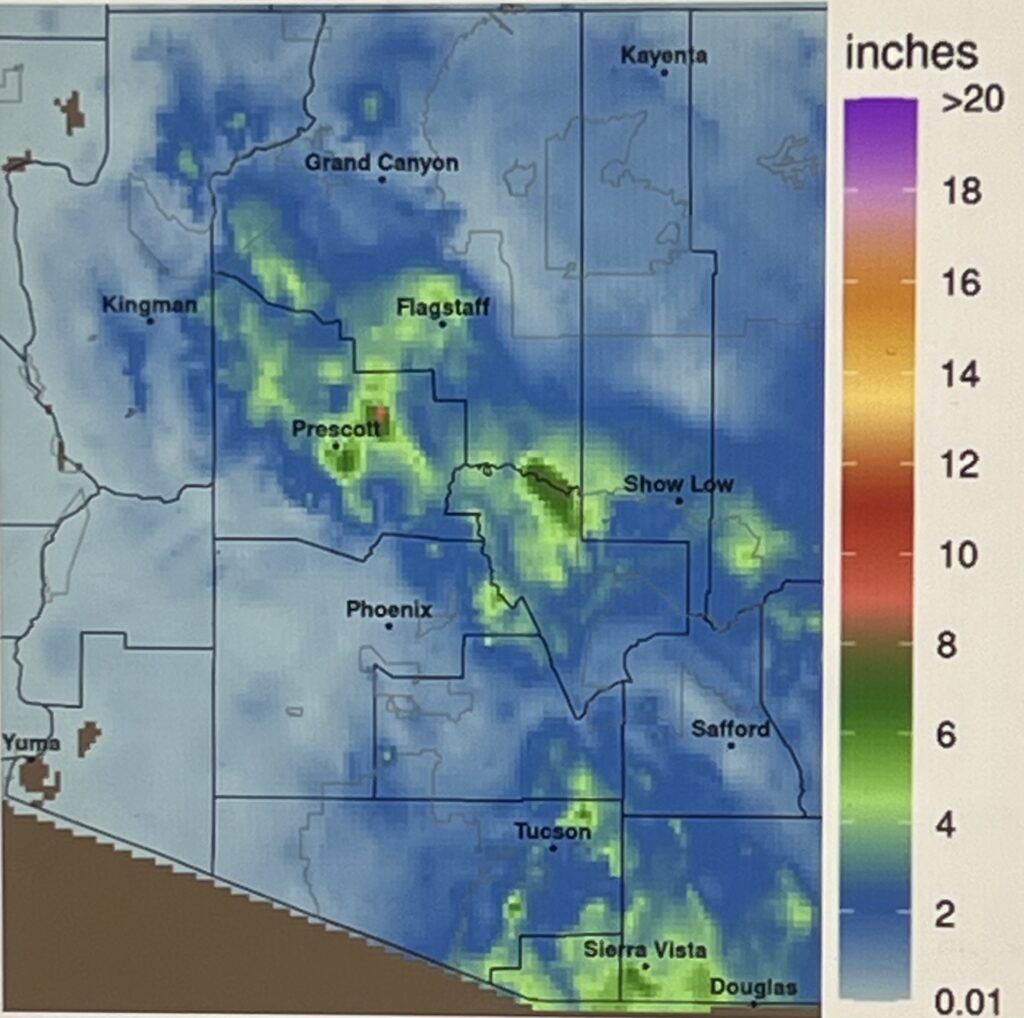
Monsoon precipitation totals (since June 15) have ranged from trace amounts in typically drier parts of the region like southwestern Arizona, to a regional maximum of over 8 inches near Jerome, AZ.
Water Supply
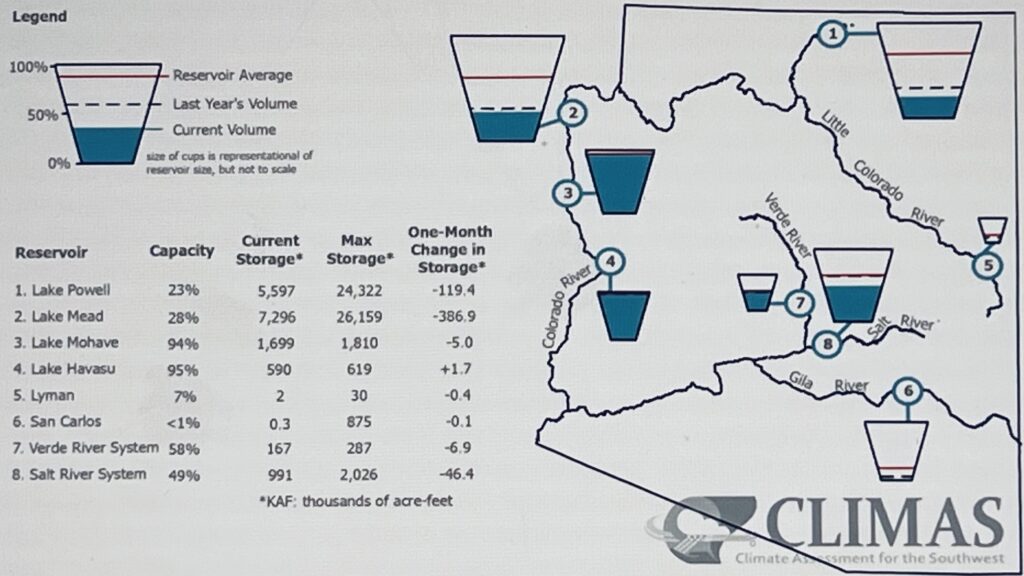
Reservoir storage in Arizona is generally below normal levels and down compared to last year, especially at San Carlos, where the effects of long-term drought on the Gila River watershed have left the reservoir nearly dry.
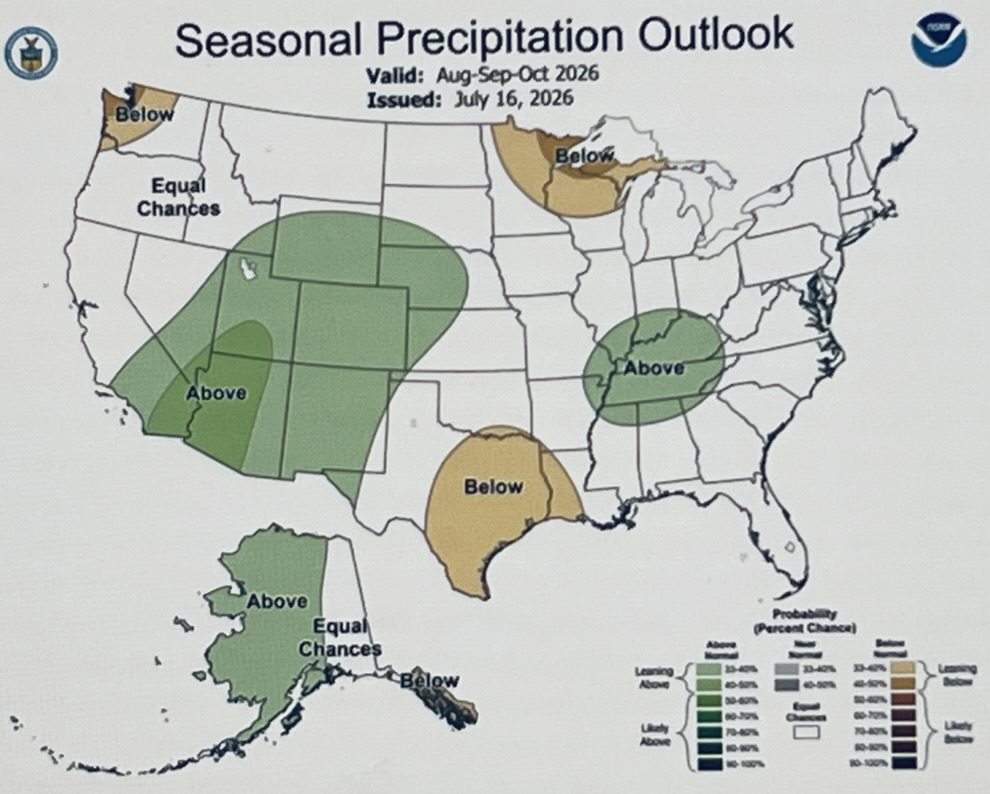
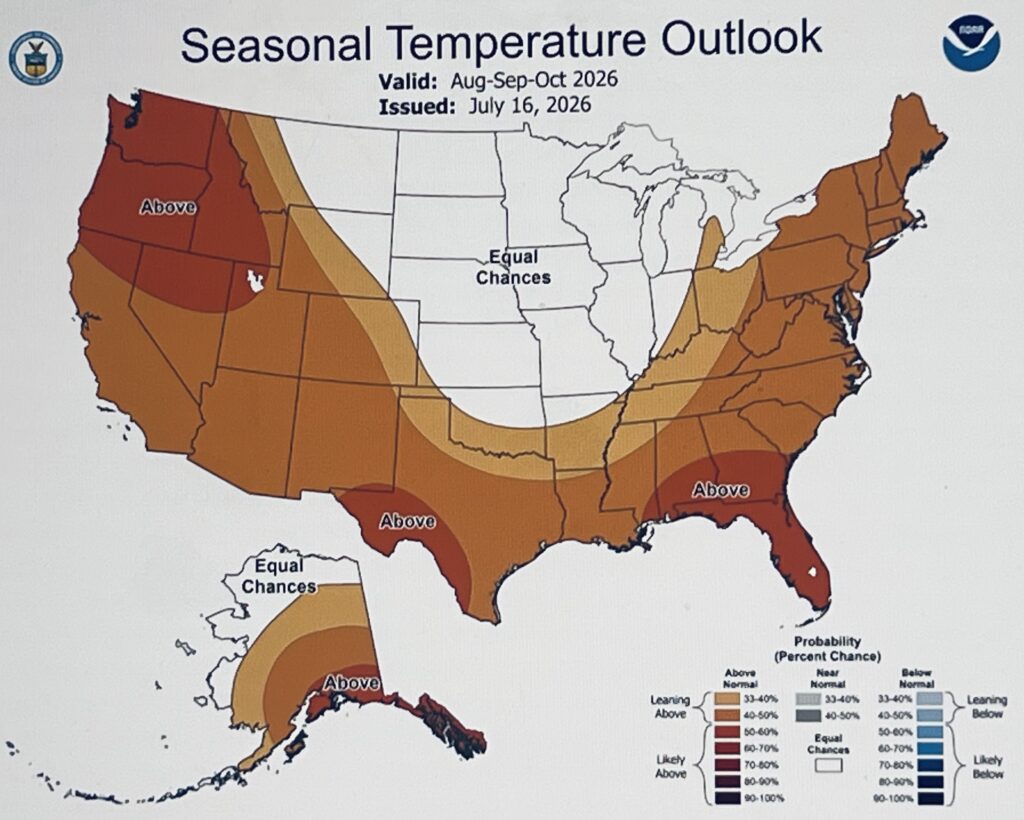
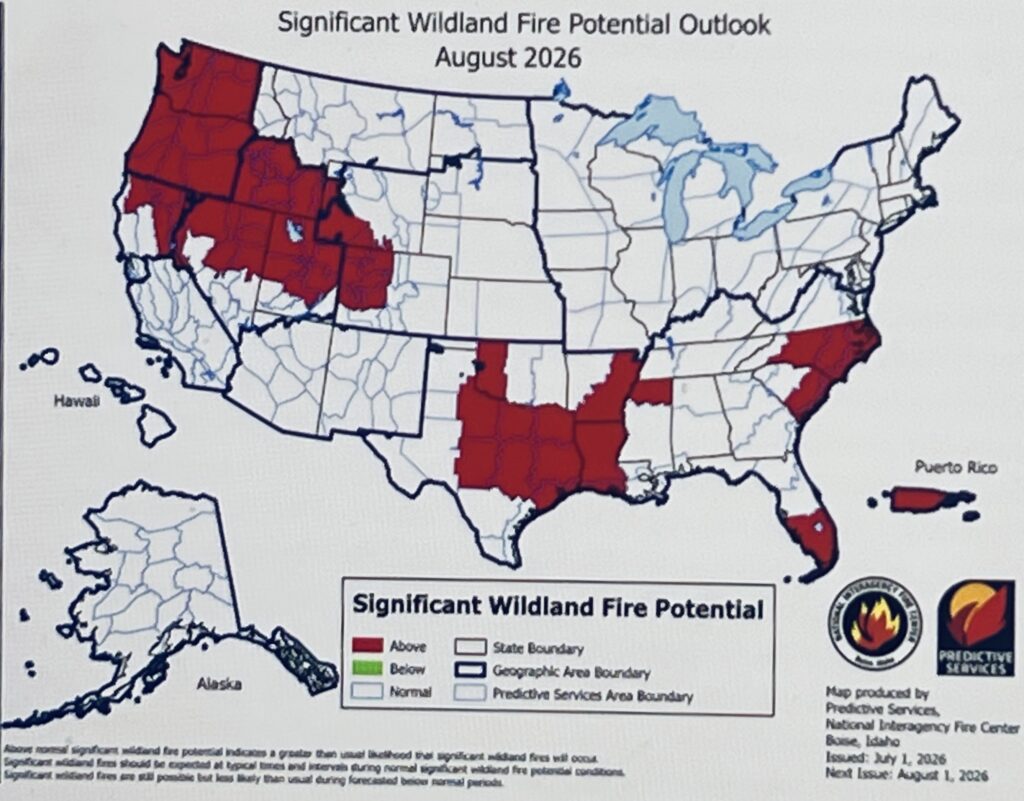
Seasonal Precipitation Outlook
Valid: Aug-Sept 2026
Issued:July 16, 2026
3. Tucson Considers Limits On Data Centers.TUCSON, Ariz. (KVOA) – The Tucson City Council is poised to vote on an ordinance outlining specific restrictions on any future large scale data centers within city limits.
One year after the vote against Project Blue and months after talks between city staff and the community, the Tucson City Council is poised to put strict regulations around any future data center projects that want to come to the Old Pueblo.
Restrictions include no potable water to cool data centers, strict energy use rules and construction cannot happen within a half mile of homes or schools. There would be noise regulations, too. As far as zoning, any data center would have to go in a specific mayor and council approved planned area or community development.
“If this passes, the ordinance it will establish a baseline set of requirements,” Tucson City Council Member Miranda Schubert said. “Mayor and Council would still have to approve each project on a case-by-case basis. The community would still have an opportunity to let us know how they feel about that, to let us know if they want more requirements. So, it’s not really the end of the conversation in my view.
Kielly Lewis is with the No Desert Data Center Coalition. She says the group prefers an all out ban on data centers citywide, specifically large scale ones. However, she tells News 4 Tucson the group is willing to make what it calls concessions. “Really tight enforcement on the light pollution regulations that the city currently has,” Lewis said. “Creating and enforcing a stronger noise pollution, especially for lower frequency noises. That’s really geared towards protecting wildlife in the area.”
Community members will have the chance to speak at a public hearing before any vote. Schubert feels confidence this ordinance on the table reflects both stakeholder and community input.
“People felt listened to,” Schubert said. “They felt like their feedback has been incorporated. The planning commission actually spent an additional session incorporating more changes before the current version that is before us tonight.”
“We genuinely want to protect Tucson and the surrounding area,” Lewis said. “It is too precious to let something this extractive and harmful come into our community and harm it. We want people’s children and their children’s children to enjoy the Sonoran Desert and all that is has to offer but this is not sustainable. We are just fighting to protect our community and those who are going to follow after us along with all of the wildlife and the wilderness.” Source: VOA News 4 Tucson
Copyright 2026@ EnviroInsight.org
