
Daniel Salzler No. 1365 EnviroInsight.org Six Items July 3 2026
—————Feel Free To Pass This Along To Others——————
If your watershed is doing something you would like others to know about, or you know
of something others can benefit from, let me know and I will place it in this Information .
If you want to be removed from the distribution list, please let me know.
Please note that all meetings listed are open.
Enhance your viewing by downloading the pdf file to view photos, etc.
The attached is all about improving life in the watershed through knowledge.
If you want to be removed from the distribution list,
please let me know. Please note that all meetings listed are open.
Check our website atEnviroInsight.org
- Celebrate the 250th Anniversary Of This Country With A Test Of Your American History Knowledge. (Answers at end of newsletter)
|
A. The first English colony founded in North America was called the Roanoke Colony. In what year did this occur?
i. 1492 ….. ii. 1525 ….. iii. 1585 ….. iv. 1610
B. Roanoke County is found mysteriously abandoned. Historian still cannot definitively determine what happened to the settlers. In what year did this occur?
i. 1525 ….. ii. 1570 ….. iii. 1590….. iv. 1600
C. What was the first successful English Colony founded in America in 1607 ?
i. Roanoke ….. ii. Popham ….. iii. Jamestown….. iv. Boston
D. In 1620 the Puritans founded the Plymouth colony. What document was signed, marking this event in history?
i. The New Amsterdam compact. …… ii. The Mayflower compact.
iii. The British-American compact ….. iv. The America compact
E. The first “Thanksgiving” meal was shared between two groups of people in 1621. Who were these people?
i. Pilgrims & Wampanoag natives ……. ii. Puritans and Cherokee natives
iii. Colonist & Mohawk natives ……. iv. Pilgrims & Accohannock natives
F. In 1667, the Dutch colony of New Netherlands is ceded to?
i. English….. ii. Dutch ….. iii. France ….. iv. Spain
G. In 1640, the Iroquois nation and the French engaged in what?
i. The Swamp Fox war ….. ii. The Deer Trade War
iii. The Beaver War ….. iv. The Eagle War
H. On March 4, 1681, William Penn received the royal charter from King Charles II of England. Why was the charter issued?
i. As a birthday gift ….. ii. A political payoff
iii. To settle a debt ….. iv. In exchange for land
I. In what year did Williamsburg become the capital of the Virginia colony?
i. 1645 ….. ii 1699 ….. iii.1692….. iv. 1695
J. The Stamp Act of 1765 generated fierce resistance and protest in the colonies over British attempts at what?
i. Stamps prices ….. ii. Beer prices….. ii. Coffee &Tea fees….. iv Unjust taxation
K. John Adams was elected President in 1796. Adams was the ___?__ President?
i. 1st….. ii.2nd ….. iii. 3rd ….., iv.4th
L. The US Constitution was written during the Constitutional Convention in Philadelphia, Pennsylvania in what year?
i. July 4, 1767 ….. ii.Aug. 8,1777 ….. iii. July 4, 1787 ….. iv. Sept. 17, 1787
M. The U.S. Constitution was ratified in?
i. July 4, 1767 ….. ii. June 17, 1778….. iii. July 4th, 1787 ….. iv. June 21, 1788
N. The U.S. Constitution went into effect in what month and year.
i. Jan 1, 1767….. ii. March 4, 1789….. iii.May 15, 1787 ….. iv Sept 17, 1779
O. The colonist officially declared independence from Great Britain on July 4th of what year?
i. 1787 ….. ii. 1767 ….. iii.1775 ….. iv. 1776
P. Lewis and Clark officially started their expedition near present-day Hartford, Illinois on May 14, 1804, traveling 8,000 miles. Where did their expedition end?
i. Astoria, OR ….. ii. Seaside, OR ….. iii. St Louis, MO….. iv. San Diego, CA
Q. The United States is celebrating it’s independence as it’s?
i. Bicentennial ….. ii. Sesquicentennial
iii Semiquincentennial ….,., iv. Semidicentennial
2. Federally Imposed Temporary Solution To Colorado River Compact Disagreement Grows More Likely By The Day. October 1 is the deadline for formalizing operational plans for the upcoming water year. That’s the date at which the U.S. Bureau of Reclamation determines the amounts there might be in cuts to water allowed for Lower Basin states. The U.S. Department of the Interior will impose its own guidelines with interim guidelines from nearly 20 years ago expiring. But the department has been indicating it may come out with guidelines sooner.
“They’re going to issue some kind of management protocol here that will get us probably through next year,” said Brad Udall, senior water and climate research scientist at the Colorado Water Center at Colorado State University. “We have too many straws in this glass. This river’s down a third compared to the 20th century average, and we need to do something about all the demands. It’s the only thing we control, is how much water we take out.”
Udall believes that in an election year a settlement is less likely.
“In some sense, the states now can make the federal government the boogeyman here, right? I think come 2027, we’ll get back to business, and the states will begin negotiating again, and ultimately, we will get an agreement. It will take a while, though.”
The compact was negotiated back in the early 1920s. It followed some wet years. Udall however notes there’s information that some scientists at the time noted that flows were low back in the late 1890s.
“And the negotiators of the Compact chose to ignore that repeatedly. So there’s evidence now that there was a lot of boosterism and a lot of optimism that was not warranted.”
In recent years as flows have fallen off and drought has hit hard, it’s been clear that the water sharing agreement doled out water that simply isn’t there.
“This is uncomfortable for a lot of people, but this is climate change at work here,” said Udall. “Scientists like myself have pointed out repeatedly that human emissions of greenhouse gases are behind much of this flow decline, and that flow decline will continue as the planet continues to warm.”
Follow-up agreements in 2007 and 2019 are being re-done. Negotiators have met frequently over the past two years. At stake is water for agriculture and human consumption for 40 million people in the West as well as water used in power generation. The original treaty was negotiated by the upper basin states of Colorado, Wyoming, Utah and New Mexico as well as the three Lower Basin states of Arizona, Nevada and California. But the water also serves about 30 Native American tribes and there’s a separate water sharing agreement with Mexico as well.
The Colorado River Compact set up the concept of “first in time makes first in right.” But population growth has changed a lot of that. That means older water rights take precedence.
“In Arizona, for example, you probably have 250 farmers there who control massive amounts of water, and ultimately, at the end of the day, those 250 people can’t dictate the water for 5 million people in Phoenix. It just can’t happen, and yet that’s what Western Water Law points us at right now,” explained Udall.
The Upper Basin states are still using only about 60% of what they are allotted, so have taken the position that they should not surrender water for a problem they did not cause. But there may be movement.
“I’ve heard a little bit of a shift recently, where they seem to be a little more willing to help solve this problem in some small way,” said Udall.
Agriculture is sure to feel effects. While many urban areas have grown over recent decades, water use restrictions have meant less water use. About 70% of the water use from the Colorado goes to agriculture.
“In recent years, we paid farmers not to irrigate, and I would tell you, I think that’s where we’re headed here,” explained Udall. Source: Alan Gionet, CBS Colorado June 26, 2026
3. WRRC Launches New Arizona Water Conservation Factsheets.
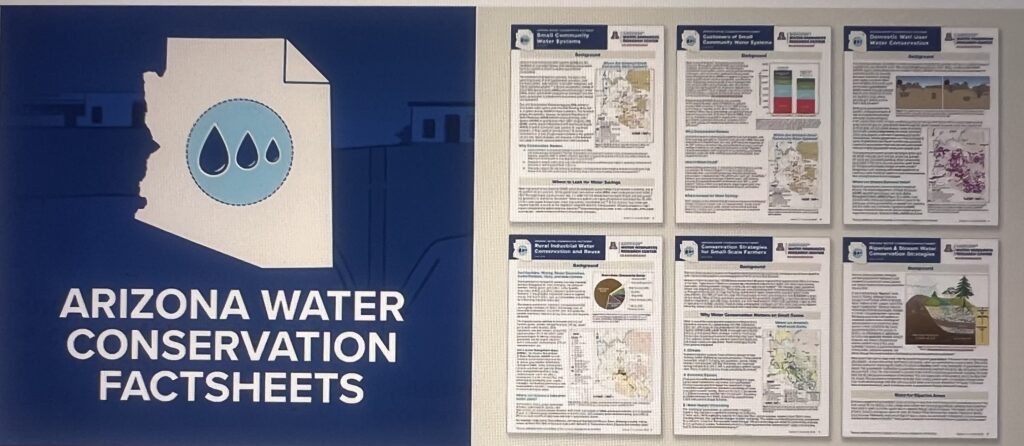
The WRRC is excited to announce the release of six Arizona Water Conservation Factsheets, which are intended to provide useful water-saving strategies to communities, businesses, and individuals in areas where technical resources may be limited. The factsheet topics include conservation strategies for small water systems and their customers, domestic wells, small-scale farms, and rural industries, as well as streams and their riparian areas.
The water conservation factsheets will be officially released on June 30, 2026.
Also on June 30, at noon MST, the project team leaders will present a WRRC Water Webinar on the process of factsheet development and an overview of all six information-packed factsheets. Project Manager Anne Gondor, WRRC Director Sharon B. Megdal, and Associate Director Jamie McEvoy will also discuss factsheet dissemination efforts and engage in discussion with participants following the presentation.
The Arizona Water Conservation Factsheet project was funded by a grant from the Water Infrastructure Finance Authority of Arizona (WIFA), which supports water conservation through programs that promote water use efficiency, drought-resistant landscaping, and improved water management and that produce long-term, sustainable reductions in water use. Additional support came from the Technology and Research Initiative Fund (TRIF) through the University of Arizona Office of Research and Partnerships.
For a closer look at the Fact Sheets, go to https://wrrc.arizona.edu/news/wrrc-launches-new-arizona-water-conservation-factsheets and scroll to bottom and click on “Arizona Water Conservation Fact Sheets”.
4. Wet/Dry Mapping On selected Segments Of The Upper Agua Fria River On The Following Days:
Saturday July 4, 2026
Monday, July 6, 2026.
Wet/Dry Mapping consists of walking 2 to 4 mile segments with a GPS noting what is wet and what is dry in an effort to establish base flow, usually during the hottest, driest part of the year.
The Upper Agua Fria has been working with Friends of the Agua Fria/BLM since 2007 to collect this data.
Please let me know if you are interested in volunteering for this project. We usually meet at the Love’s at Cordes Junction around 6:30 to 7 am to walk in the cooler part of the day.
Contact Mary Hoadley at 480-206-8228
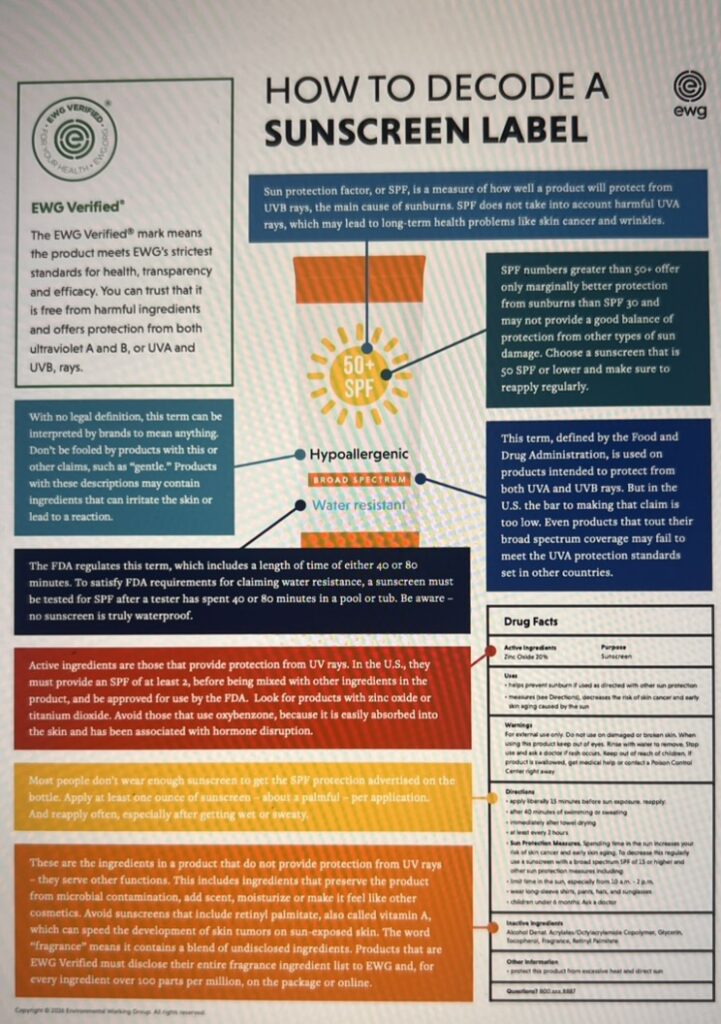
5. The Environmental Working Group (EWG) Presents 2026 Guide to Sunscreens. Only 550 of the 2,784 SPF products met the requirements for ingredient safety and balance sun protection. EWG’sTop Ten are listed below:
- Sky and Sol SPF 50
- Banana Boat Sport Ultra SPF 50
- Attitude Volume and Shine Hair Shampoo for thin hair.
4. Thrive Natural Care Mineral Face Sunscreen SPF 50
5. Thrive Natural Care Body Mineral Sunscreen SPF 50
6. Raw Elements Face and Body All Natural mineral Sunscreen SPF 30
7. Attitude Mineral Sunscreen for Sensitive Skin SPF 30
8. Attitude mineral Sunscreen Stick w/ Zinc Mineral Sunscreen SPF 30
9. Thrive Natural Care. Natural Mineral Face Sunscreen SPF 30
10. Attitude Mineral Sunscreen for Baby and Kids with Sensitive Skin SPF 30
********************************************************
Answers to America’s History Questions found in No. 1 :
- iii. 1585
- iii. 1590
- iii. Jamestown
- ii. Mayflower
- i. Pilgrims and Wampanoag natives
- i. English
- iii. Beaver Wars
- iii. King Charles II granted the immense tract of land (which would become Pennsylvania) to Penn in order to settle a large debt of £16,000 that the British Crown owed to Penn’s late father, Admiral Sir William Penn.
- ii. 1699
- iv Unjust taxation
- ii. 2nd
- iv. Sept 17, 1787
- iv. June 21, 1788
- ii. March 4, 1789
- iv. 1776
- iii. St. Louis, MO
- iii. Semiquincentennial
Copyright 2026 @ enviroinsight.org
If #1365 was actually a year, it would mark the March 12, 1365 founding of the University of Vienna in Austria. Source:https://www.onthisday.com/date/1365
