
Daniel Salzler No. 1364 EnviroInsight.org Six Items June 26 2026
—————Feel Free To Pass This Along To Others——————
If your watershed is doing something you would like others to know about, or you know
of something others can benefit from, let me know and I will place it in this Information .
If you want to be removed from the distribution list, please let me know.
Please note that all meetings listed are open.
Enhance your viewing by downloading the pdf file to view photos, etc.
The attached is all about improving life in the watershed through knowledge.
If you want to be removed from the distribution list,
please let me know. Please note that all meetings listed are open.
Check our website at EnviroInsight.org
1. University Of Arizona-Led Project Presents Solutions For Arizona’s Water Worries. A University of Arizona-led team of collaborators at Arizona’s three state universities today released a detailed report and associated products describing possible solutions to the state’s concerns about future water resource availability.
“Given the current concerns about the reliability of Colorado River deliveries to Arizona, this is a critical time to be thoroughly exploring our water supply options,” said Katharine Jacobs, a recently retired U of A professor of environmental science and the project’s principal investigator.
The Arizona Tri-University Recharge (ATUR) and Water Reliability Project is led by the Center for Climate Adaptation Science and Solutions within the U of A’s Arizona Institute for Resilience in collaboration with researchers from Arizona State University and Northern Arizona University.

The project team modeled the water budget for each of Arizona’s 51 groundwater basins and described management strategies that can increase water capture and recharge.
The report’s key findings include:
- There is an overall reduction in total water storage across the state, which is correlated with hotter and drier weather.
- More than 95% of Arizona’s precipitation is lost through evaporation. Reducing these losses by even small percentages could significantly increase water supply.
- The Mogollon Rim has the highest potential for generating large volumes of water for capture and storage because of higher precipitation volumes.
- Improving water recharge through land management practices such as in land development, forest thinning, and flood and fire management could substantially increase water supply in some areas.
The report includes a Decision Support Framework intended to help water managers navigate the new sources of information, as well as a Recharge Opportunities Matrix providing more than 50 approaches to collecting and recharging water. A complete literature review also is included, with links to evidence supporting the report’s 24 key findings. The team also made detailed projections of future water supply for the whole state through the end of the century.
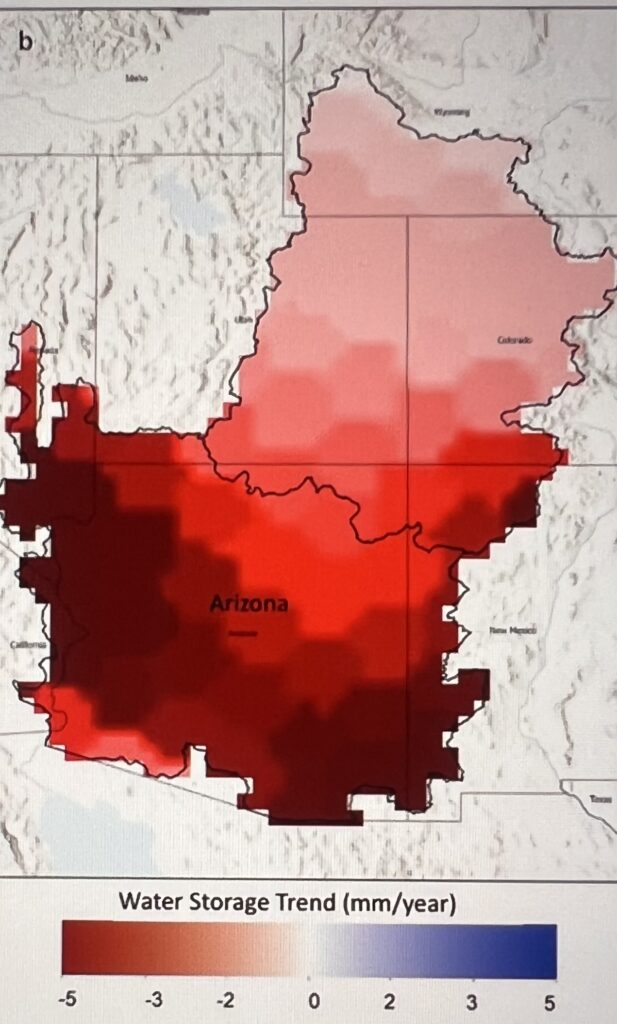
“We have taken a major step forward in understanding water supply conditions in Arizona with a level of precision never before available,” said Giuseppe Mascaro, the lead ATUR researcher for ASU. “This project has given the team an opportunity to demonstrate how accurately we can model both current and future water supply conditions.”
“The water supply information that is provided in the Basin Profiles section of this report provides a great starting point for more detailed water supply and demand planning activities,” said Marlana Hinkley, a U of A master’s student who integrated multiple sources of information from ATUR researchers to produce the profiles.
One product of the ATUR project is a framework to augment existing land and water management practices to enhance groundwater recharge into aquifers. The framework, recently published in the journal Groundwater, describes opportunities to improve groundwater recharge across diverse landscapes, by considering recharge within management activities associated with forest and flood management, and thus enhancing water resources for the state.
“Getting water underground before it has a chance to evaporate is an important path towards enhancing recharge,” said Abe Springer, the lead ATUR researcher for NAU.
“This project has built a solid scientific foundation for maximizing water supplies that are currently lost to the atmosphere, in order to support communities and natural habitats across the state,” Jacobs said.
Fifteen faculty members across the three universities, along with more than 25 students and post-doctoral researchers, have worked together on this research since January 2023.
The ATUR project was begun under the direction of Thomas Meixner, then department head of hydrology and atmospheric sciences at the U of A.
“Our team made a decision early on to continue this work, both motivated by, and in honor of Dr. Meixner’s legacy as a groundbreaking scientist whose work continues to inform and benefit all of Arizona,” said Neha Gupta, ATUR project manager at the U of A. “This project is a wonderful demonstration of how academics can work together with stakeholders and external partners to develop information to support water resources across the state, while also taking a leap forward on behalf of science.”
The ATUR report was prepared at the request of the Arizona Department of Water Resources and funded by the Arizona Board of Regents Technology and Research Initiative Fund supporting academic research in areas of greatest need to Arizonans. Source: University of AZ
2. Here’s What To Expect From 2026 Monsoon Season In Arizona. Welcome to Arizona’s most unpredictable season — the annual weather spectacle where sunshine can turn into sideways rain, patio umbrellas become airborne projectiles and everyone suddenly develops strong opinions about the 2026 monsoon season in Arizona officially runs from June 15 through Sept. 30, and if early forecasts are any indication, Arizona may be in for an active stretch of summer weather.
Meteorologists are giving much of the state a 33% to 50% chance of seeing above-normal precipitation this year, which means residents may want to keep one eye on the forecast — and maybe stop pretending that windshield wipers aren’t optional.
For Phoenix, Tucson and much of central Arizona, the odds slightly favor a wetter-than-normal monsoon season, thanks in part to expected El Niño conditions in the Pacific Ocean. That weather pattern can help funnel more moisture into the Southwest, increasing the chance for those dramatic late-afternoon thunderstorms Arizonans know so well.
Of course, monsoon season in Arizona is never just about rain. It’s also about timing.
Storms often build during the hottest part of the day, especially near the Mogollon Rim and mountainous terrain. By late afternoon or evening, powerful outflow winds can race toward metro Phoenix, sometimes arriving dramatically before the actual storm. Locals know the signs: the temperature suddenly drops, patio napkins take flight and the sky turns an unsettling shade of brown.
Cue the haboob.
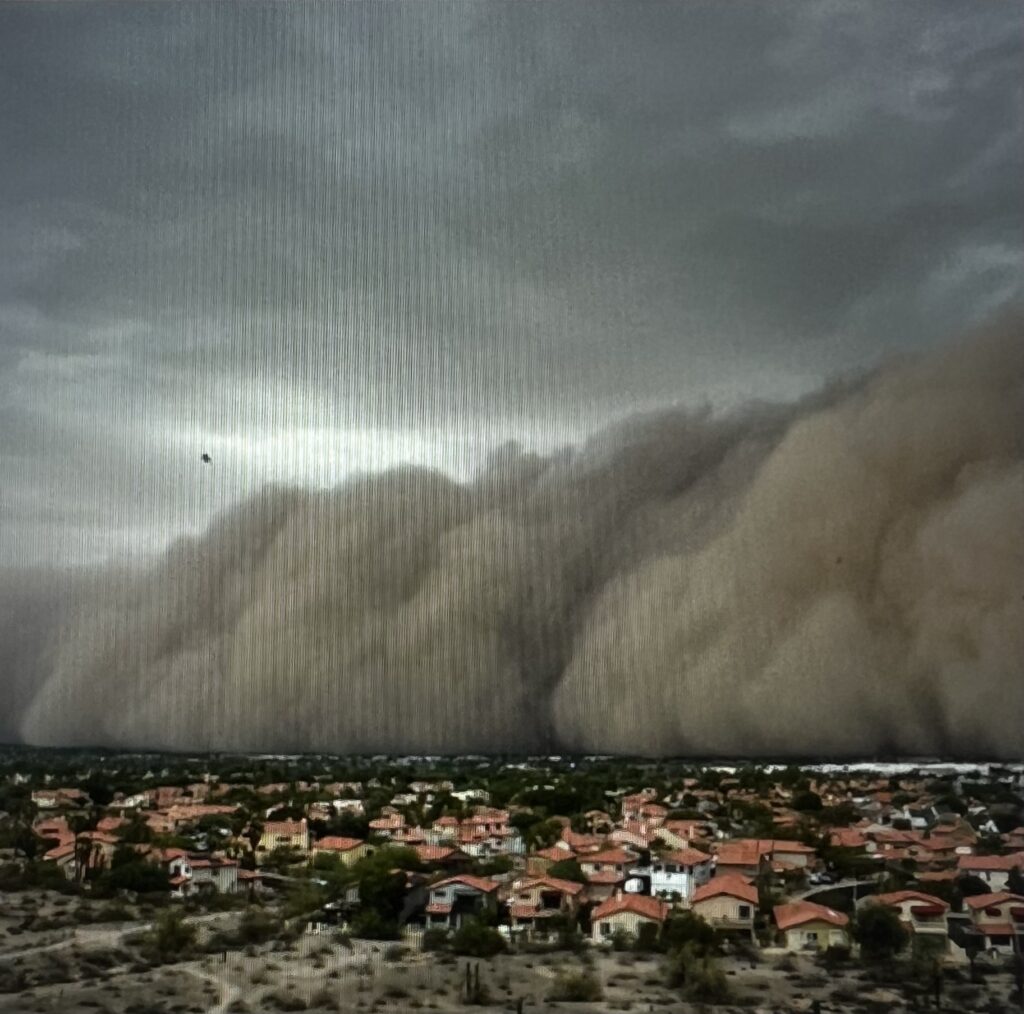
Dust storms remain one of the monsoon’s biggest hazards. Visibility can disappear in minutes, making driving dangerous — especially on Valley freeways. Safety experts continue to remind drivers: “Pull aside, stay alive.” Translation: If you can’t see, don’t keep driving like you’re starring in an action movie.
Then there’s lightning — Arizona’s unofficial summer light show. Frequent cloud-to-ground strikes make monsoon storms visually stunning but potentially dangerous. Add in gusty winds and occasional flash flooding, and monsoon season quickly earns its reputation as nature’s version of controlled chaos.
After months of triple-digit heat and skies so blue they almost feel repetitive, monsoon season delivers drama. The smell of creosote after rainfall, dramatic sunsets, booming thunder rolling across the desert and the excitement of watching storms gather over mountain ranges feel uniquely Arizona.
There’s also practical value. Summer rainfall helps vegetation, replenishes soil moisture and temporarily cools temperatures. However, experts caution that monsoon moisture alone will not solve Arizona’s long-term drought challenges. The state remains deeply dependent on winter snowpack and Colorado River supplies to refill reservoirs.
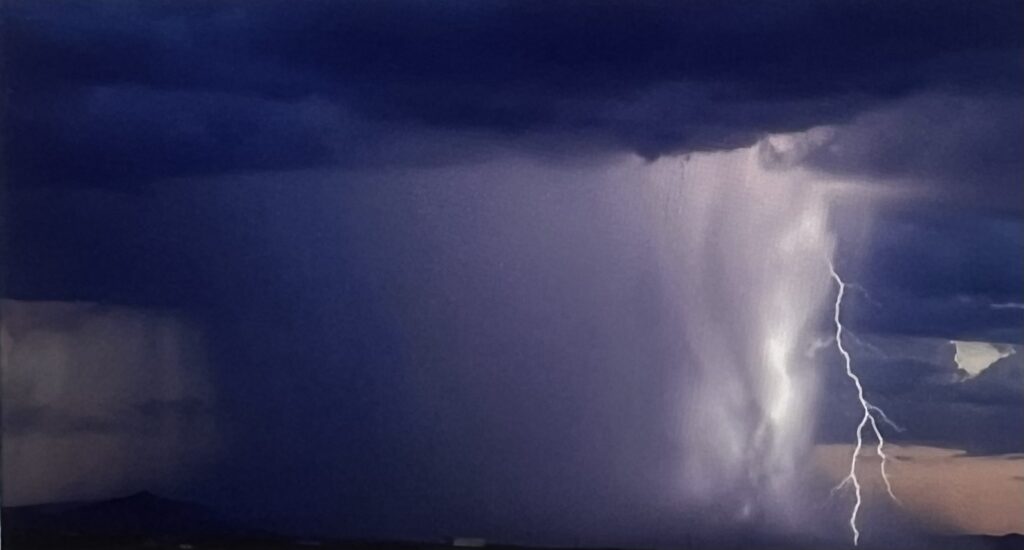
Monsoon rain can even be a double-edged sword. Dry thunderstorms that produce lightning without meaningful rainfall can spark wildfires, while heavy rainfall encourages grasses and brush growth that may later dry out and become fuel.
In Phoenix, the seasonal rainfall average is just 2.43 inches between June 15 and Sept. 30. That may not sound impressive, but in the desert, every drop feels like an event.
So what should Arizonans expect from the 2026 monsoon?
Expect surprises. Expect dust. Expect at least one person to say, “We really needed this rain.” And above all, expect Arizona to put on one of the most dramatic weather shows in the country.
Source: AZ Big Media June 20, 2026
3. Pre- Test (Below ) Info On PFAS. PFAS (per- and polyfluoroalkyl substances) are a massive group of synthetic chemicals used since the 1950s to make products resistant to water, grease, and stains. Known as “forever chemicals,” they do not break down in nature or the human body, leading to widespread environmental and biological accumulation.
Where Are They Found?
Because of their durability and versatility, PFAS are used in thousands of everyday consumer and industrial products. Common sources include:
• Nonstick Cookware: e.g., Teflon
- Waterproof/Stain-Resistant Gear: Outdoor clothing, carpets, and upholstery
- Food Packaging: Microwave popcorn bags, fast-food wrappers, and pizza boxes
- Personal Care: Certain cosmetics, dental floss, and menstrual products
- Firefighting Foams: Aqueous film-forming foam (AFFF) used at military bases and airports
Health & Environmental Risks
Because PFAS break down so slowly, they leak into soil and drinking water. As a result, they are present in the blood of most people and animals worldwide. Exposure to certain PFAS over time has been linked to:
- Reproductive issues and developmental delays in fetuses and children
- Increased risk of certain cancers
- Liver, kidney, and thyroid issues
- Reduced immune system response
How to Minimize Exposure
While it is difficult to avoid PFAS completely, you can reduce your exposure by taking a few actionable steps:
Review product guides: Check resources like the Environmental Working Group for databases on PFAS-free consumer products, cosmetics, and gear.
Check your cookware: Swap out worn nonstick pans for cast iron, stainless steel, or ceramic alternatives.
Filter your water: Consider certified water filters (such as activated carbon or reverse osmosis) designed to reduce PFAS.
Avoid stain-resistant treatments: Skip the aftermarket stain guards for your carpets and furniture.
4. PFAS Crossword Puzzle

ACROSS
2. Water-based film-forming
firefighting foam type
7. Buildup of toxins in living
organisms over time
10. Halogen element central
to forever chemical bonds
DOWN
1. Time for substance concentration to decrease by half
3. Underground water source vulnerable to chemical leaching
4. Cleanup process for contaminated soil or water
5. Cancer-causing substance found in polluted environments
6. Hormonal system disrupted by synthetic chemical exposure
8. Unwanted substance Source: WaterWorld June 15, 2026 presence in water or soil
9. Persistent synthetic chemicals called forever pollutants
ANSWER at end of newsletter
5 . Did You Know……..? Of the >190,000 bacterial species* known, there are four dominant bacterial species found in both tree roots and human guts. * Genome Taxonomy Database
The four dominant bacterial groups shared across both environments include:
- Pseudomonadota (formerly Proteobacteria):
- In Human Guts: Present in smaller, controlled amounts, this group (including E. coli) helps support the balance of the gut ecosystem.
-
- In Tree Roots: Highly abundant, these bacteria assist with nitrogen fixation, mineral weathering, and protecting tree roots from pathogens.
- In Tree Roots: Highly abundant, these bacteria assist with nitrogen fixation, mineral weathering, and protecting tree roots from pathogens.
- Bacillota (formerly Firmicutes):
- In Human Guts: One of the two most dominant groups in the gut, housing key species that help absorb energy and break down complex carbohydrates.
- In Tree Roots: Includes beneficial Bacillus species that promote root growth and trigger the plant to absorb soil microbes for nutrients.
- Bacteroidota (formerly Bacteroidetes):
- In Human Guts: A primary “workhorse” phylum (e.g., Bacteroides) that digests indigestible plant fibers and complex starches.
- In Tree Roots: Also known to be present, acting to decompose soil organic matter and assist in nutrient cycling.
- Actinomycetota (formerly Actinobacteria):
- In Human Guts: Houses essential beneficial bacteria (like Bifidobacterium) which maintain the gut lining and regulate immune responses.
- In Tree Roots: Highly abundant around the root zone, where they help degrade tough plant polymers and produce vital natural antibiotics.
Sources: National Institutes of Health, SciececDirect.com
6. Arizona Lawmakers Add $6 Million To Colorado River Legal Fund Ahead Of Potential Court Battle. Arizona lawmakers are tripling the size of the state’s legal fund for potential lawsuits about sharing water from the Colorado River. The new state budget will add $6 million to the pool of money, which was first set up in 2025, bringing the fund to a total of $9 million.
States that share the Colorado River are caught in a standoff about how to cut back on water use amid drought, climate change and shrinking reservoirs. Negotiators from the seven states are under pressure to agree on a new set of rules for sharing water after the current ones expire later this year.
If that happens, states are likely to sue one other or the federal government, sending the Colorado River’s future to a messy legal battle that would likely end up in the Supreme Court.
Arizona has already secured an East Coast law firm, Sullivan & Cromwell, to represent the state in Colorado River matters.
Legions of Colorado River experts have warned that a court battle would be bad for the river and the nearly 40 million people who rely on its water each year . Arizona lawmakers are tripling the size of the state’s legal fund for potential lawsuits about sharing water from the Colorado River. The new state budget will add $6 million to the pool of money, which was first set up in 2025, bringing the fund to a total of $9 million.
States that share the Colorado River are caught in a standoff about how to cut back on water use amid drought, climate change and shrinking reservoirs. Negotiators from the seven states are under pressure to agree on a new set of rules for sharing water after the current ones expire later this year. They have been unable to forge a deal, meaning that the federal government will likely force a water management plan on the states.
Arizona has already secured an East Coast law firm, Sullivan & Cromwell, to represent the state in Colorado River matters.
Legions of Colorado River experts have warned that a court battle would be bad for the river and the nearly 40 million people who rely on its water each year — in major cities from Phoenix and Los Angeles to Denver and Salt Lake City. Source: KJZZ, June 12,2026
ANSWER to PFAS Crossword Puzzle

Copyright 2026@ EnviroInsight.org
