
Daniel Salzler No. 1381 EnviroInsight.org Six Items October 23, 2026
—————Feel Free To Pass This Along To Others——————
If your watershed is doing something you would like others to know about, or you know
of something others can benefit from, let me know and I will place it in this Information .
If you want to be removed from the distribution list, please let me know.
Please note that all meetings listed are open to the public.
Enhance your viewing by downloading the pdf file to view photos, etc.
The attached is all about improving life in the watershed through knowledge.
If you want to be removed from the distribution list,
Impact of Tire Dust on Lung Health
Composition of Tire Dust
Tire dust is composed of fine particles that include:
Microplastics
These particles are generated as tires wear down during normal driving, releasing harmful substances into the air.
Health Risks Associated with Tire Dust
Breathing in fine dust from automotive tires can lead to several health issues, including:
Inflammation: The particles can irritate lung tissue, leading to chronic inflammation.
Oxidative Stress: Heavy metals in tire dust can cause oxidative damage to cells, which may contribute to various
diseases.
Respiratory Diseases: Long-term exposure is linked to conditions such as:
Asthma
Chronic Obstructive Pulmonary Disease (COPD)
Lung Cancer
Mechanism of Damage
The fine particles from tire dust can penetrate deep into lung tissue and may even enter the bloodstream. This allows them to cause systemic health effects beyond just respiratory issues.
Conclusion
Overall, tire dust poses significant risks to lung health due to its composition and the way it interacts with the respiratory system. Reducing exposure to this type of pollution is crucial for maintaining lung health. Source: https://duckduckgo.com/?q=what+is+lung+damage+ from+automotive+tires+dust?&kbg=-1&ia=web
Continental’s Sustainable Change To Tire Manufacturing
The global tire manufacturing industry is led by the “Big Four” companies—Michelin, Bridgestone, Goodyear, and Continental. These four companies manufacture 748.7 million tires every year.
Continental Tire has produced, and tested, the first tires where the tread is made 100 percent out of dandelion natural rubber as a polymer. Plans are in place to begin manufacturing consumer road tires made from dandelion-derived rubber in five to 10 years. Continental has already initiated the manufacturing of bicycle tires.
Between 10 and 30 percent of a car tire includes natural rubber, while truck tires can include proportionally higher amounts. Today, natural rubber is still obtained almost exclusively from the rubber tree (Hevea brasiliensis).
The collaboration saw Continental Tire produce and test the first tires where the tread is made 100% out of dandelion natural rubber as a polymer. The team at Continental Tire looks to the dandelion as an alternative source of natural rubber. But it’s not using just any dandelion – the Russian dandelion has been tapped as the dandelion of choice.
The Russian dandelion plant is a larger, more robust variant that can be produced in mass quantities. The plant also thrives in a large part of the world and can be cultivated on land not suitable for food production. This is an advantage over rubber trees, which require a hot, damp climate and only grow in a small area of the world. A dandelion also has a one-year growth period whereas the rubber tree has a seven-year life cycle.
The roots of the Russian dandelion contain the natural rubber latex (the source for natural rubber in tires) which means that the supply will be steadier and easier to control, leading to greater price stability. Source: https://continentaltire.com/learn/dandelions-future-tires
2. Spotting The Political Liar Prior To The Elections. During this period of pre-election campaigning, political candidates talk themselves up and the opposition down. If you listen carefully to what they say. Science Focus magazine suggest there are ways to tell if someone is lying. You just have to listen carefully to what they’re saying.
Here are five ways a liar’s words can help unmask them… (or other people you know)

1. Repetition
Repetition in a person’s story is something to listen out for.
2. Foregrounding
The first thing someone says can be highly revealing in detecting deception. When we tell someone about an experience, we normally use a chronological structure, with a beginning, middle and end.
3. Negative affective state
Someone who’s lying about their involvement in something or trying to appear innocent in some way, for instance, will usually slip up in what they say and, in doing so, give us a sign that they’re trying to deceive us.
Research has shown that these slip-ups tend to happen in the language people use to refer to someone or something.
4. Missing sensory information
People often lie about being robbed to claim insurance on something they’ve lost or broken – a mobile phone, for example. And it happens more than you might think.
Some people alsolie about being robbed to get sympathy or maintain their public image when they’ve done something that could damage their reputation.

5. Hiding among others
People can use plural pronouns such as ‘we’ or ‘us’ instead of ‘I’ or ‘me’ to hide a lie – Image credit: Dale Edwin Murray
Pronouns can be another clue that someone is lying. Personal pronouns are the words we use to refer to ourselves or other people: I, he, she, they, me, him, her and so on.
When we refer to ourselves, we normally use the singular form ‘I’ or ‘me’. Liars, however, prefer not to. This may be because using I or me places them solely in the spotlight.
Read more on this subject at: https://www.sciencefocus.com/wellbeing/how-to-catch-a-liar-language
3. WRRC Publishes FY 2026 Annual Report (Oct 16, 2026). The WRRC is pleased to announce the publication of its FY 2026 Annual Report. The report highlights how, through applied research, outreach, and engagement, the WRRC continues to contribute to water resource planning, assessment, and capacity building, as well as to expand awareness and understanding of water resource issues. As Arizona and the region face ongoing water challenges, the WRRC serves as a trusted source for reliable information.
This year, after careful consideration, the WRRC has decided to shift the annual reporting period from a calendar year (CY) schedule to a fiscal year(FY) schedule. The University of Arizona’s fiscal year aligns with that of the State of Arizona, beginning on July 1 and concluding on June 30 the following calendar year. FY 2026 began with July 2025 and ended with June 2026.
GREATER DEPTH, BROADER PERSPECTIVE FOR A CLEAR WATER FUTURE
We tackle key water policy and management issues, empower informed decision-making, and enrich understanding through engagement, education, and applied research.

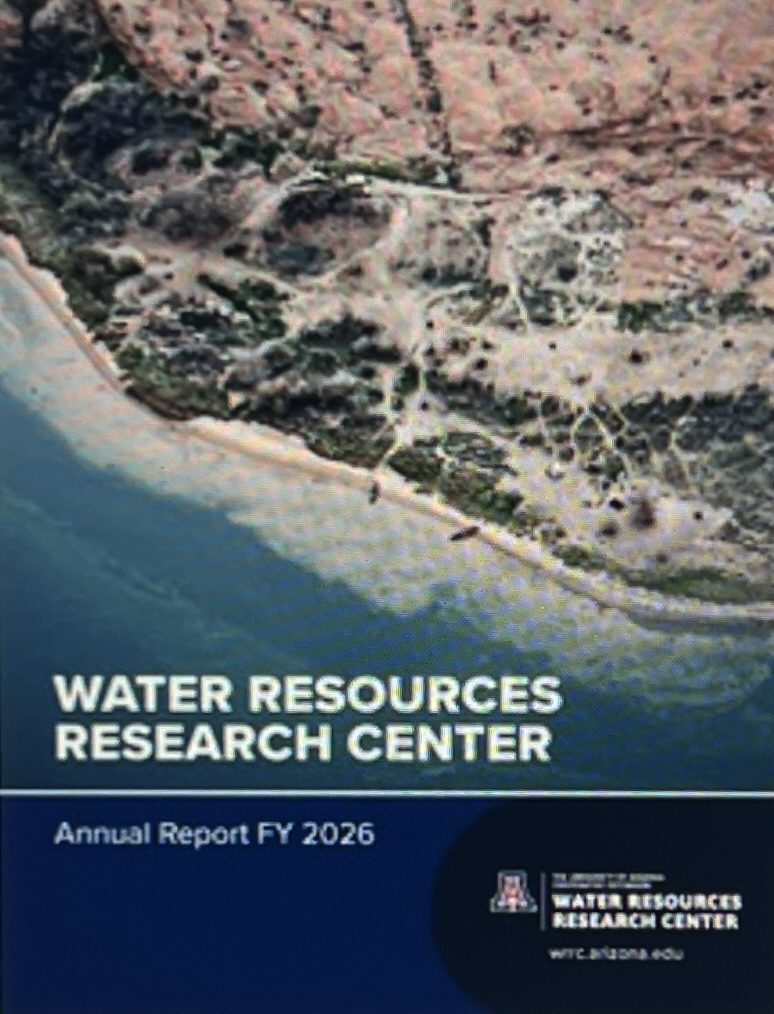
Table of Contents
Message from the Director…………………………………………………………………………………………..1
External Advisory Committee. …………………………………………………………………………………….2
Organization. …………………………………………………………………………………………………………….2
New Annual Reporting Period. ……………………………………………………………….2
Projects & Programs. ………………………………………………………………………………………………….3
Outreach, Engagement & Education……………………………………………………………………………..7
Affiliated Programs…………………………..…………………………………………….. 10
Personnel. ………………….………………………………………………………………..11
Financial Summary FY 2026………………………………………………………………..13
FY 2026 Annual Report
Previous WRRC Annual Reports
Read the report at; https://wrrc.arizona.edu/sites/default/files/2026-10/Annual-Report-2026.pdf
4. Arizona Joins Nevada Lawsuit To Block Federally Imposed Colorado River Cuts. SALT LAKE CITY (ABC4) — Arizona is joining Nevada in a lawsuit challenging federally imposed cuts to Colorado River allotments. The two Lower Basin states claim the cuts would significantly impact their economies.
“Arizona has always been willing to do our part to protect the Colorado River, but we will not accept a forced federal plan that solves this crisis on the backs of our families, farmers, and businesses,” she wrote.
Of the three Lower Basin States, Arizona takes the brunt of the cuts. In August, the Bureau of Reclamation announced Arizona would be required to take a 760,000-acre-foot reduction of Colorado River water.
The move would force Arizona to rely more on ground water supplies. Hobbs took issue with mandated cuts to Lower Basin states that do not apply to Upper Basin states like Utah.
“I’m joining Nevada in court to protect Arizona’s water and stop the forced cuts that could devastate our families, farmers, and businesses,” Hobbs wrote.
Nevada filed suit against the plan earlier this year as the federal government announced plans for each of the Lower Basin states to take cuts. The plan came after the seven Colorado River states failed to reach a new deal to share a dwindling supply of Colorado River Water.
The Colorado River is the lifeblood of the West. It supports 40 million people in the United States. But a megadrought, influenced by human-caused climate change and exacerbated by significant overuse, is causing reservoir levels to drop to historic lows, threatening hydropower and water availability across the region.
5. Oak Creek Clean Up. Recently, volunteers successfully removed over 100 pounds of trash from Oak Creek Canyon, highlighting community efforts to maintain the area’s natural beauty.
Community Cleanup Efforts
The cleanup initiative involved numerous volunteers and organizations.
- Volunteer Participation — More than 100 volunteers participated in the cleanup event, showcasing strong community involvement.
- Trash Removed — Volunteers collected over 100 pounds of trash, including various waste items, from the canyon.
- Organizing Bodies — The event was organized by Wilderness Volunteers in collaboration with local organizations, emphasizing teamwork for environmental conservation.
- Visitor Impact — Oak Creek Canyon welcomed around 4 million visitors recently, increasing the need for such cleanup efforts to preserve its beauty.
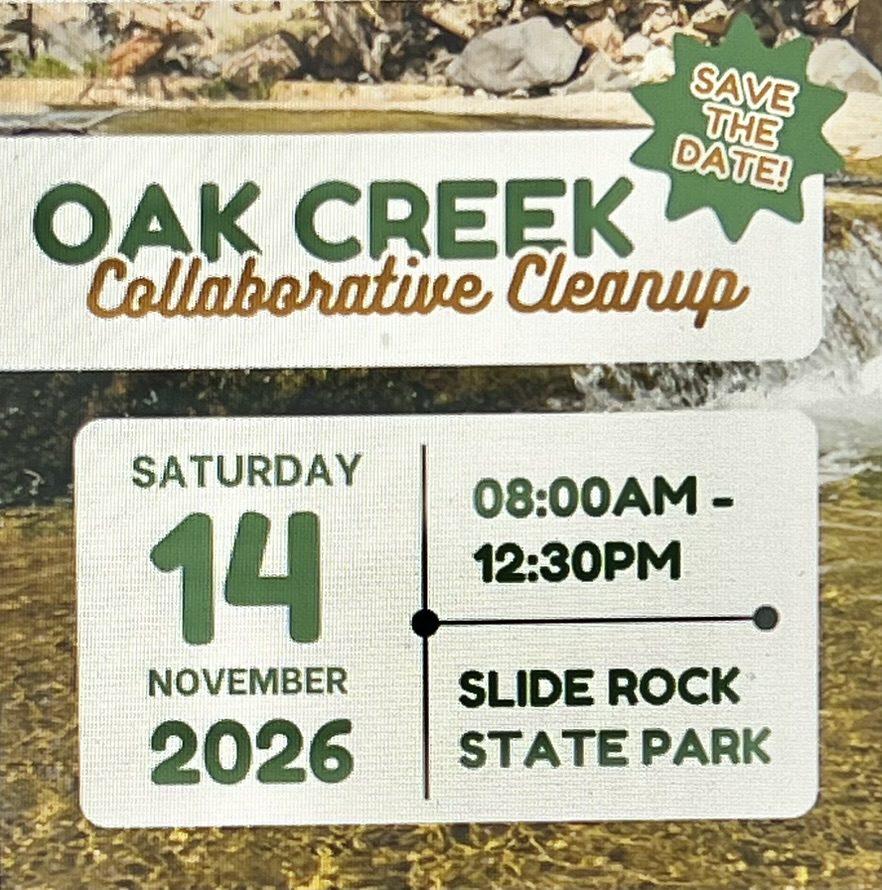
In addition, there will be an Oak Creek collaborative cleanup on Saturday, November 14, 2026 from 8 a.m. to 12:30 p.m.
Join us for a collaborative clean-up event with many of the organizations who care for Oak Creek and the surrounding lands. Keeping Oak Creek clean takes all of us!
There will be a prize for the team that picks up the most trash. All volunteers must complete registration prior to November 13. After registering, you will receive a confirmation email with an attachment of all consent forms. All volunteers between the ages of 12-17 must have a completed and signed Parental Consent Form. To register, go online to: https://form.jotform.com/261695646112157
Schedule of events:
8 a.m. – Check-in and registration validation
8:30 a.m. – Mandatory safety briefing
9 a.m. – Let the clean-up begin!
12 p.m. – Reconvene at Slide Rock State Park for celebration, thank yous, and raffle
6. Gilbert’s Freestone Park Project’s Impact On Wildlife Raises Concerns. Since Gilbert’s hired contractor began in mid-August emptying the two interconnected lakes at the 88-acre Freestone Park for a multi-million renovation project, it’s leaving behind carcasses of fish and ducks that once called the now stagnant water home.
As of last week the north lake was mostly drained and the south lake continued to drain into a nearby retention basin. The Town last week said it received a handful of complaints from residents about the odor, standing water and mounds of sludge.
“The contractor is monitoring the area and removing carcasses as the draining process continues, both to prevent odor and to reduce any risk to public health,” Town spokeswoman Abbi Baggs said in an email last week. “Due to high temperatures and rapidly lowering water levels, some fish carcasses have since been recovered on site.”
Approximately 11 ducks have died since recovery efforts began, according to Baggs.
Although it was unknown last week what killed the ducks, a nonprofit rescue that’s been retrieving them suspected avian botulism.
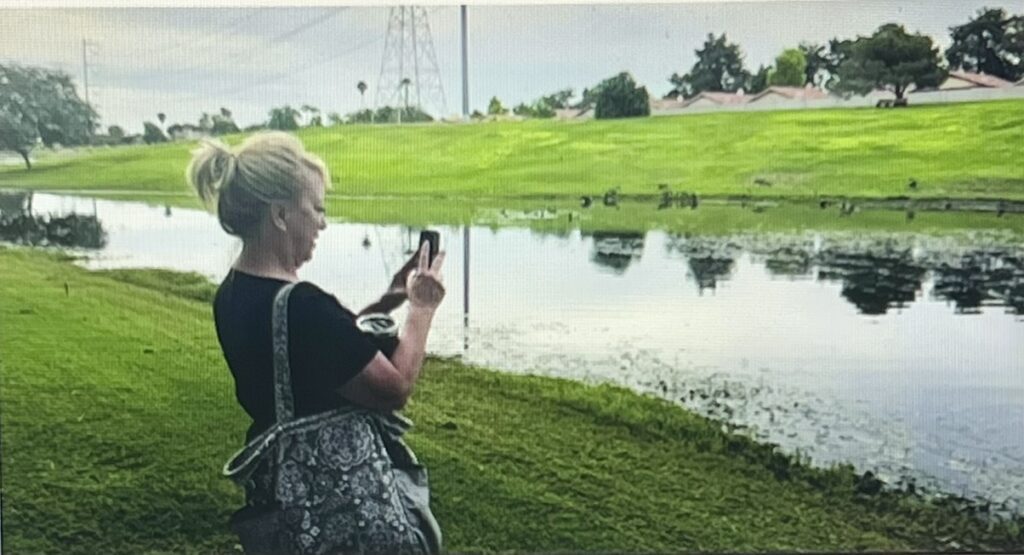
Crystal White, who heads Gilbert-based East Valley Wildlife and Mesa-based Crystal’s Critter Haven, last Wednesday morning showed up at Freestone with volunteers and captured nine ducks – one domestic and eight mallards “that all had potential botulism.”
“They’re barely holding their heads up,” White said. “They are not able to walk.” She said there were still possible five more domestic ducks left to be caught and maybe mallards as well. “We’re pretty sure two of them can fly but we are seeing very much-compromised mallards,” she said.
Avian botulism ingested by ducks is progressive, paralyzing muscles, usually starting in the legs and moving upward. Birds on water often drown because they cannot keep their heads above the surface. Those on land with advanced paralysis die by asphyxiation as the toxin eventually impairs the respiratory system.
Dropping water levels help foster an environment where the Clostridium botulinum, which naturally exists in mud, quickly multiplies, causing an outbreak.
Freestone’s lakes, spanning a total of about 2 acres, have a maximum depth of 10 feet. Last week both appeared well below that depth.
“They’re just wallowing in the dirty water because I don’t think they can move,” Hansen said. “It’s an absolute mess. We got to get those out but we also need signs up because people shouldn’t be near the water.
“The lake is being drained into the retention area, where it is right by my house. It’s right by a soccer field. It’s right by a playground. That’s concerning for the public.”

Baggs said a veterinarian from the Arizona Game and Fish has reviewed the situation and “confirmed that avian botulism is not contagious to people, pets or other wildlife and requires no further water or duck testing.”
However, Gilbert is choosing to test the water, “partnering with Aquatic Consulting & Testing, with results pending,” Baggs said.
The first 20 ducks taken from Freestone were healthy, 10 are sick and four have died so far, according to White.
White and Ellsworth are providing supportive care to the ailing ducks, initially administering fluids subcutaneously via syringes and needles and now giving them electrolytes and vitamins via feeding tubes as the affected birds cannot swallow food or water.
“With care, with fresh water, with subcutaneous fluids, with tubing, vitamins, electrolytes, we can usually flush out their systems and they recover within a couple days,” White said.
So far White estimated she and Ellsworth have spent about $1,600 out of their own pockets to care for the ducks and to set up a temporary pond for the turtles that will be displaced from Freestone.
“The Herpetological Society has agreed to take up to 30, and if we exceed this number, the rest will go to Crystal’s Critter Haven,” Baggs said. “No turtles will be euthanized.”
Five turtles so far from the north lake have been found and relocated to the Herpetological Society, she said.
“The south lake continues to drain, and crews continue to carry out additional turtle collection and relocation efforts throughout the week,” Baggs said.
The Herpetological Society is being paid to provide long-term care for the turtles it takes, and Gilbert last week decided to also compensate Whites’ nonprofits equally for the relocation and care of the turtles, which White was told would be around $1,000.
It was unknown how many turtles will be found at Freestone.
“All non-native species are not permitted to be returned to the lake, per direction from AZGFD,” Baggs said. According to Game and Fish, non-native turtles can hurt native species by introducing disease or out-competing them for habitat and food. These foreign turtles such as red-eared sliders end up in the Valley’s lakes as the result of people dumping their unwanted pets.
White pointed out that East Valley Wildlife released 61 turtles, including the popular red-ear slider back into the pond at Selleh.
“They should have kept more water in, got as much of the wildlife out,” she said.
Baggs said the Town’s plan was developed with guidance from the Game and Fish Department and local nonprofit wildlife experts and “it has continued to evolve as specific site conditions have been identified.”
Baggs said that the Town recognizes that the process has been difficult for residents who care about the wildlife at the park.
“We remain committed to managing it responsibly and keeping the community informed as work continues,” she said. “We will continue to work with AZGFD and our nonprofit wildlife partners through the completion of the project.”
