
Daniel Salzler No. 1361 EnviroInsight.org Four Items June 5, 2026
—————Feel Free To Pass This Along To Others——————
If your watershed is doing something you would like others to know about, or you know
of something others can benefit from, let me know and I will place it in this Information .
If you want to be removed from the distribution list, please let me know.
Please note that all meetings listed are open.
Enhance your viewing by downloading the pdf file to view photos, etc.
The attached is all about improving life in the watershed through knowledge.
If you want to be removed from the distribution list,
please let me know. Please note that all meetings listed are open.
Check our website atEnviroInsight.org
- June Is National Safety Month. Get educated and then plan, prepare and protect.If your home or workplace has safety issue, speak up and address it. If you don’t have smoke alarms in your home, get some. Do you have an emergency exit strategy and does everyone in your house know that strategy. Does your home have accumulated dust? Do you know what is in your dust?
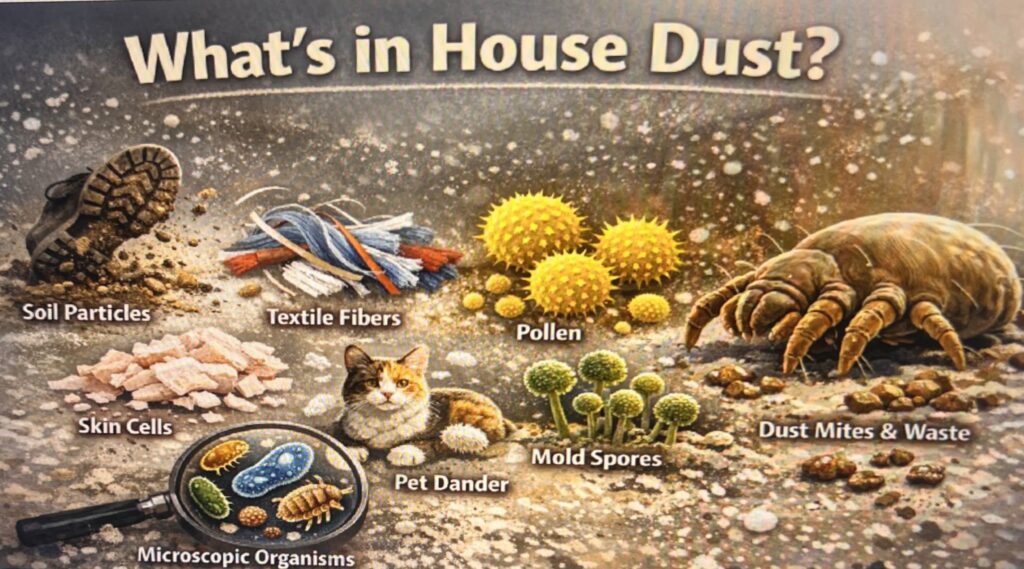
In addition to those allergens shown above, there could be lead based paint dust, asbestos particles and other chemical particles.
Lead dust can form when lead-based paint is scraped, sanded or heated. Lead dust also forms when painted surfaces containing lead bump or rub together. Lead paint chips and dust can get on surfaces and objects that people touch. Settled lead dust can reenter the air when the home is vacuumed or swept, or when people walk through it. EPA currently defines any reportable level of lead dust measured by an EPA-recognized lead laboratory as hazardous.
Asbestos-containing materials may release fibers when they are disturbed, damaged, removed improperly, repaired, cut, torn, sanded, sawed, drilled or scraped. Keep an eye on asbestos-containing materials (wallboard, ceiling and floor tiles, roofing shingles, roofing paper etc.) and visually check them over time for signs of wear or damage.
If you suspect material contains asbestos, don’t touch it. Look for signs of wear or damage such as tears, abrasions, or water damage. Damaged material may release asbestos fibers.
This is particularly true if you often disturb it by hitting, rubbing or handling, or if it is exposed to extreme vibration or air flow.
How do these particles affect us?
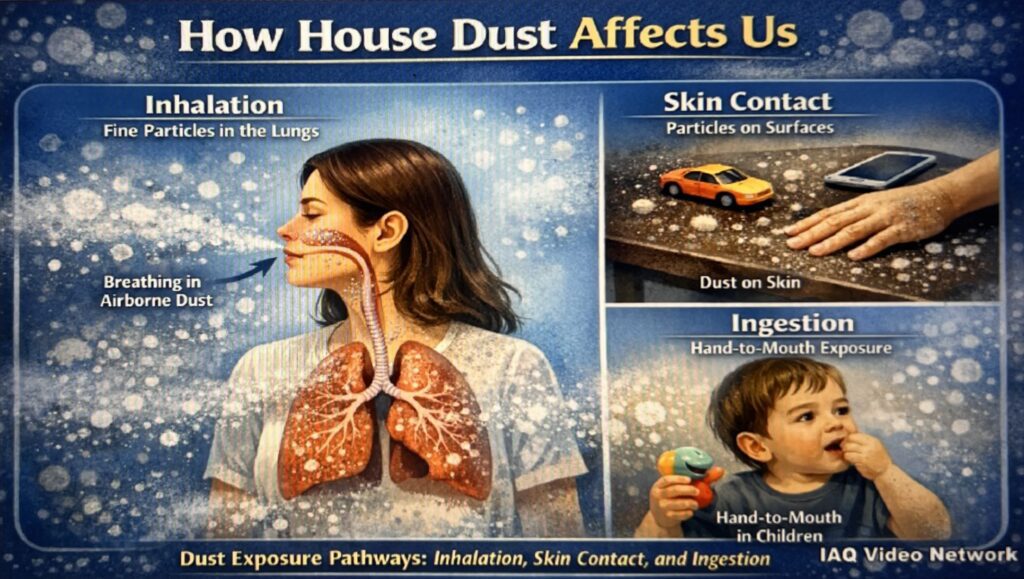
In your workplace, are there safety issues that concern you? Speak up! Is everyone OSHA certified? If you or your work associates need to be OSHA certified, contact this newletter editor to arrange for a certification class or a OSHA refresher. BE SAFE! Source: IAQ and editor.
2. Speaking Of Air Borne Dust… The Spring/ Summer Winds carry desert dust which is resulting in an increased cases of Coccidioidomycosis (Valley Fever) across Arizona.
Cases of Valley Fever have accelerated with the Spring winds.
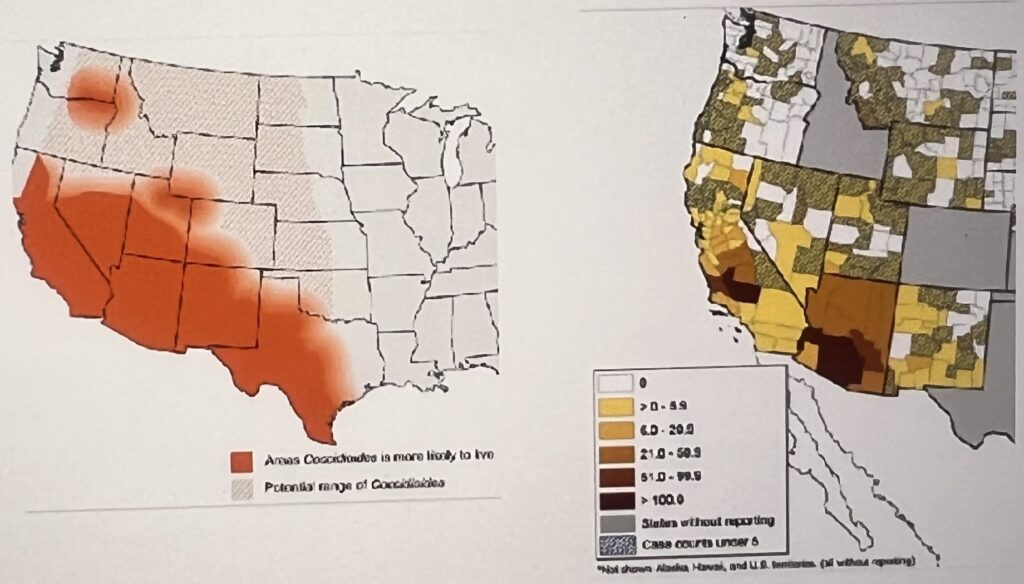
Valley Fever reaches far and wide across the western U.S. but cases are rising significantly in Arizona. As of May 23,2026, Arizona has reported 4,183 cases since January 15, 2026 to present. 0.1% to 0.5% die from VF.
A few people who contract contract Valley Fever exhibit no symptoms.
Valley fever is a fungal lung infection and causes symptoms of pneumonia.
Symptoms usually last for a few weeks to a few months.
Rarely, Valley fever can cause severe lung infections or infections throughout the body.
Symptoms
If your symptoms last for more than a week, contact your healthcare provider.
Symptoms include:
- Fatigue (tiredness)
- Cough
- Fever and headache
- Shortness of breath
- Night sweats
- Muscle aches or joint pain
- Rash on upper body or legs
In extremely rare cases, the fungal spores can enter the skin through a cut, wound, or splinter and cause an infection.
Timing
Symptoms of Valley fever may appear between 1 and 3 weeks after a person breathes in the dust laden with fungal spores.
Symptoms usually last for a few weeks to a few months. However, some patients have symptoms that last longer than this, especially if the infection becomes severe.
Severe Valley fever
Approximately 5 to 10% of people who get Valley fever will develop serious or long-term problems in their lungs. In an even smaller percent of people (about 1%), the infection spreads from the lungs to other parts of the body. This could include the central nervous system (brain and spinal cord), skin, or bones and joints. Source: CDC https://www.cdc.gov/valley-fever/signs-symptoms/index.html
3. Low Water At Lake Mead May Cut Power Generation By Fall, Driving Up Costs For Arizonans
The Arizona State Water Director says a drop in water elevation at Lake Mead could cut Hoover Dam’s Generation 80%.
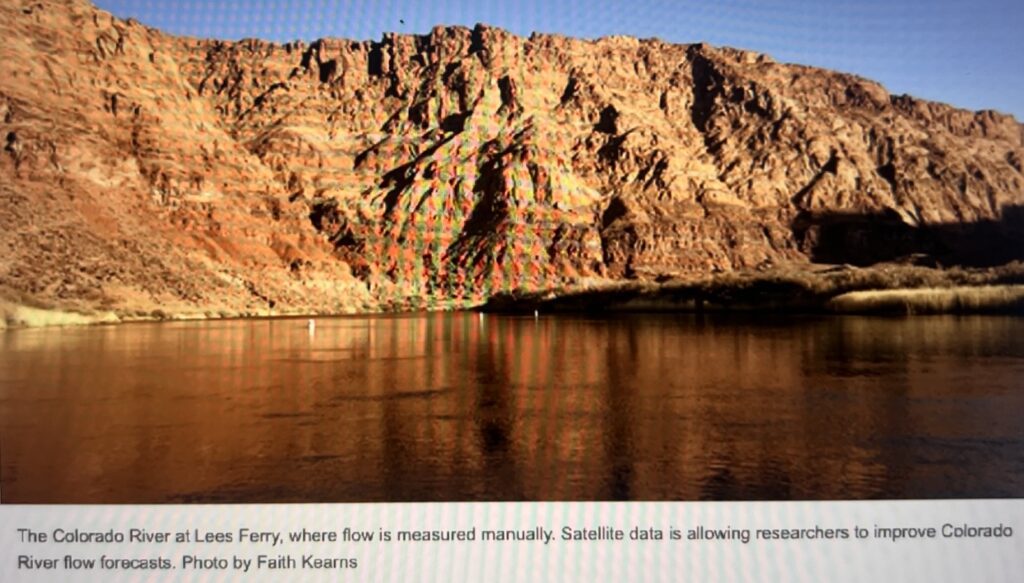
PHOENIX — Discussions about drought typically involve how to respond to water scarcity. But there may be another concern for the Southwest: higher electricity bills.
Less water flowing through the Colorado River is expected to reduce hydropower generation at the Hoover Dam. Managers there say they may need to shut off 12 of 17 turbines by fall.
About 20% of Hoover’s generation goes to Arizona, including reservations. California and Nevada also rely on the dam.
Arizona Water Director Tom Buschatzke is Chief Negotiator for Colorado River Resources. During an interview last month, Buschatzke told 12News that water levels at Lake Mead may drop another 20 feet by the end of the year.
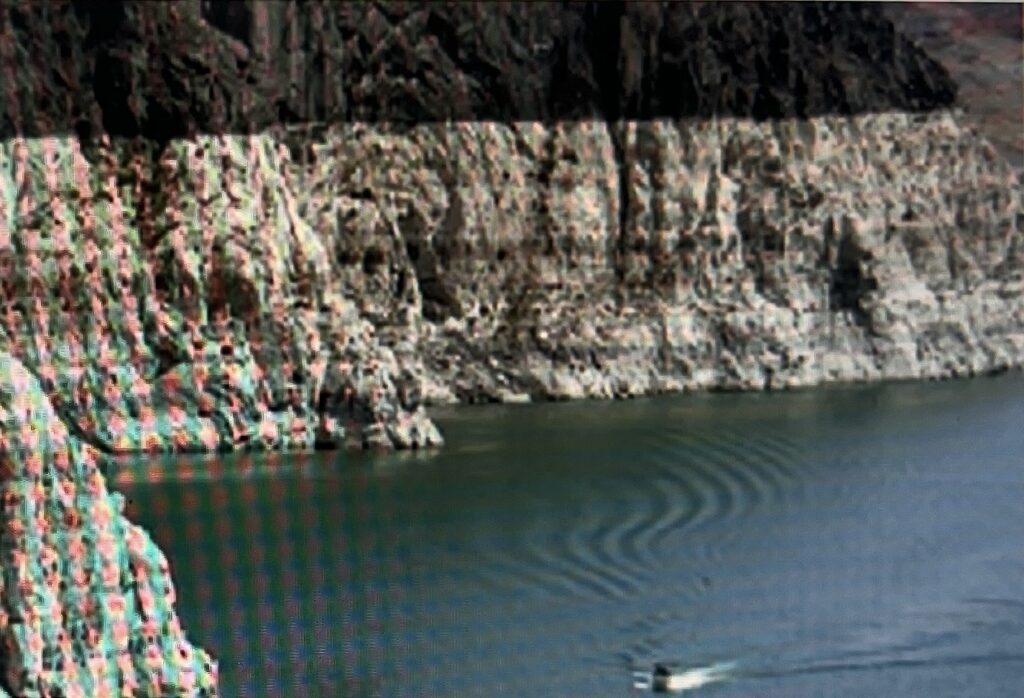
“I think you lose about 80% of hydro-generation when you get to that elevation at that point at Lake Mead,” Buschatzke said.
Where will utilities in the southwest get that lost power?
“You’ve got to go on the grid to find it,” Buschatzke said.
Asked if that means the cost for power will go up, Buschatzke said he hesitates to speculate too much.
“You have to assume they (utilities) are going on the grid, and hydropower is one of the cheaper sources of power, so you can expect that impact to occur,” Buschatzke said.
A spokesperson for Arizona’s second largest utility, SRP, said hydropower from Hoover dam makes up about .5% of annual energy need to serve SRP retail customers.
“While Hoover Dam is an important resource, it is relatively small portion of SRP’s portfolio, and we do not expect the anticipated reductions to impact reliability,” said SRP Media Relations manager Jennifer Schuricht.
Utilities may pass on costs or savings of purchased power and fuel straight to consumers through adjustable prices on bills.
4. Fog Is Riddled With Bacteria, Study Finds.The research team found that millions of bacteria floating in tiny fog droplets are alive, growing and breaking down pollutants in the air.
A new study is changing the way we think about fog. In this study, a research team from Susquehanna University in Pennsylvania and Arizona State University sampled fog droplets that came from 32 weather events in Pennsylvania over the span of two years.
Turns out it’s not just an amorphous blob of water droplets: “We found that millions of bacteria inhabit … fog droplets,” study co-author Ferran Garcia-Pichel of Arizona State University.

In fact, the research team found that bacteria floating in tiny fog droplets are alive, growing and breaking down pollutants in the air.
“Not only are they there, they are actively consuming atmospheric pollutants, and likely also growing in them. Fog is a habitat,” he said.
Garcia-Pichel researches fog because “liquid water is a necessity for life,” Garcia-Pichel said. “Of all sources of liquid water on Earth, fogs and clouds represent the only form of stable liquid water in the atmosphere. If there is active life in the atmosphere, it has to be there. And fogs are closer to us than clouds.”
Although scientists already knew that bacteria drift around in the air and clouds, what they do there remains somewhat of a mystery − especially in fog.
“There’s very limited knowledge about what kinds of bacteria are present in fogs, which are like clouds at the ground level,” cloud researcher Thi Thuong Thuong Cao, the paper’s lead researcher, said in a statement.
Is fog ‘alive’?
“Fog is not alive, in the same way that the ocean is not alive, but like it, it contains active forms of life,” Garcia-Pichel told USA TODAY.
One bacterial group stood out
According to Arizona State, one group of bacteria stood out from the fog samples: methylobacteria*. Methylobacteria consume simple carbon compounds, including chemicals such as formaldehyde. Formaldehyde is a common pollutant that adds to ozone smog and harms human health.
‘An astounding amount of life’
According to a statement from Arizona State University, the team found that fewer than 1% of fog droplets contain bacteria. But averaged together, they represent an astounding amount of life.
“When you take all of the droplets together, the concentration of bacteria is the same as in the ocean,” says Garcia-Pichel. A thimble’s worth of fog water has some 10 million bacteria.
The researchers say more studies are needed to understand whether fog’s role in cleaning the air is more beneficial to people than its potential as a water source.
“If we harvest fog, we are getting rid of our little friends in the air,” Garcia-Pichel said. “We don’t know if that’s going to make a big impact or not, but we should be considering that.”
Source: USA Today,AZ State University June 1, 2026
- Methylobacterium is a genus of bacteria, also designated as Pink-Pigmented Facultative Methylotrophs (PPFMs). Methylobacterium is commonly found in soil, water, and particularly in association with the phyllosphere, the aerial part of plants.[2][3] Methylobacterium is characterized by its ability to metabolize one-carbon compounds like methanol released by plant leaves.[4] Methylobacterium plays key roles in nutrient cycling and plant-microbe interactions, often promoting plant growth and resilience through hormone production and stress mitigation. Source: Wikipedia
Copyright 2026@ EviroInsight.org
