
—————Feel Free To Pass This Along To Others——————
If your watershed is doing something you would like others to know about, or you know
of something others can benefit from, let me know and I will place it in this Information .
If you want to be removed from the distribution list, please let me know.
Please note that all meetings listed are open to the public.
Enhance your viewing by downloading the pdf file to view photos, etc.
The attached is all about improving life in the watershed through knowledge.
If you want to be removed from the distribution list,
please let me know. Please note that all meetings listed are open.
Check our website at EnviroInsight.org
1. Grand Canyon Projects South Rim Water Service Restoration By Thanksgiving. Grand Canyon National Park plans to restore water service to South Rim residents and concessionaires by late November following August flood damage.
Based on current construction schedules, the National Park Service Incident Management Team expects to begin pumping water from the Bright Angel Creek intake to a new water treatment plant by Nov. 16. Distribution from the treatment plant to residents is projected to begin by Thanksgiving, allowing concessionaires to gradually resume services for overnight guests.
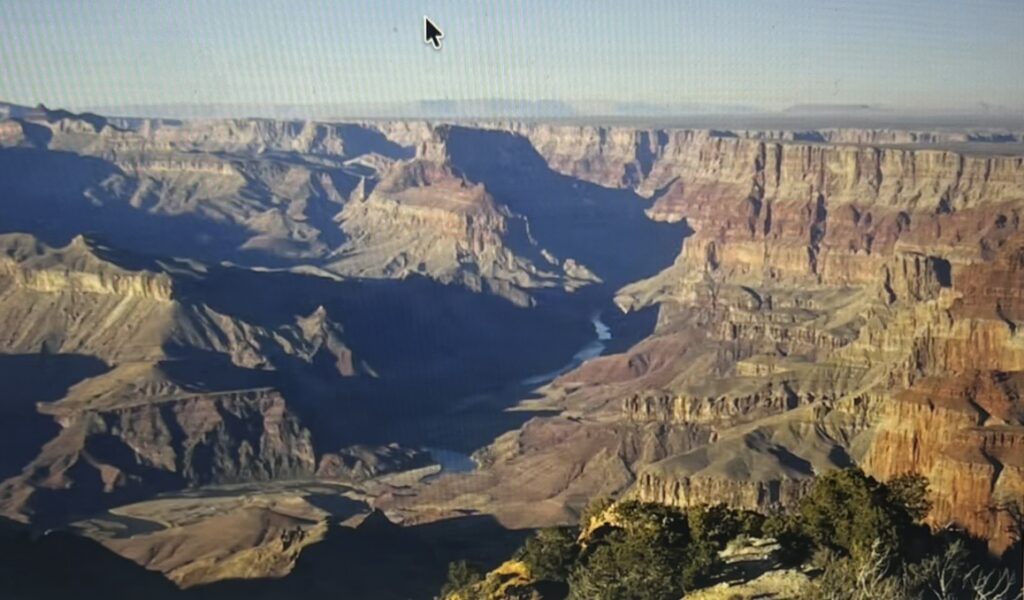
The dates remain subject to change as construction progresses. The park is also working to finalize an agreement to haul approximately 200,000 gallons of water per day to replenish storage tanks. At the current usage rate of about 137,000 gallons per day, the additional supply would help stabilize tank levels until pumping can resume.
Once the Bright Angel Creek pumps begin operating, the park estimates it will take approximately 45 days to fully replenish the water storage tanks.
The Aug. 29 flash flood destroyed a water intake pump and other infrastructure and damaged approximately 40% of the legacy Transcanyon Waterline between the Phantom Ranch area and the North Rim. The Bright Angel Creek and Roaring Springs intake areas also sustained significant damage.
Stage 4 water restrictions remain in effect while repairs continue. Visitors and residents are being asked to conserve water and use designated portable bathrooms, handwashing stations and potable water tanks. The park remains open at both rims, although modified operations and closures remain in effect in affected inner-canyon areas. Source: WaterWorld, Sept 23, 2026
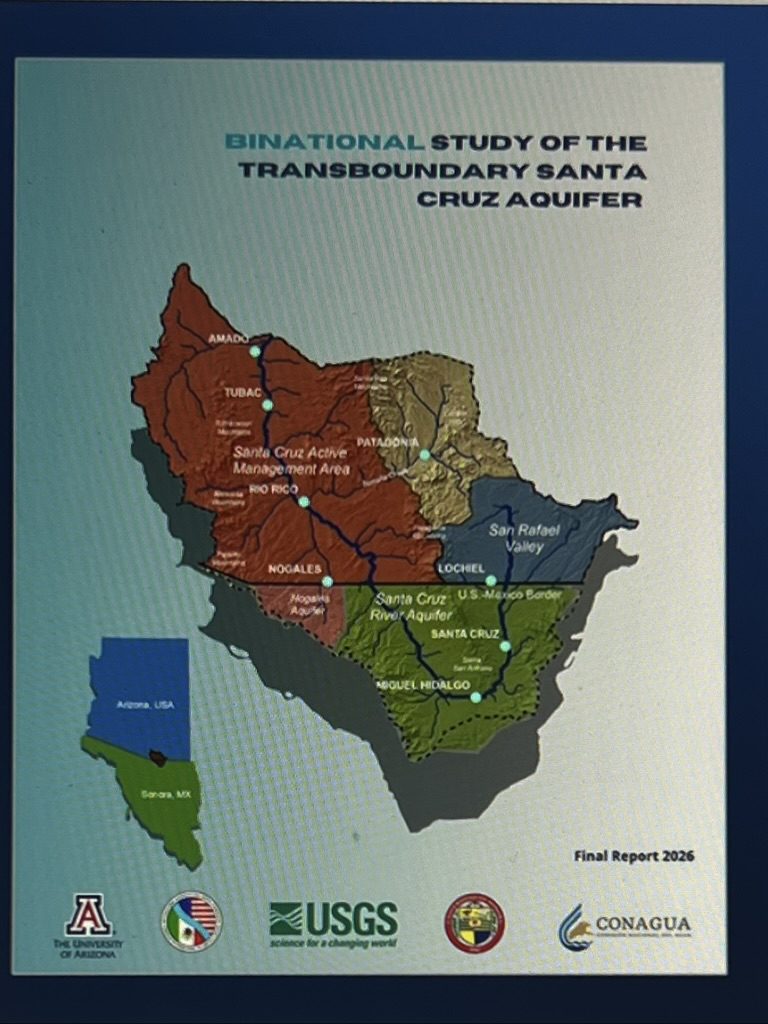
2. IBWC Publishes Binational Study Of The Transboundary Santa Cruz Aquifer. The US and Mexican Sections of the International Boundary and Water Commission (IBWC) have published a Binational Study of the Transboundary Santa Cruz Aquifer, an important contribution to characterizing groundwater shared by Arizona and Sonora. Developed under the Transboundary Aquifer Assessment Program (TAAP), the study is the product of sustained scientific and technical collaboration between the two countries.
Released simultaneously in English and Spanish, the report brings together scientific information from both countries on climate, geology, surface water and groundwater, water quality, land use, and water use. By integrating and comparing information across the international border, the study strengthens the shared understanding of the Santa Cruz aquifer and helps identify information gaps and priorities for continued research and monitoring.
The report was developed by scientists and technical experts from the US Geological Survey (USGS), Mexico’s National Water Commission (CONAGUA), the University of Arizona Water Resources Research Center (WRRC), and Universidad de Sonora, working within the binational cooperative framework established through the IBWC. WRRC contributions were funded by USGS through TAAP, a program authorized by US Public Law 109-448, and Arizona’s Technology and Research Initiative Fund.
To learn more about the Binational Study, go online to https://wrrc.arizona.edu/publication/binational-study-transboundary-santa-cruz-aquifer
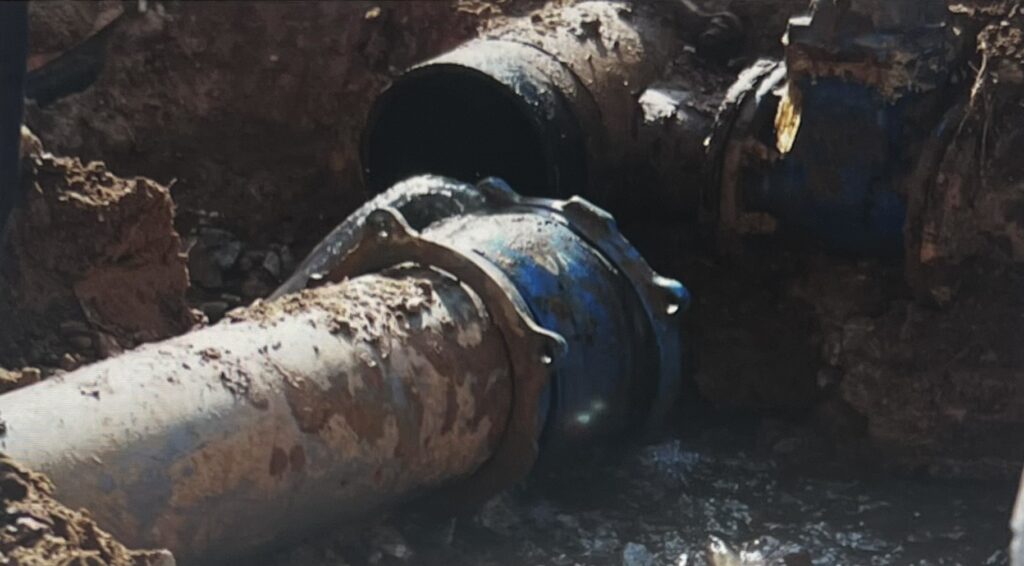
3. The Water Loss Paradox: Everyone’s Problem, No One’s Priority. Lets face it, water is on the minds of almost everyone in the seven western states. In Arizona, we all know that severe water cuts are in our near future. We’re all talking about Colorado River Water but not much conversation is being made concerning NRW (Non Revenue Water) – this is water leaking into the ground from water transportation lines, everywhere.
Highlighting the issue:
Water loss is a decision-making problem, not just an infrastructure or technology issue, requiring strategic prioritization of limited resources.
Utilities possess extensive operational data across multiple systems, but fragmentation hampers effective decision-making; integration is key.
AI and analytics may serve to reduce uncertainty, support prioritization, and enable smarter operational decisions rather than merely detecting leaks.
Utilities must therefore focus much of their attention and resources on maintaining reliable service while responding first to the most visible and consequential of risks.
Water loss behaves very differently. According to the EPA Water Sense Program., most leakage develops gradually beneath the surface, often without disrupting service or attracting public attention. The American Water Works association has repeatedly emphasize that water loss represents far more than lost water volume alone.
Investments required to reduce water loss such as leak detection, district metering, pressure management, monitoring technologies, and engineering support, are immediate and highly visible.
This creates the central paradox of water loss management. The question really becomes: “How can your utility address water loss within the operational realities it faces every day?”
Even when utilities commit to reducing NRW, determining where the leak(s) exits is rarely straightforward. Water loss is often treated as a single problem., but it is actually a collection of interconnected challenges with different causes, consequences and solutions.
The issue is challenging in every way, but with cuts in our Colorado water allocation perhaps it is time to look at our NRW losses. Source: WaterWorld, Aug 3, 2026, and Editor.
4. Coconino County To Hold 22nd Annual Sustainable Building Tour On October 3. Presented as part of the Flagstaff Festival Of Science, the free event features ”a dual track tour showcasing practical inspiring strategies for building and living sustainably across northern Arizona”.
Attend and choose between two distinct experiences, or explore both:
- Curious Spaces, Sustainable Places (Flagstaff Track): Self guided tours running from 10 AM to 2 PM, highlighting, cutting edge, urban design, energy, efficient home, and local community spaces in and around Flagstaff.
- Living Off-the-Grid: A Self-Reliant Home Tour (Williams and Valle Track): Tours running from 10 AM to 4 PM, focusing on Self Sufficient, off-grid homesteads and rural building practices.in the Williams and Valle areas.
Featured sustainable practices include:
Passive solar design and high-performance insulation
Off-grid, power systems and solarPV with battery storage
Rainwater harvesting and gray water recycling
All-electric design designs, heat pumps, and radiant heating
Alternative and low carbon construction (including insulated concrete forms, and straw bale)
Net-zero building techniques and native landscaping
Digital tour maps, packets, and site descriptions can be found at :
coconino.az.gov/SustainableBuildingTour.
Source: Flagstaff DailySun
5. Would You Like To Reduce The Amount Of Microplastics You Consume? Start your reduced microplastic consumption by chewing the “right” gum.
.
According to a 2025 UCLA pilot study, researcher Sanjay Mohanty and Lisa Lowe at UCLA presented pilot data in March 2025 measuring microplastic release from 10 popular gum brands. Findings from the pilot included:
- Average ~100 microplastic particles per gram of gum.
- One outlier brand released over 600 particles/gram.
- 94% of release happened in the first 8 minutes of chewing.
- Both synthetic-labelled AND natural-labelled gums released particles in similar ranges, “natural” gum base claims often aren’t verified.
Major brands ranked
CHEWING GUM BRANDS RANKED BY GUM-BASE MATERIAL (VERIFIED LABELS 2025-2026)
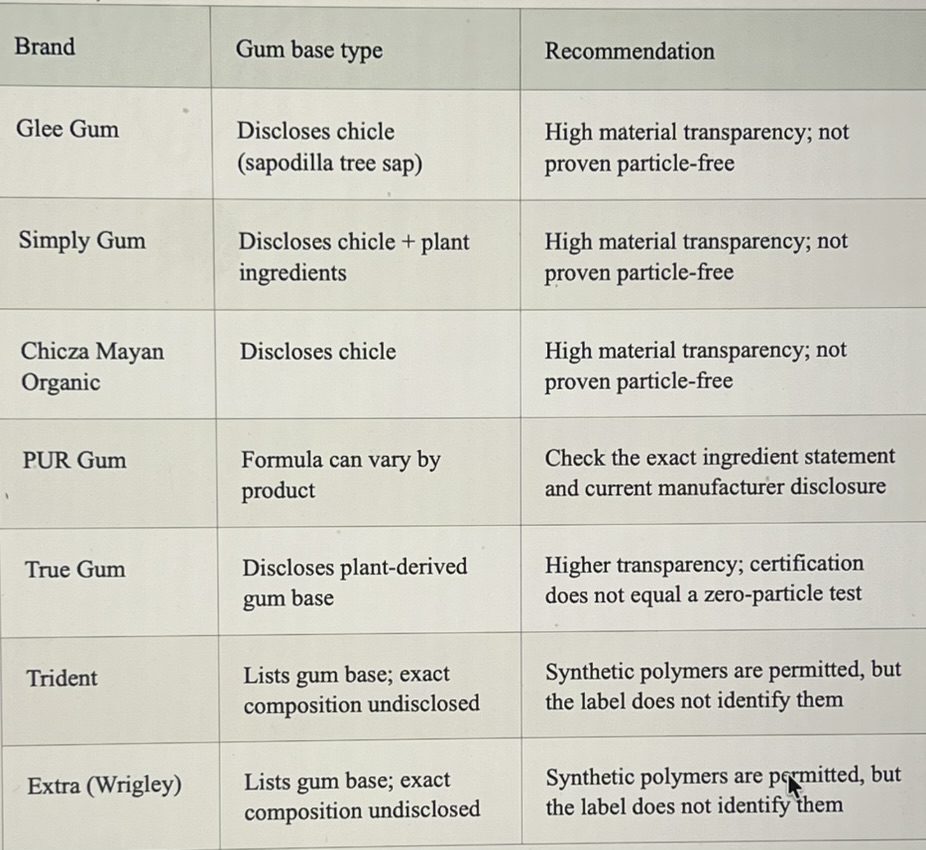
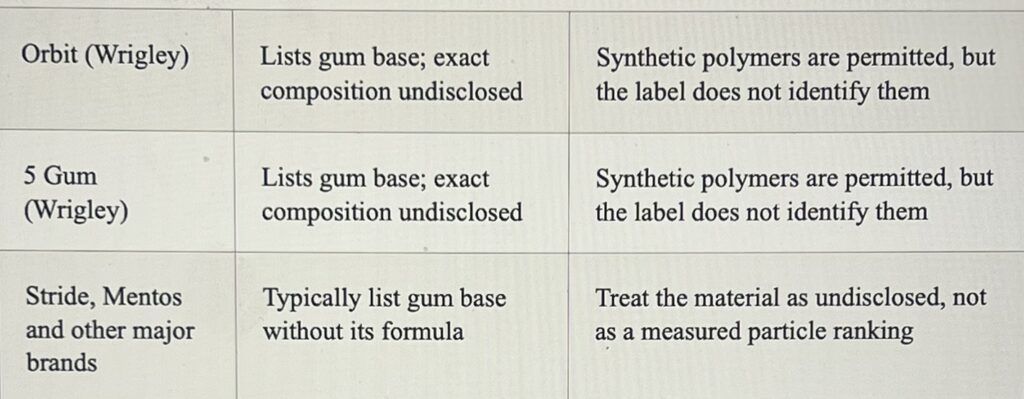
When you read the ingredients list of a chewing gum, you’ll see “gum base” listed, but not what’s in it. The FDA permits more than 45 different ingredients under the “gum base” label (21 CFR 172.615), including:
- Polyethylene (same plastic as plastic bags)
- Polyvinyl acetate (used in white glue)
- Styrene-butadiene rubber (used in car tires)
- Polyisobutylene (synthetic rubber)
- Butyl rubber (used in inner tubes)
- Paraffin wax (petroleum-derived)
Manufacturers don’t have to disclose which combination they use, and most don’t. The default assumption for any mainstream brand is that the gum base is synthetic. Source: MicroPlastics, December 15, 2025.
A Single Piece of Gum Releases Hundreds of Microplastics
A March 2025 study found that on average, chewing gum releases over 600 particles of microplastics per gram into your saliva.
A standard piece of gum is anywhere from 1.5 to 2.5 grams, which means you’d be ingesting 900 to 1,500 microplastic particles, on average, every time you pop a fresh piece.
Microplastics are being found in practically every part of the human body: the brain, blood, lungs, heart, ovaries, testicles, breast milk, placenta, and more.
When they analyzed the saliva from the person who chewed the gum, they found that both the synthetic and the natural gums contained the same polymers: polyolefins (which was the most abundant kind), polyethylene terephthalates, polyacrylamides, and polystyrenes.
How to Reduce Microplastic Exposure from Chewing Gum
If you don’t want to give up your gum chewing, here are a few things you can do:
- Chew one piece of gum for a longer period of time. The researchers from the above study found that most of the microplastics detached from gum within the first two minutes of chewing, and after eight minutes of chewing, 94% of the plastic particles collected during the tests had been released. So, if you’re going to chew gum, chewing one piece for longer can reduce the overall amount of microplastics you consume (versus chewing piece after piece after piece).
- Avoid the “gum base”, even in brands advertised as “natural.” Choose brands that ACTUALLY disclose the specific ingredients used in their gum base.
Don’t let kids chew it. Kids are more vulnerable to the negative effects of toxic exposures. Plus, it’s probably easier to stop a gum-chewing habit before it even starts, right?
Copyright 2026 @ EnviroInsight.org
